One of the 2 locusts on WAnimals
Insects · Orthoptera · Acrididae
Migratory Locust
Locusta migratoria
It has not yet been assessed against the IUCN criteria. See full glossary
It can switch between a solitary, harmless phase and a gregarious migratory phase that forms swarms devastating to crops.
Size
3.5 cm – 6.5 cm
Lifespan
1 years
Diet
Herbivore
Feeds mainly on plants.
Activity
Diurnal
Active mainly during the day.
Social structure
Colony
Lives in large concentrations, often for breeding reasons.
Sighting difficulty
Unknown
Fun facts
- The switch to the gregarious phase is triggered by crowding and mediated by a release of serotonin in its nervous system.
- Its migrating swarms can travel more than 130 km in a single day on the prevailing winds.
- It eats grasses, cereal crops and practically any vegetation available once it swarms.
- It has the same phase change as the Desert Locust, and was behind Europe's great historical plagues: there are records of invasions reaching as far as France and Germany in the 17th and 18th centuries.
- Its genome, published in 2014, was at the time the largest animal genome ever sequenced, at some 6.5 billion base pairs, twice the size of the human one.
- It is the most widespread locust species in the world, with populations from southern Europe to New Zealand.
- It is one of the insects authorised as food in the European Union, and is farmed commercially for human consumption and for feed.
- Its flight capacity is enormous: swarms can cross seas and deserts riding air currents.
- In its solitary phase it is an unobtrusive, rather scarce grasshopper, and many populations never gregarise at all.
Life cycle & biology
- Skeleton type
- Invertebrate - chitin exoskeleton
- Habitat & environment
- Grassland and farmland of Africa, most of Eurasia, the East Indies, tropical Australia and New Zealand
- Birth weight
- Tiny on hatching as a nymph (known as a hopper)
- Size at birth
- A tiny newly hatched nymph, wingless
- Sexual maturity
- ~2 weeks after the final moult to adult
- Gestation / incubation
- 11-15 days of egg development
- Litter / clutch size
- 50 to 100 eggs per ootheca, with 2 to 7 clutches per female in her lifetime
Sources consulted: HopperWiki; Thomas More University; BYJU'S; National Geographic; Wikipedia (Locusta migratoria manilensis); Entomologist.net; Britannica
Where to find it
See its range on the interactive mapWhere to watch it
Parques y spots de buceo donde se ha documentado esta especie — se muestran 10 de 41 documentados.
Related species
Other species in the catalogue with the most in common with Migratory Locust — same habitat, park, country, tags or family.
Desert Locust
Schistocerca gregaria
Field Grasshopper
Chorthippus brunneus
Bush Hyrax
Heterohyrax brucei
Village Weaver
Ploceus cucullatus
 Vulnerable
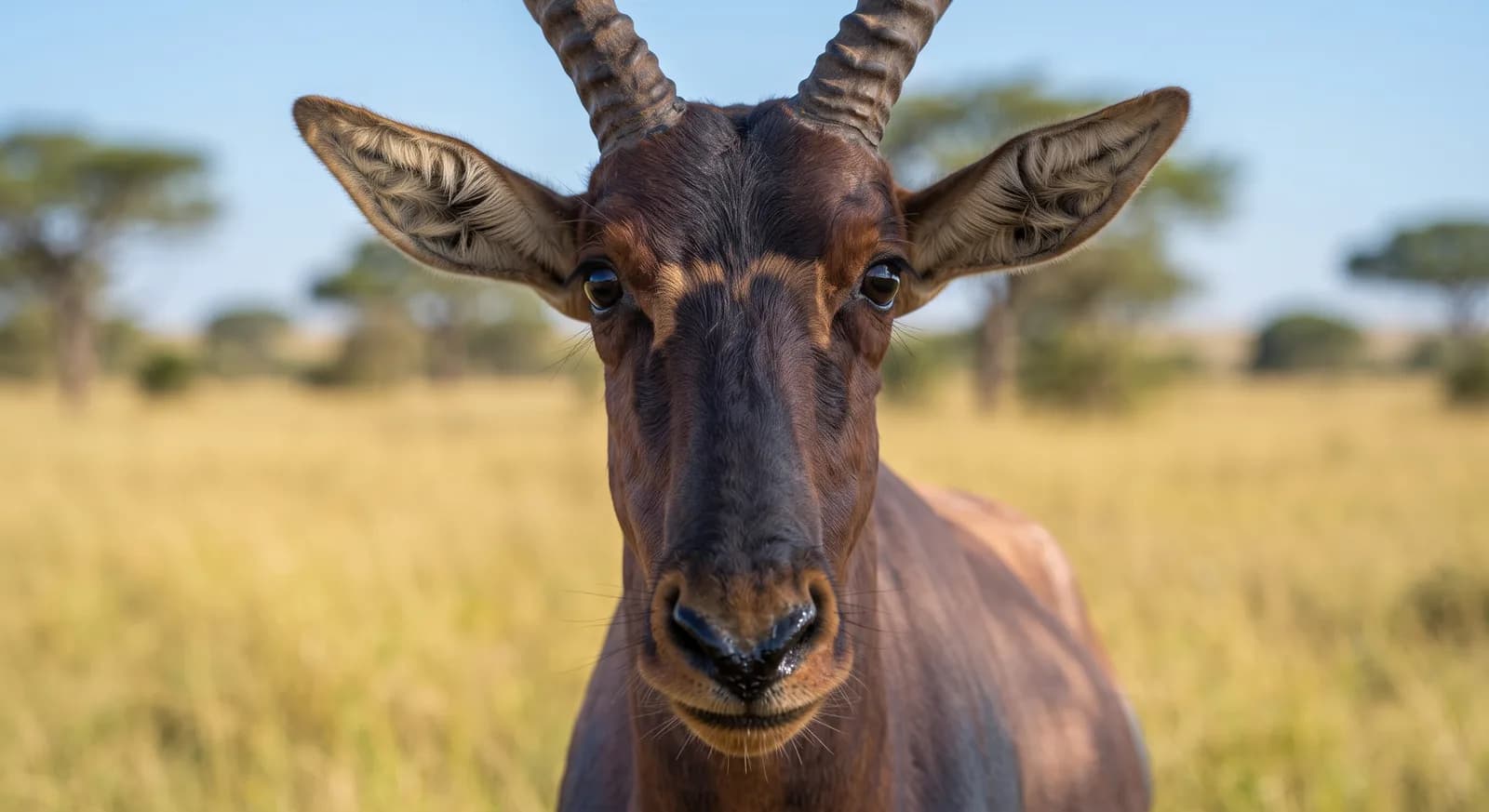
Topi
Damaliscus lunatus
Keep exploring
Based on what we already know about migratory locust.
Comments
Share an experience, a fun fact or a tip for seeing the migratory locust.
Be the first to comment.