One of the 15 butterflies on WAnimals
Insects · Lepidoptera · Nymphalidae
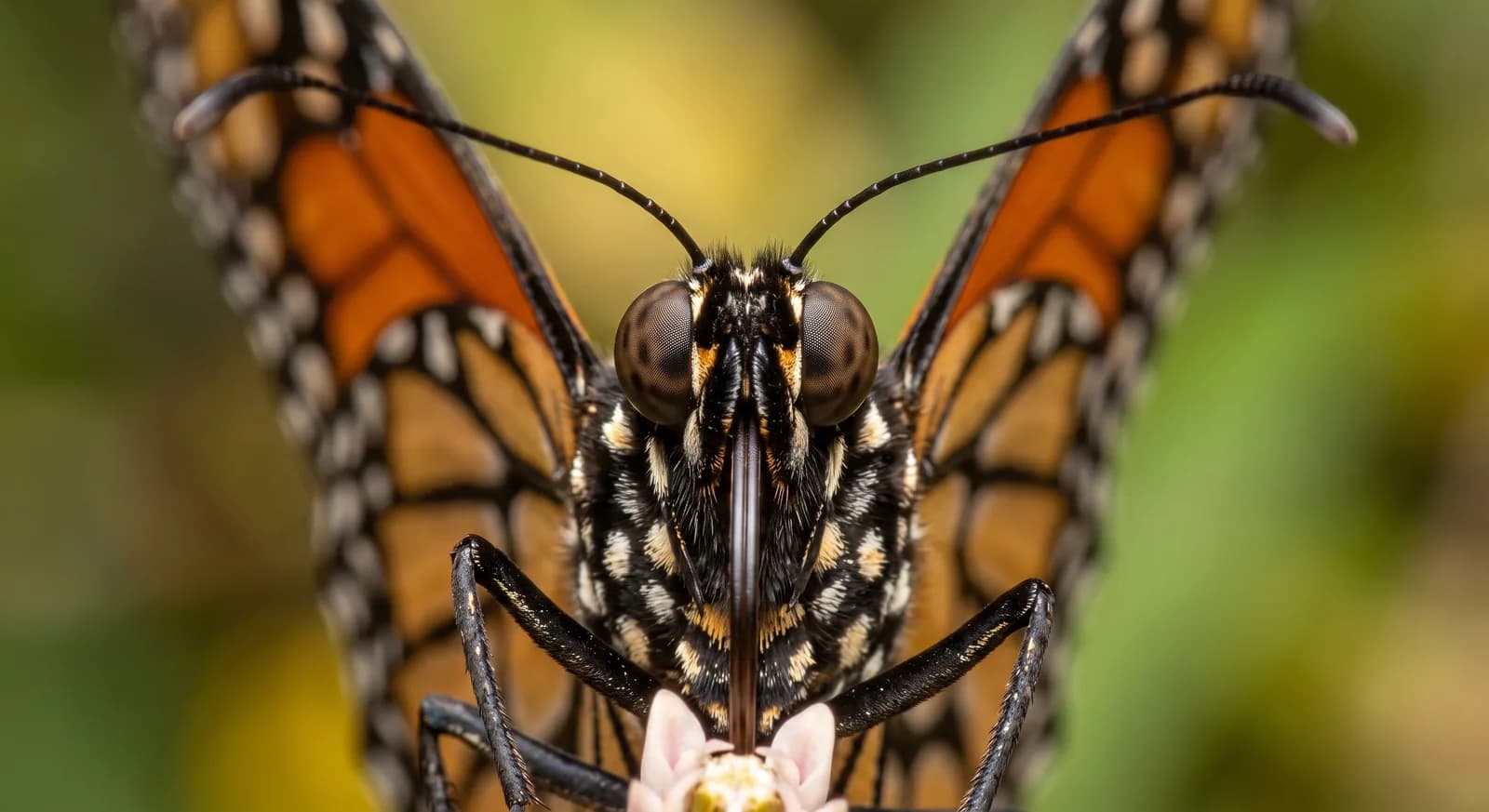
Monarch
Danaus plexippus
It has not yet been assessed against the IUCN criteria. See full glossary
It makes one of the most extraordinary migrations in the animal kingdom: up to 4,500 km between North America and the oyamel fir forests of Mexico — a journey no single butterfly completes, but several generations do.
Weight
0 g – 1 g
Size
9 cm – 10.4 cm
Lifespan
1 years
Diet
Herbivore
Feeds mainly on plants.
Activity
Diurnal
Active mainly during the day.
Social structure
Colony
Lives in large concentrations, often for breeding reasons.
Sighting difficulty
Unknown
Fun facts
- The caterpillars feed exclusively on milkweed (Asclepias), which makes them toxic to many predators.
- The autumn migratory generation can live 6 to 9 months, far longer than the summer generations.
- It overwinters in vast colonies in the oyamel forests of Mexico and in California.
- comportamientoIts migration spans several generations: no single butterfly completes the round trip, and yet the generations that follow return to the very same place.
Life cycle & biology
- Skeleton type
- Invertebrate - chitin exoskeleton
- Habitat & environment
- Grassland and open country where milkweed (Asclepias spp.) grows in North America; it overwinters in the oyamel forests of Mexico and in California
- Birth weight
- An egg of 0.9-2.1 mm; a newly hatched larva under 1 cm
- Size at birth
- A mature larva of up to ~5 cm
- Sexual maturity
- Reaches breeding maturity a few days after emerging from the pupa
- Gestation / incubation
- Egg: 3-8 days | Larva: 10-14 days (5 instars) | Pupa (chrysalis): 6-14 days
- Litter / clutch size
- A female can lay between 100 and 500 eggs in her lifetime
Sources consulted: LSU AgCenter; National Geographic; Britannica; U.S. Fish & Wildlife Service; USDA Forest Service
Where to find it
See its range on the interactive mapWhere to watch it
Parques y spots de buceo donde se ha documentado esta especie — se muestran 10 de 31 documentados.
Related species
Other species in the catalogue with the most in common with Monarch — same habitat, park, country, tags or family.
Glasswing Butterfly
Greta oto
Owl Butterfly
Caligo eurilochus
Painted Lady
Vanessa cardui
 Least Concern
Black-tailed Prairie Dog
Cynomys ludovicianus
Monk Parakeet
Myiopsitta monachus
Red Admiral
Vanessa atalanta
Keep exploring
Based on what we already know about monarch.
Comments
Share an experience, a fun fact or a tip for seeing the monarch.
Be the first to comment.