One of the 2 roosters on WAnimals
Birds · Galliformes · Phasianidae
Black Grouse
Lyrurus tetrix
The species is abundant and widely distributed; it faces no significant short-term risk. See full glossary
The black grouse is a tetraonid of the heaths and boreal forests, the male blue-black with a lyre-shaped tail that he fans out in display. The males gather before dawn at collective leks where they perform a bubbling, rasping display for hours while the females walk the arena. In Spain there was once a population in the Pyrenees, and today it is a species in decline across western Europe.
Weight
925 g – 1.2 kg
Size
40 cm – 58 cm
Lifespan
10 years
Diet
Herbivore
Feeds mainly on plants.
Activity
Diurnal
Active mainly during the day.
Social structure
Solitary
Lives and hunts alone, joining others only to breed.
Sighting difficulty
Easy
Fun facts
- GeneralThe males display at communal leks at dawn, tails spread into a lyre.
- Its lek is one of the most impressive natural spectacles in northern Europe: dozens of males gather before dawn in a clearing, fan out their lyre-shaped tails and give a continuous bubbling coo that carries for kilometres.
- The males at the centre of the arena get most of the matings, and the positions are contested for years: a male can take several seasons to reach the middle.
- Its decline in western Europe is tied to the abandonment of mountain grazing and to the afforestation of the heaths and open mosaics it needs.
Life cycle & biology
- Skeleton type
- Vertebrate - internal bony skeleton (bird)
- Habitat & environment
- Mosaics of heath, peat bog, birch woodland and grassland in northern Eurasia and its mountains
- Birth weight
- Precocial: born covered in down and leaves the nest within a few hours
- Size at birth
- Precocial: born covered in down and leaves the nest within a few hours
- Sexual maturity
- 12 months
- Gestation / incubation
- 26 days of incubation
- Litter / clutch size
- 7 eggs
Sources consulted: https://es.wikipedia.org/wiki/Lyrurus_tetrix
Where to find it
See its range on the interactive mapBest time: From April to May, at dawn, at the leks in bogs and mountain clearings, when the males display and fight.
Where to watch it
Parques y spots de buceo donde se ha documentado esta especie — se muestran 10 de 91 documentados.
Related species
Other species in the catalogue with the most in common with Black Grouse — same habitat, park, country, tags or family.
Grey Partridge
Perdix perdix
Willow Ptarmigan
Lagopus lagopus
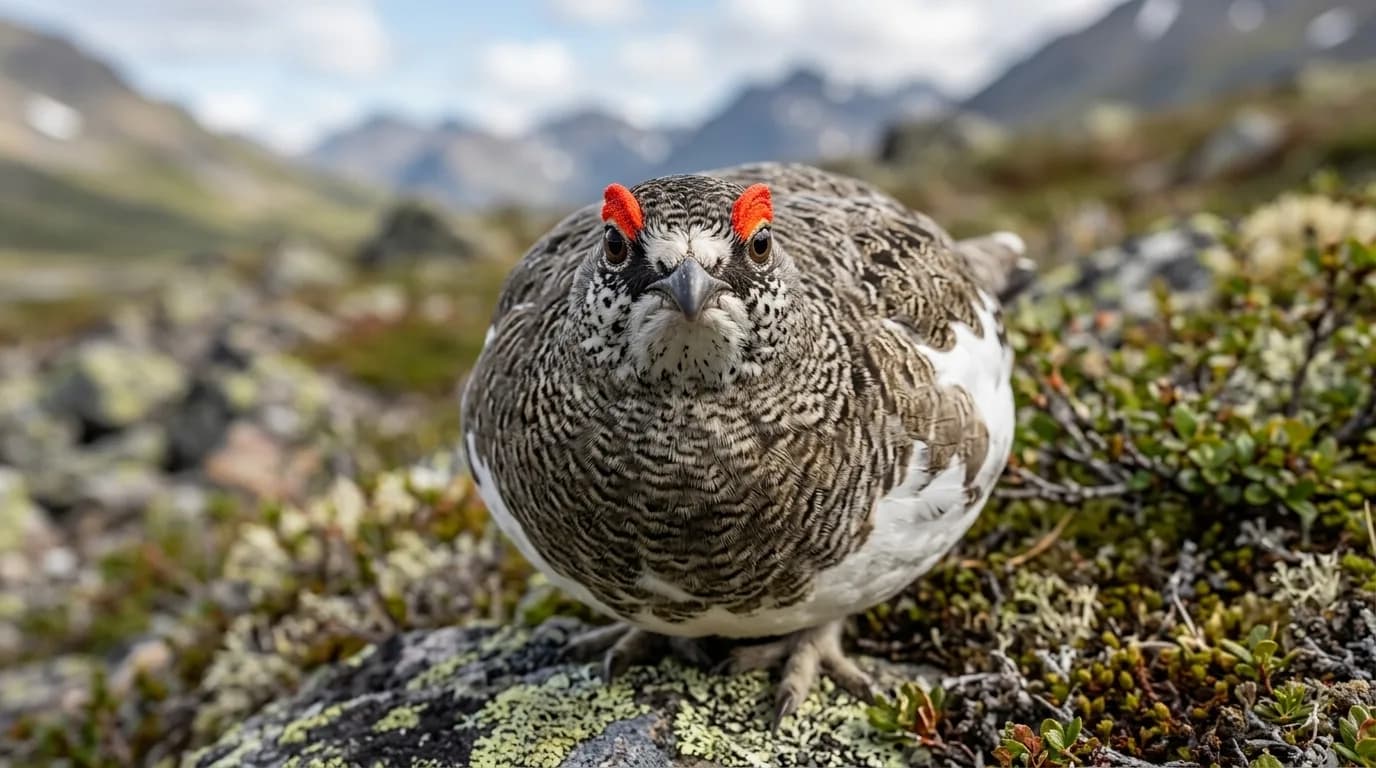 Least Concern
Rock Ptarmigan
Lagopus muta
Western Capercaillie
Tetrao urogallus
Common Pheasant
Phasianus colchicus
Red-legged Partridge
Alectoris rufa
Keep exploring
Based on what we already know about black grouse.
Comments
Share an experience, a fun fact or a tip for seeing the black grouse.
Be the first to comment.