 Vulnerable
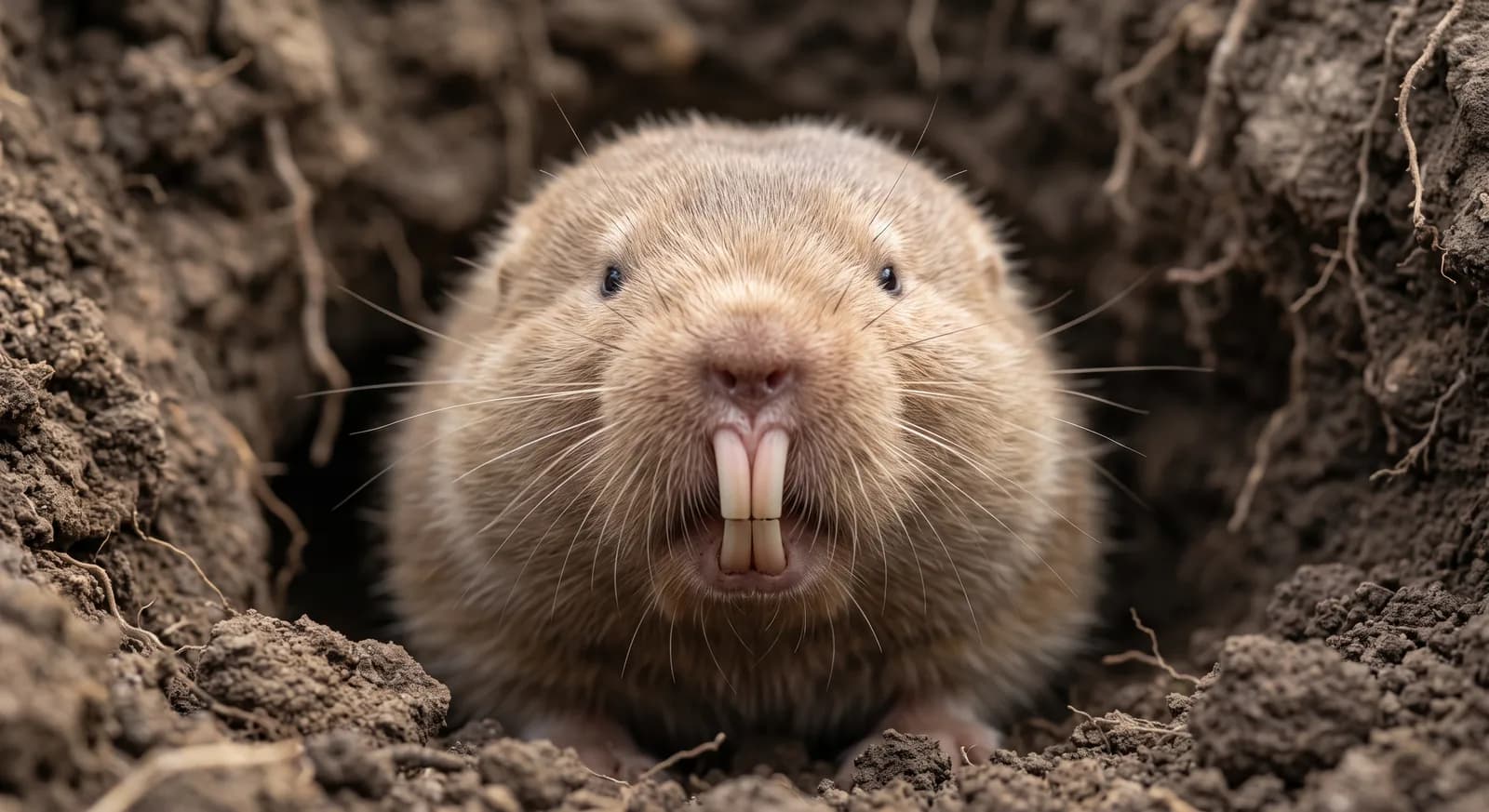
Giant Mole Rat
Spalax giganteus
2 countries1 park
Species group · Mammals
WAnimals has 11 species of rat, spread across 7 families (Bathyergidae, Cricetidae, Heteromyidae, Muridae, Nesomyidae, Potoroidae, Spalacidae).
Each one has its own full profile. This group does not replace them: it brings them together.
2 species in this group are in a threatened category according to the IUCN.
Recorded in 109 countries. The ones with the most species in the group:
It is completely blind: its vestigial eyes, buried under the skin, no longer form images but retain the ability to detect light cycles and set its biological clock.
From
It navigates underground using the Earth's magnetic field, an ability demonstrated experimentally in the spalacids and very uncommon among mammals.
From
It can stay under for as long as 20 minutes by cutting blood flow to non-essential organs while it dives.
From
It digs burrows into the banks and swims well; it is in decline as riverside habitat is lost.
From
It is endemic to the Iberian Peninsula and France and is in sharp decline throughout its range: it is one of the Spanish mammals whose position has worsened fastest in recent decades, and yet it goes almost unnoticed.
From
Its disappearance has been linked directly to the spread of American mink that escaped from fur farms, which prey on it efficiently along stretches where it used to be abundant.
From
Its breeding cycle is among the fastest of any mammal: a female can give birth every month from two months of age, and its populations increase tenfold in a single favourable season.
·
Ranges calculated from the profiles that record the figure, not from all 11.
From Hispid Cotton Rat
It is an important laboratory model in research on human respiratory viruses, because it responds to some of them more like people do than mice do.
From Hispid Cotton Rat