 Least Concern
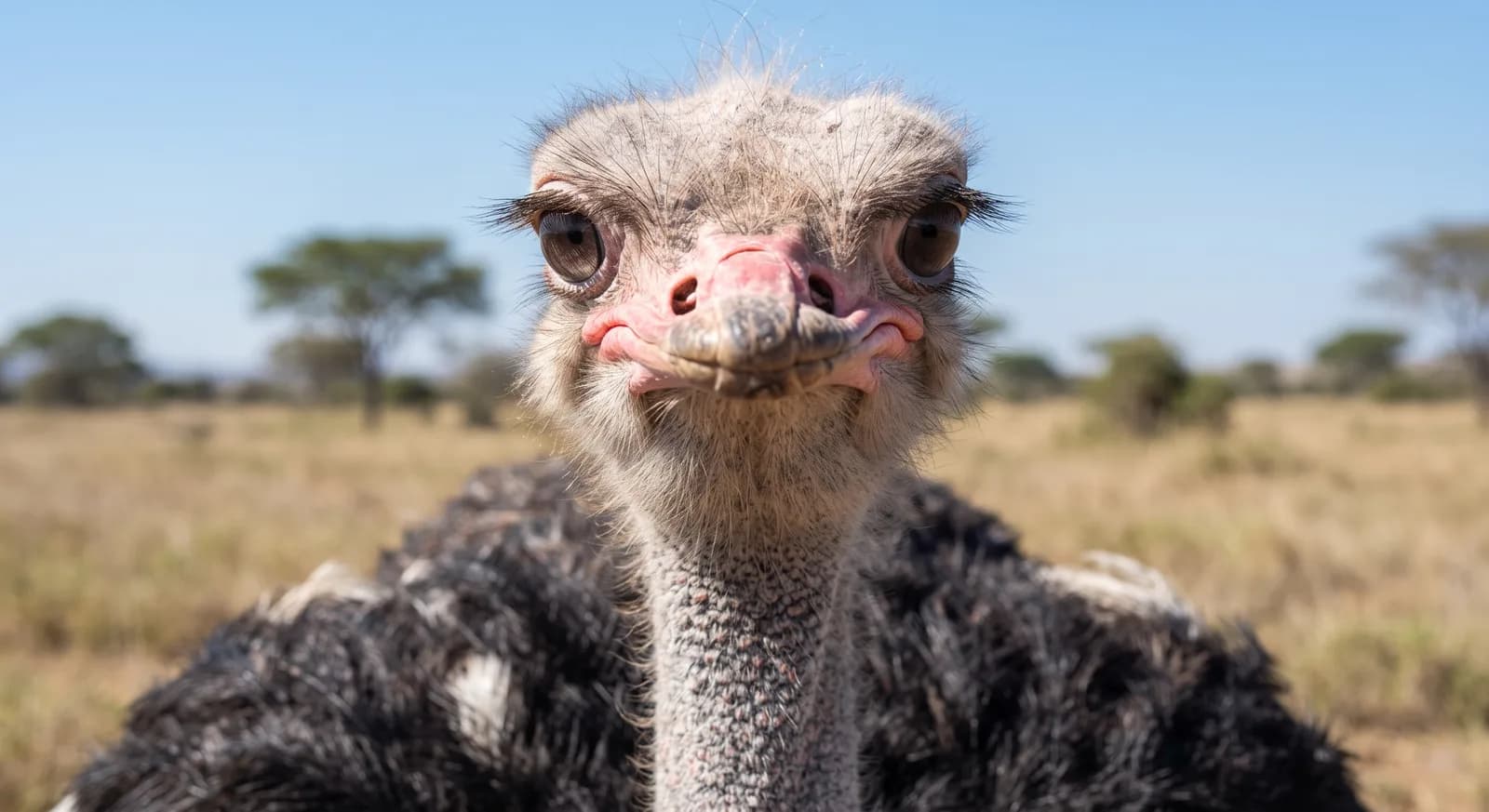
Common Ostrich
Struthio camelus
One of the 5 starlings on WAnimals
Birds · Passeriformes · Sturnidae
Lamprotornis superbus
The species is abundant and widely distributed; it faces no significant short-term risk.
The superb starling is probably the most photographed bird on East African safaris: a metallic deep blue back and head, an intensely orange breast separated from the blue by a crisp white line, and pale yellow eyes. It is abundant, confiding and highly visible around camps and lodges. It practises cooperative breeding: up to half a dozen helpers feed the chicks of a single breeding pair.
Weight
61 g – 70 g
Size
18 cm – 19 cm
Life expectancy
15 years
Diet
Omnivore
Combines animal and plant food depending on availability.
Activity
Diurnal
Active mainly during the day.
Social structure
In pairs
Usually lives in pairs, sometimes for life.
Sighting difficulty
Easy
Sources consulted: https://es.wikipedia.org/wiki/Lamprotornis_superbus
Best time: All year round in East Africa, by day; it is confiding and very common around campsites, lodges and car parks in the parks.
Parks and dive sites where this species has been documented — showing 10 of 24.
Other species in the catalogue with the most in common with Superb Starling — same habitat, park, country, tags or family.
Based on what we already know about superb starling.
Share an experience, a fun fact or a tip for seeing the superb starling.
Be the first to comment.
The pins mark the parks where its presence is documented.