Birds · Ciconiiformes · Ciconiidae
Mycteria americana
The species is abundant and widely distributed; it faces no significant short-term risk.
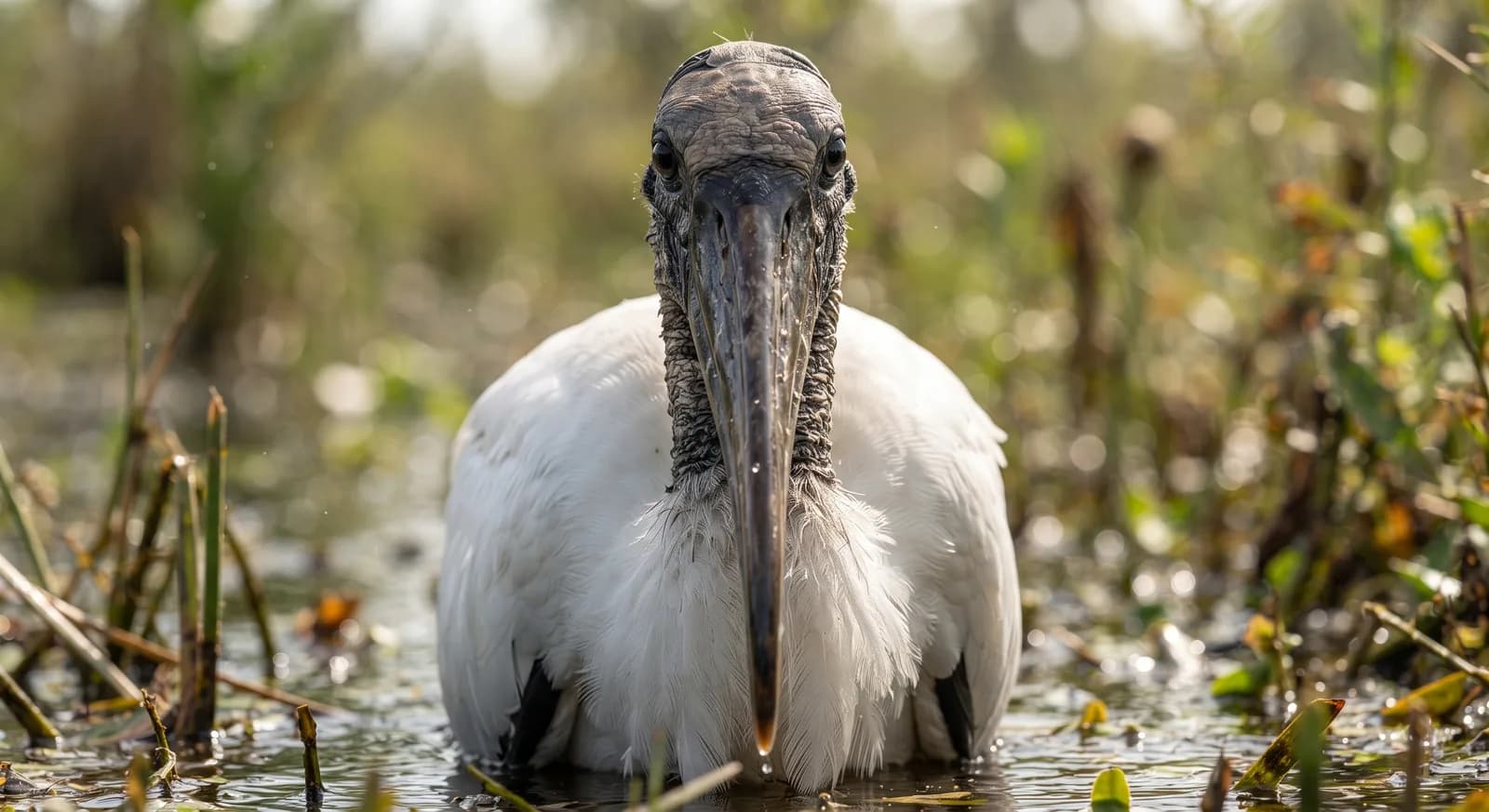
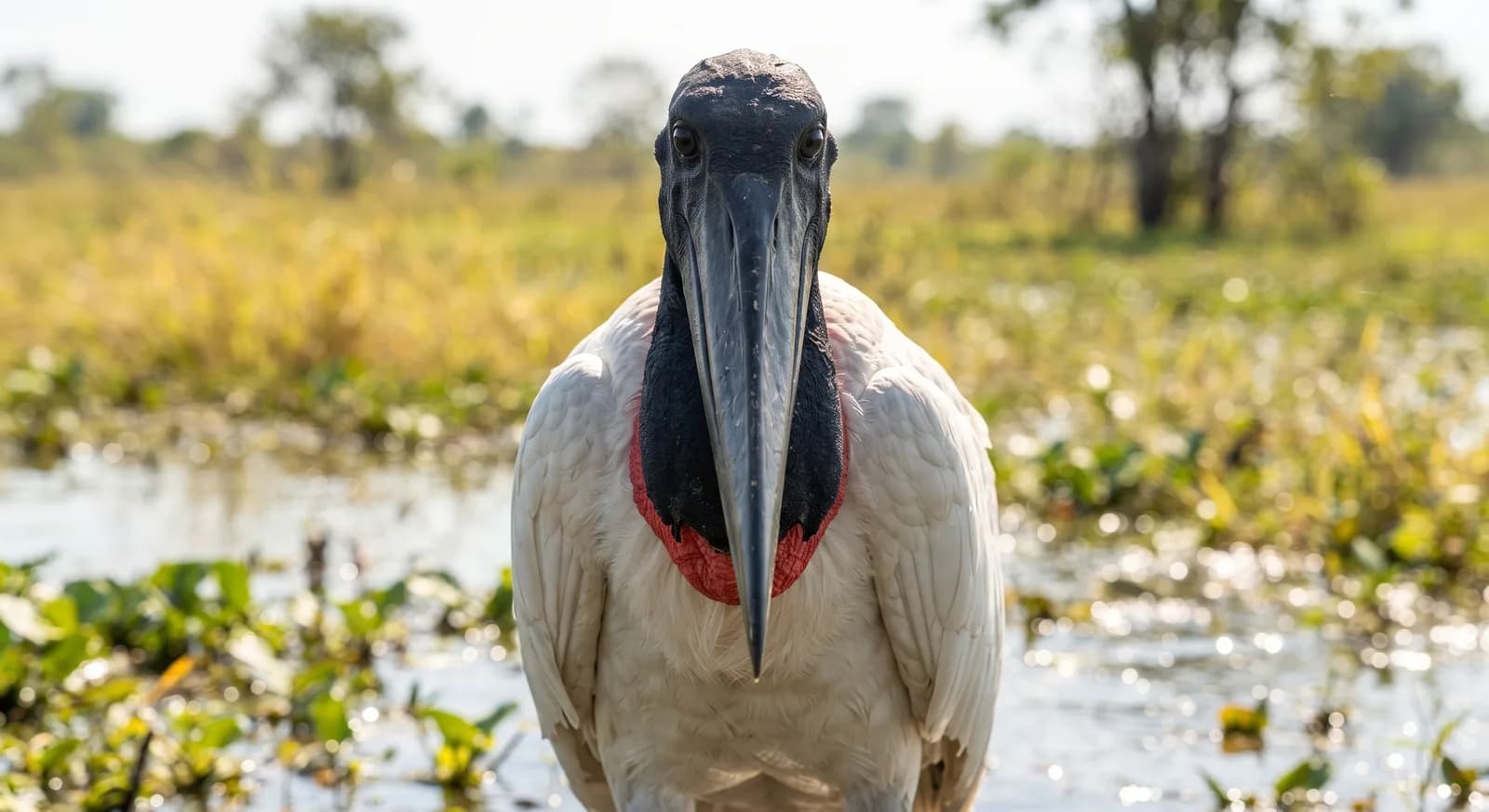
A large wading bird with white plumage except for the tail and flight feathers, which are black with greenish and purplish iridescence. The head and neck are entirely bare and dark grey, and the bill, long and broad at the base, curves downwards in a characteristic way. Juveniles keep a feathered head and a yellow bill.
Weight
2.5 kg on average
Size
85 cm – 1.2 m
Life expectancy
30 years
Diet
Piscivore
Feeds mainly on fish.
Activity
Diurnal
Active mainly during the day.
Social structure
Colony
Lives in large concentrations, often for breeding reasons.
Estimated population
Some 250,000 birds worldwide, around 30,000 of them in the United States, with an increasing trend
AI-generated images: illustrations, not photographs.
Sources consulted: IUCN Red List · Birda (ficha Wood Stork) · World Atlas (revisión de cigüeñas del mundo)
Best time: All year round in South America; the North American populations migrate south
Parks and dive sites where this species has been documented — showing 10 of 12.
Other species in the catalogue with the most in common with Wood Stork — same habitat, park, country, tags or family.
Based on what we already know about wood stork.
The pins mark the parks where its presence is documented.