One of the 4 slugs on WAnimals
Gastropods · Pulmonata · Arionidae
Vulgar Slug
Arion vulgaris
It has not yet been assessed against the IUCN criteria. See full glossary
A large slug, orange-brown to brown, which has become one of the most widespread garden and crop pests in Europe. It is hermaphroditic, eats living plants, fungi, carrion and dung, and in damp conditions can reach very high densities. It contracts into a hemisphere and rocks from side to side when disturbed.
Size
7 cm – 15 cm
Lifespan
1 years
Diet
Omnivore
Combines animal and plant food depending on availability.
Activity
Nocturnal
Active mainly at night.
Social structure
Solitary
Lives and hunts alone, joining others only to breed.
Sighting difficulty
Unknown
Fun facts
- Despite being called the Spanish slug, genetic studies have found no clear native populations on the Iberian Peninsula and its true origin remains disputed.
- A single slug can lay several hundred eggs and, being hermaphroditic, any one individual introduced can found a population.
- It is one of the worst vegetable-plot and garden pests in Europe, and a first-rank invader that has spread across almost the whole continent in recent decades with the trade in plants and soil.
- Its origin is a curious story: for years it was said to come from the Iberian Peninsula — hence its popular name, the Spanish slug. Later genetic studies have not confirmed that Iberian origin, and today it is considered more likely to come from central or western Europe.
- It hybridises with native slugs of the same genus, which complicates its identification and adds a conservation problem for the local species.
- It is hermaphroditic and highly prolific: a single slug can lay several hundred eggs.
- When disturbed it contracts into a hemispherical ball and rocks from side to side, a characteristic behaviour.
- Its mucus is thick and sticky, which makes it unappetising to many predators and also makes it awkward to handle.
Life cycle & biology
- Skeleton type
- Invertebrate - no rigid skeleton (mollusc)
- Habitat & environment
- Gardens, vegetable plots, verges and damp grassland
- Sexual maturity
- 2-3 months
- Gestation / incubation
- 3-4 weeks
- Litter / clutch size
- 200-400 eggs per clutch
Sources consulted: Zemanova et al. (2016), trabajos sobre el origen de Arion vulgaris; CABI Compendium; Rowson et al., Slugs of Britain and Ireland
Where to find it
See its range on the interactive mapBest time: Spring and autumn, on damp nights or after rain
Related species
Other species in the catalogue with the most in common with Vulgar Slug — same habitat, park, country, tags or family.
Common Hamster
Cricetus cricetus
 Least Concern
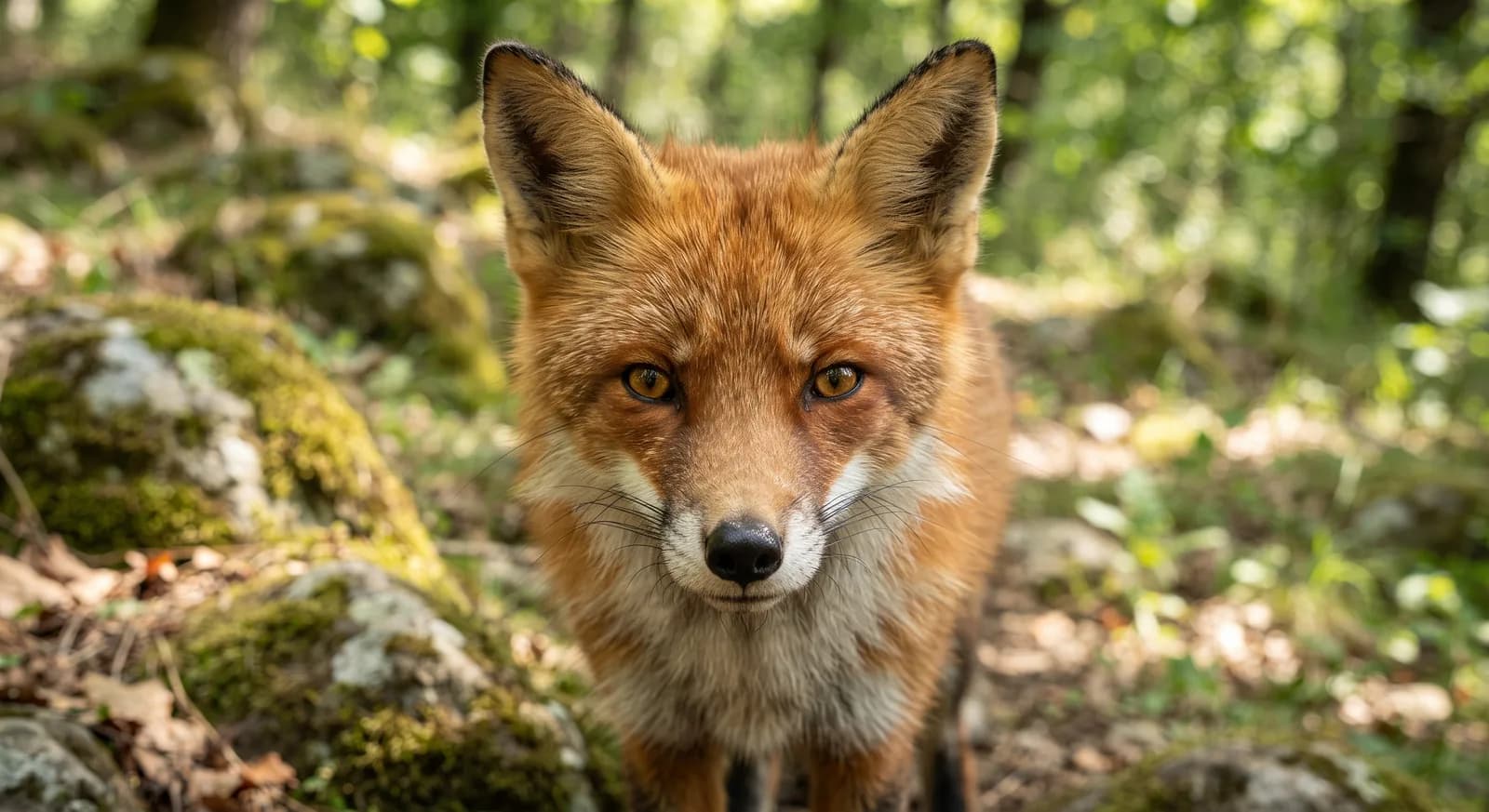
Red Fox
Vulpes vulpes
Great Green Bush Cricket
Tettigonia viridissima
Common Garden Snail
Cornu aspersum
Mole Cricket
Gryllotalpa gryllotalpa
Common Earwig
Forficula auricularia
Keep exploring
Based on what we already know about vulgar slug.
Comments
Share an experience, a fun fact or a tip for seeing the vulgar slug.
Be the first to comment.