One of the 2 grasshoppers on WAnimals
Insects · Orthoptera · Tettigoniidae
Great Green Bush Cricket
Tettigonia viridissima
It has not yet been assessed against the IUCN criteria. See full glossary
A large green bush-cricket with extremely long antennae, longer than its own body, which identify it as a tettigoniid rather than a true grasshopper. It lives in bramble thickets and tall hedges, is an active predator of other insects, and its song — a continuous, strident churring — carries on for hours at dusk.
Size
up to 4.2 cm
Diet
Omnivore
Combines animal and plant food depending on availability.
Activity
Nocturnal
Active mainly at night.
Social structure
Solitary
Lives and hunts alone, joining others only to breed.
Sighting difficulty
Unknown
Fun facts
- Its ears are on the tibiae of the front legs, in the form of two slits leading to tympanic membranes.
- Despite looking like a peaceable herbivore, it hunts caterpillars, flies and other insects, and can bite hard if held.
- The female carries a long, sabre-shaped ovipositor with which she inserts the eggs into the soil, and which is often mistaken for a sting.
- It is not a grasshopper but a long-horned relative, a tettigoniid, and those extremely fine antennae longer than the body are the trait that separates it from the true grasshoppers.
- It hears through its legs: its tympanal organs are on the front tibiae, not on the abdomen as in grasshoppers.
- The male sings by rubbing his forewings together, with a file and a scraper, and his stridulation is a continuous, penetrating buzz that can be heard more than a hundred metres away on summer nights.
- It is omnivorous and above all predatory: it hunts caterpillars, flies and other insects, and bites hard if handled.
- The female has a long, curved, sabre-shaped ovipositor with which she inserts her eggs into the soil; it is not a sting and she does not sting.
- Its eggs can spend more than one winter in diapause before hatching.
Life cycle & biology
- Skeleton type
- Invertebrate - chitin exoskeleton (insect)
- Habitat & environment
- Bramble thickets, hedges, tall grassland and field margins
Sources consulted: Ragge y Reynolds, The Songs of the Grasshoppers and Crickets of Western Europe; Buglife; Fauna Ibérica
Where to find it
See its range on the interactive mapBest time: From July to October, singing from bushes at dusk
Where to watch it
Parques y spots de buceo donde se ha documentado esta especie — se muestran 10 de 136 documentados.
Related species
Other species in the catalogue with the most in common with Great Green Bush Cricket — same habitat, park, country, tags or family.
Common Hamster
Cricetus cricetus
 Least Concern
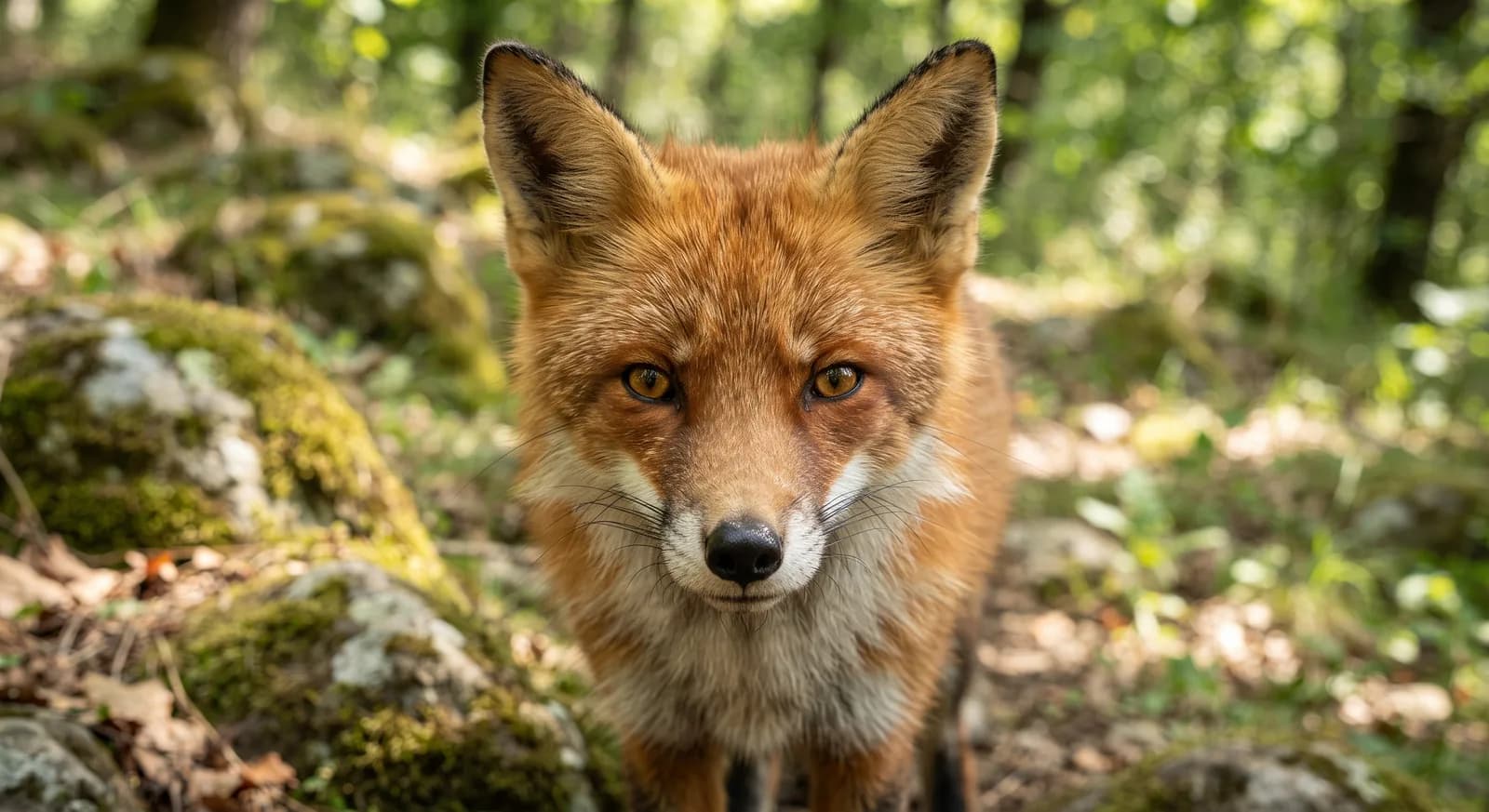
Red Fox
Vulpes vulpes
Sacred Scarab
Scarabaeus sacer
Death's-head Hawk-moth
Acherontia atropos
Dung Beetle
Onthophagus taurus
Pale Giant Horsefly
Tabanus bovinus
Keep exploring
Based on what we already know about great green bush cricket.
Comments
Share an experience, a fun fact or a tip for seeing the great green bush cricket.
Be the first to comment.