Insects · Diptera · Tabanidae
Pale Giant Horsefly
Tabanus bovinus
It has not yet been assessed against the IUCN criteria. See full glossary
A large, robust horsefly with huge eyes crossed by iridescent bands and a fast, noisy flight. The males take nectar; the females need blood and do not pierce the skin like a mosquito but cut it with scissor-like mouthparts and lap up the blood that wells out.
Size
up to 2.5 cm
Diet
Omnivore
Combines animal and plant food depending on availability.
Activity
Diurnal
Active mainly during the day.
Social structure
Solitary
Lives and hunts alone, joining others only to breed.
Sighting difficulty
Unknown
Fun facts
- Its bite hurts precisely because it tears rather than pierces, and the wound goes on bleeding because of the anticoagulants in its saliva.
- It homes in on its victims by carbon dioxide, heat and movement, and will chase a running horse or person for tens of metres.
- Its larvae are predatory and live in waterlogged soil, where they hunt earthworms and other larvae.
- Its bite is lacerating in the literal sense: instead of a fine stylet, it has scissor-like mouthparts that slice the skin, and it then laps up the blood that flows. That is why it hurts far more than a mosquito's.
- Only the females bite, and only to mature their eggs; the males sip nectar and cannot bite.
- It locates cattle by carbon dioxide, heat, movement and dark surfaces. That last detail explains why zebras are studied so much: the stripes appear to make it harder for horseflies to land.
- It flies very fast, at up to about 50 km/h, and pursues moving prey, which makes it hard to dodge.
- The wound keeps bleeding after the bite, because its saliva contains anticoagulants, and that favours the mechanical transmission of pathogens between animals.
- Its larvae are predatory and live in damp soils, where they hunt earthworms and other invertebrates.
Life cycle & biology
- Skeleton type
- Invertebrate - chitin exoskeleton (insect)
- Habitat & environment
- Damp meadows, riverbanks and grazed pasture in Europe
Sources consulted: Buglife; Caro et al. (2019), PLOS ONE; Krčmar, trabajos sobre Tabanidae
Where to find it
See its range on the interactive mapBest time: Hot, muggy summer days, near livestock and water
Where to watch it
Parques y spots de buceo donde se ha documentado esta especie — se muestran 10 de 77 documentados.
Related species
Other species in the catalogue with the most in common with Pale Giant Horsefly — same habitat, park, country, tags or family.
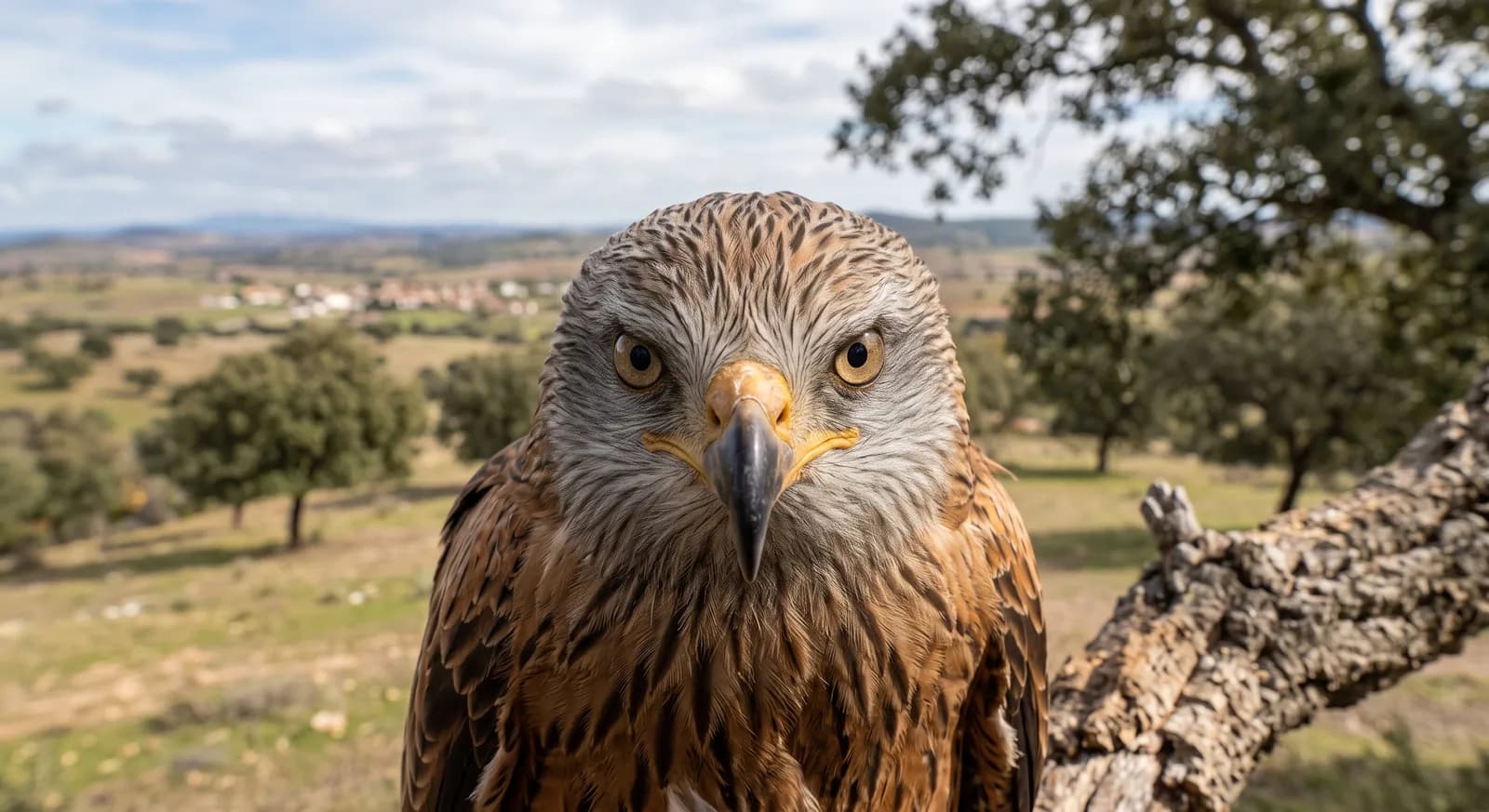 Least Concern
Red Kite
Milvus milvus
Common Chaffinch
Fringilla coelebs
European Robin
Erithacus rubecula
Sacred Scarab
Scarabaeus sacer
Peacock
Aglais io
Keep exploring
Based on what we already know about pale giant horsefly.
Comments
Share an experience, a fun fact or a tip for seeing the pale giant horsefly.
Be the first to comment.