One of the 11 snails on WAnimals
Gastropods · Stylommatophora · Succineidae
Large Amber Snail
Succinea putris
The species is abundant and widely distributed; it faces no significant short-term risk. See full glossary
A land snail with an amber shell, very thin and translucent, which climbs the rushes, reeds and grasses of damp places in Europe. Its body is too large to withdraw completely into the shell. It feeds on soft plants and plant debris.
Size
up to 2.4 cm
Lifespan
2 years
Diet
Herbivore
Feeds mainly on plants.
Social structure
Solitary
Lives and hunts alone, joining others only to breed.
Sighting difficulty
Easy
Fun facts
- It is the host of the fluke Leucochloridium paradoxum, whose larvae invade the snail's tentacles and turn them into two green and red swellings that pulse like caterpillars so that birds will eat them and complete the parasite's cycle.
- The parasitised snail changes its behaviour: instead of hiding, it exposes itself on sunlit leaves, where birds spot it easily.
- This is the zombie snail, and its story is among the most cited in parasitology. The trematode Leucochloridium paradoxum infects it and colonises its tentacles, forming swollen sacs with green and brown bands that pulse rhythmically and mimic a caterpillar.
- And it does not stop there: the parasite manipulates the snail's behaviour. Infected snails abandon the shade, climb to the high, exposed parts of the vegetation and come out into full daylight — precisely the opposite of what a healthy snail would do.
- The target is a bird. The bird sees the pulsating tentacles, mistakes them for caterpillars and eats them, and the parasite completes its cycle in the bird's gut, from where its eggs pass out with the droppings and go on to infect more snails.
- The snail usually survives and regenerates its tentacles, which allows the parasite to repeat the operation.
- Its shell is thin, translucent and amber-coloured — hence its name.
- Despite living at the water's edge, it is a terrestrial pulmonate snail, not an aquatic one.
Life cycle & biology
- Skeleton type
- Invertebrate - external calcareous shell (mollusc)
- Habitat & environment
- Marsh vegetation on riverbanks, marshes and waterlogged meadows
Sources consulted: Wesołowska y Wesołowski (2014), Journal of Zoology; Lewis, trabajos sobre Leucochloridium; Fauna Europaea
Where to find it
See its range on the interactive mapRelated species
Other species in the catalogue with the most in common with Large Amber Snail — same habitat, park, country, tags or family.
Black Grouse
Lyrurus tetrix
 Least Concern
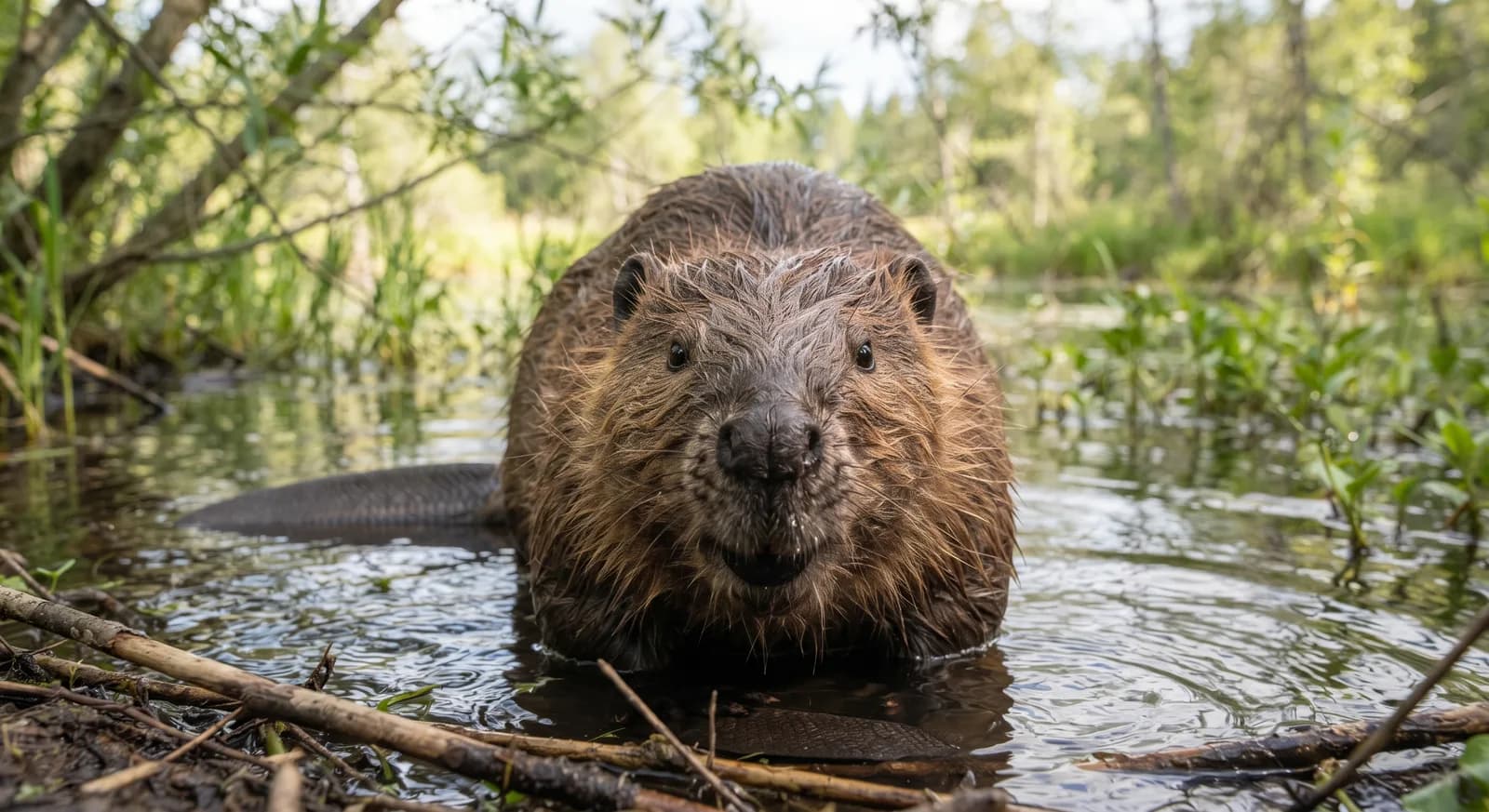
Eurasian Beaver
Castor fiber
 Least Concern
Mute Swan
Cygnus olor
Whooper Swan
Cygnus cygnus
Canada Goose
Branta canadensis
 Least Concern
Greylag Goose
Anser anser
Keep exploring
Based on what we already know about large amber snail.
Comments
Share an experience, a fun fact or a tip for seeing the large amber snail.
Be the first to comment.