One of the 5 swans on WAnimals
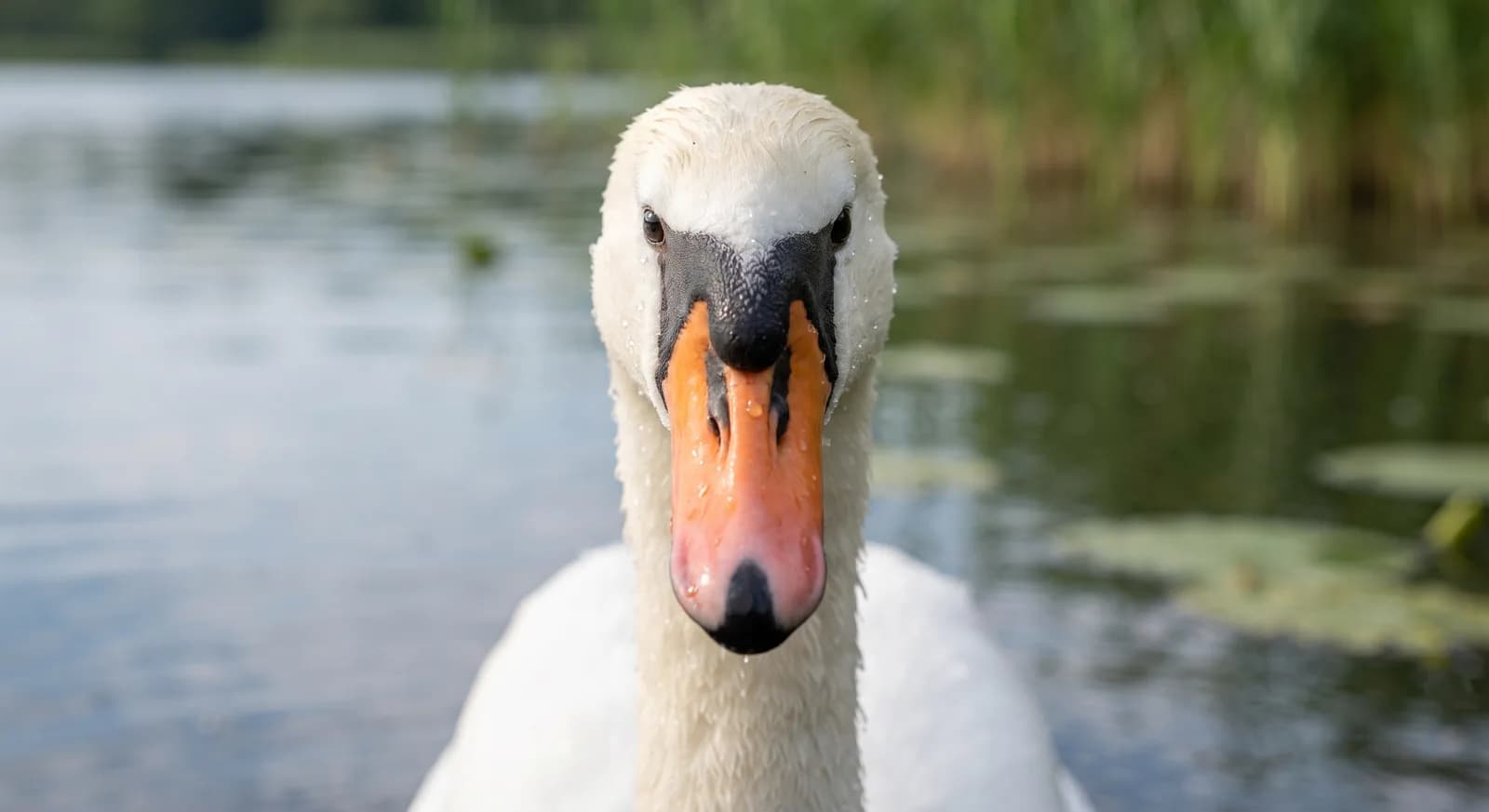
Birds · Anseriformes · Anatidae
Mute Swan
Cygnus olor
The species is abundant and widely distributed; it faces no significant short-term risk. See full glossary
It is one of the heaviest flying birds in the world. Contrary to popular belief, established pairs do not always stay together for good, though they do breed more successfully when they do.
Weight
6.6 kg – 12 kg
Size
1.4 m – 1.6 m
Lifespan
15 years
Diet
Herbivore
Feeds mainly on plants.
Activity
Diurnal
Active mainly during the day.
Social structure
In pairs
Usually lives in pairs, sometimes for life.
Sighting difficulty
Easy
Fun facts
- It is one of the heaviest flying birds in the world.
- Contrary to popular belief, pairs do not always stay together for life.
- It can swim and feed itself shortly after hatching.
- reproducciónIt forms pair bonds that usually last for life, and in a few documented cases two females have raised cygnets together after taking over a nest.
Life cycle & biology
- Skeleton type
- Vertebrate - pneumatised bony skeleton (bird)
- Habitat & environment
- Lakes, ponds, rivers and shallow sheltered bays of Europe and Asia; introduced to North America
- Birth weight
- Covered in grey-brown down at hatching; exact weight not found as a precise figure
- Size at birth
- Able to swim and feed itself soon after hatching
- Sexual maturity
- 2-3 years (effective breeding usually from the third year)
- Gestation / incubation
- 34-41 days (usual reference 36-38 days)
- Litter / clutch size
- 2 to 12 eggs per clutch (most commonly 5-7)
- Lifespan in captivity
- Anecdotal cases of up to 70 years in captivity
Sources consulted: NHPBS NatureWorks; Minnesota DNR; AnAge (genomics.senescence.info); Animal Diversity Web; Animalia.bio; BirdsGlobe; IUCN Global Invasive Species Database
Where to find it
See its range on the interactive mapWhere to watch it
Parques y spots de buceo donde se ha documentado esta especie — se muestran 10 de 132 documentados.
Related species
Other species in the catalogue with the most in common with Mute Swan — same habitat, park, country, tags or family.
Eurasian Wigeon
Mareca penelope
Gadwall
Mareca strepera
Whooper Swan
Cygnus cygnus
Goosander
Mergus merganser
Canada Goose
Branta canadensis
Red-crested Pochard
Netta rufina
Keep exploring
Based on what we already know about mute swan.
Comments
Share an experience, a fun fact or a tip for seeing the mute swan.
Be the first to comment.