One of the 7 scorpions on WAnimals
Arachnids · Scorpiones · Scorpionidae
Common Emperor Scorpion
Pandinus imperator
It has not yet been assessed against the IUCN criteria. See full glossary
The emperor scorpion is a species of the order Scorpiones belonging to the family Scorpionidae.
Size
15 cm – 20 cm
Lifespan
8 years
Diet
Carnivore
Feeds mainly on other animals.
Activity
Nocturnal
Active mainly at night.
Social structure
Solitary
Lives and hunts alone, joining others only to breed.
Sighting difficulty
Unknown
Fun facts
- It has been listed in CITES Appendix II since 1995, because demand from the pet trade once meant hundreds of thousands of animals were exported a year.
- It is one of the few scorpions with any social life: mothers and young may share a burrow, and family groups have been seen hunting together.
- The females give birth to live white young that climb onto their back, where they stay until the first moult.
- It is one of the largest scorpions in the world, at up to 20 cm and more than 30 grams, and at the same time one of the least dangerous: its venom is weak and it prefers to crush prey with its enormous pincers rather than use its sting.
- That contrast illustrates the general rule of scorpions: large pincers and a thin tail indicate little venom, and small pincers with a thick tail indicate the opposite.
- It is social, which is exceptional: it lives in family groups in which the mother and her young cohabit long after birth and sometimes hunt cooperatively.
- Its docility and its size have made it the most popular scorpion in the pet trade, and that demand took it onto Appendix II of CITES in 1995.
- It lives up to eight years, a long time for a terrestrial invertebrate.
- It detects its prey with the pectines, comb-shaped sensory organs on the underside of the abdomen, which it drags along the ground picking up chemicals and textures.
Life cycle & biology
- Skeleton type
- Invertebrate - chitin exoskeleton (arachnid)
- Habitat & environment
- Rainforest and savannah of West Africa; burrows and leaf litter
Sources consulted: https://es.wikipedia.org/wiki/Pandinus_imperator
Where to find it
See its range on the interactive mapWhere to watch it
Parques y spots de buceo donde se ha documentado esta especie — se muestran 10 de 14 documentados.
Related species
Other species in the catalogue with the most in common with Common Emperor Scorpion — same habitat, park, country, tags or family.
 Vulnerable
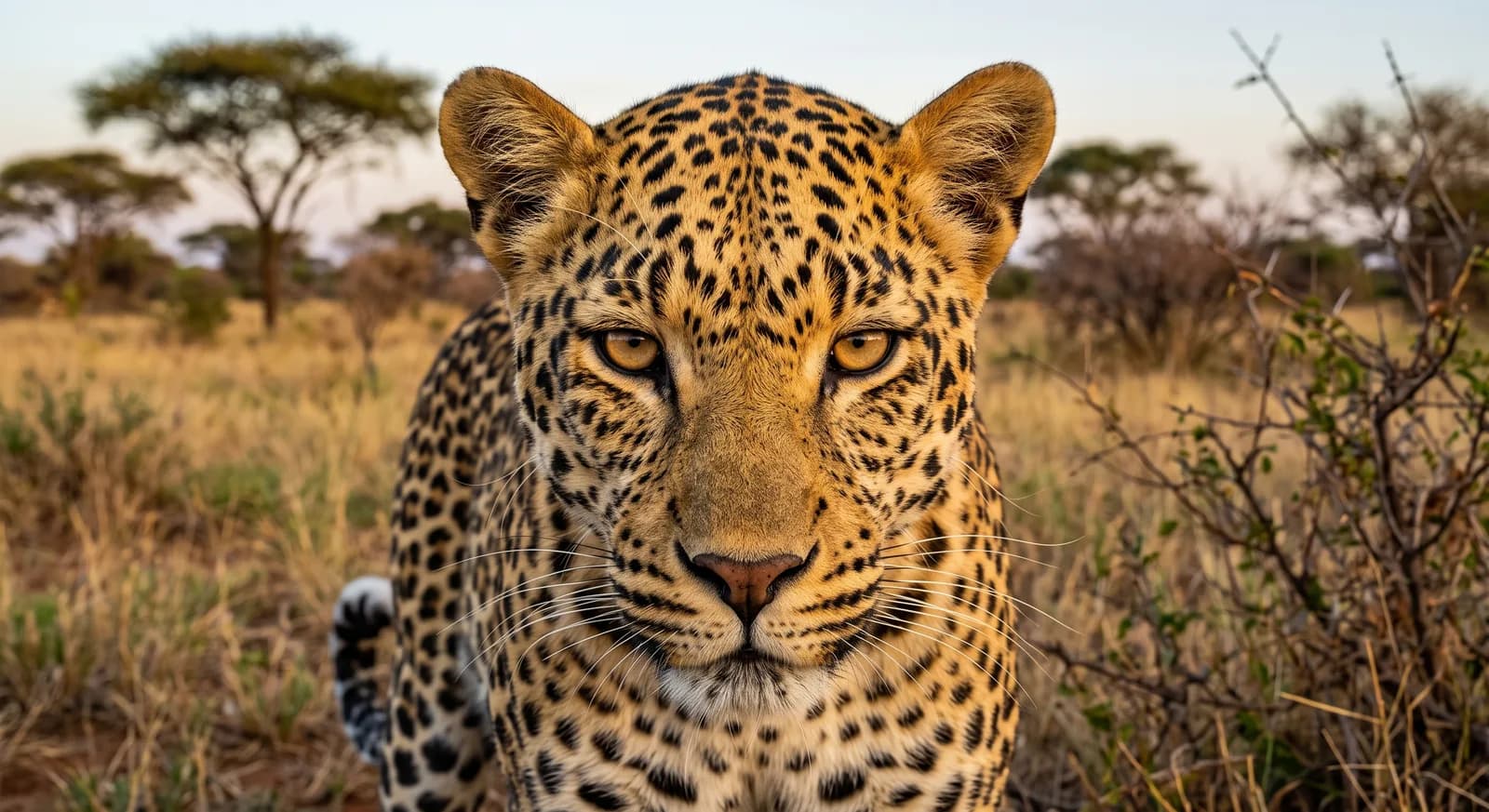
Leopard
Panthera pardus
African Dwarf Crocodile
Osteolaemus tetraspis
Gaboon Viper
Bitis gabonica
Giant Slippery Frog
Conraua goliath
African Golden Cat
Caracal aurata
Keep exploring
Based on what we already know about common emperor scorpion.
Comments
Share an experience, a fun fact or a tip for seeing the common emperor scorpion.
Be the first to comment.