One of the 2 terrapins on WAnimals
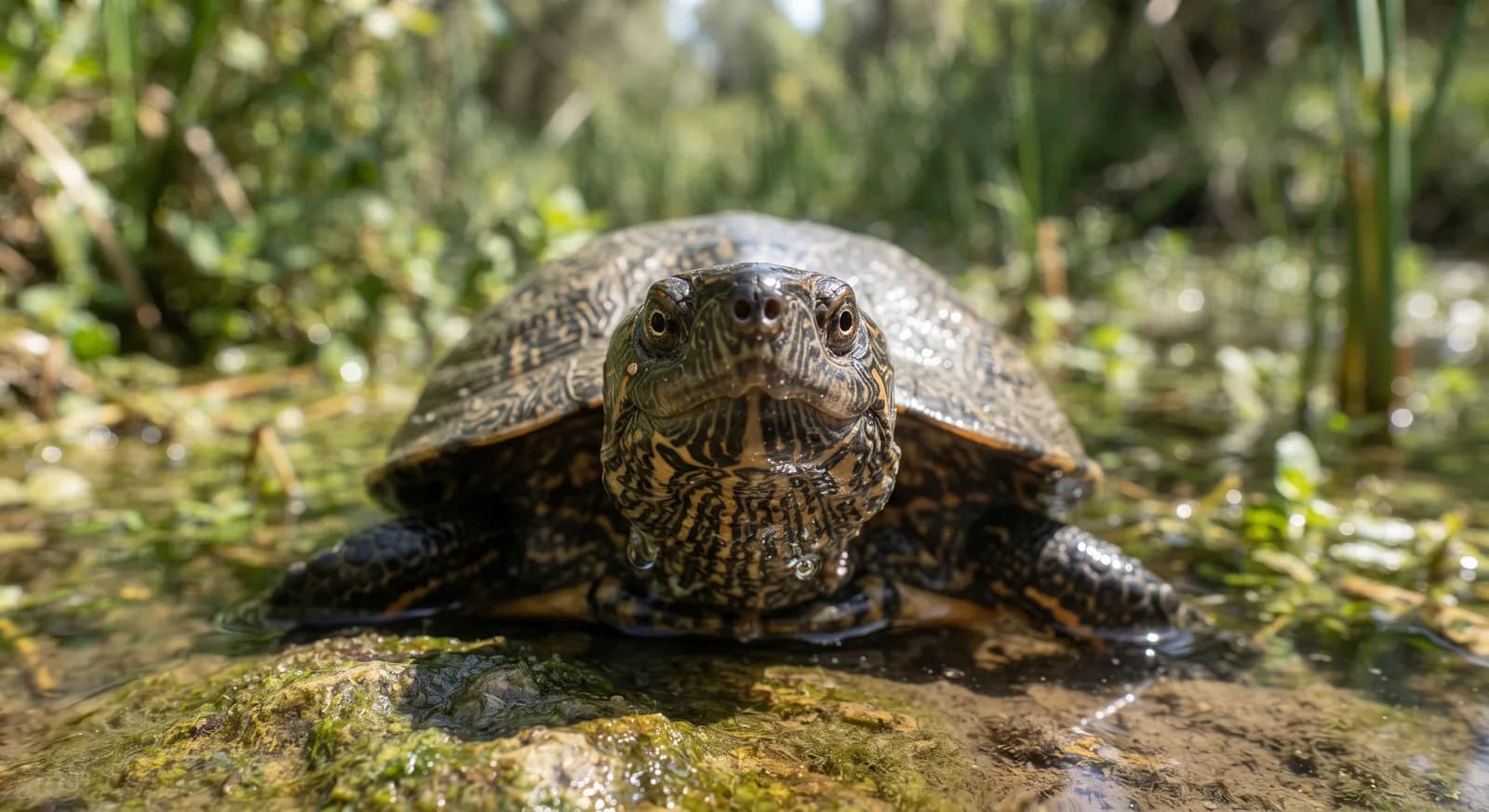
Reptiles · Testudines · Geoemydidae
Spanish Terrapin
Mauremys leprosa
It faces a high risk of extinction in the wild over the medium term. See full glossary
It can tolerate air temperatures of up to 47°C for two hours without harm, and its sex is determined by the temperature at which the eggs are incubated.
Weight
up to 756 g
Size
up to 24 cm
Lifespan
30 years
Diet
Omnivore
Combines animal and plant food depending on availability.
Activity
Irregular activity
Active at irregular times, by day or night depending on circumstances.
Social structure
Solitary
Lives and hunts alone, joining others only to breed.
Sighting difficulty
Moderate
Fun facts
- The temperature of the nest decides whether the hatchlings are male or female.
- It eats aquatic invertebrates and small fish, supplemented with water plants.
- It lives in rivers, lagoons and wetlands of the Iberian Peninsula, with a notable tolerance of brackish and polluted water.
Life cycle & biology
- Skeleton type
- Vertebrate - internal bony skeleton (reptile)
- Habitat & environment
- Rivers, lagoons and wetlands of the Iberian Peninsula, southern France and North Africa, with a notable tolerance of brackish and polluted water
- Birth weight
- 25-30 mm of carapace length at hatching
- Size at birth
- 25-30 mm of carapace length at hatching
- Sexual maturity
- Male: 5-7 years | Female: 7-9 years
- Gestation / incubation
- 55-108 days in Europe (25-30 days in African populations)
- Litter / clutch size
- 3 to 13 eggs per clutch (3.8-9.6 on average depending on the population), with up to 2 clutches a year
Sources consulted: IUCN TFTSG (Mediterranean Pond Turtle chapter); Moroccoherps.com; The Turtle Hub; Grokipedia (Leprosa); DOAJ (body size ectoparasitic study); AnAge (genomics.senescence.info)
Where to find it
See its range on the interactive mapBest time: From March to October, on sunny days, in rivers, ponds and reservoirs of southern and western Iberia; it tolerates murkier water than the European pond turtle.
Where to watch it
Parks and dive sites where this species has been documented.
Related species
Other species in the catalogue with the most in common with Spanish Terrapin — same habitat, park, country, tags or family.
Pond Slider
Trachemys scripta
Common Pochard
Aythya ferina
Water Rail
Rallus aquaticus
Common Tortoise
Testudo graeca
Grass Snake
Natrix natrix
 Vulnerable
Grayfish
Alopias vulpinus
How to help
The spanish terrapin is classified as vulnerable. Organizations such as UICN, WWF y Wildlife Conservation Society work specifically on its conservation and that of its habitat; looking into their programs is a good starting point if you want to get involved.
It's documented in 6 real protected areas — part of why protecting these places matters for its conservation.
Keep exploring
Based on what we already know about spanish terrapin.
Comments
Share an experience, a fun fact or a tip for seeing the spanish terrapin.
Be the first to comment.