One of the 2 mullets on WAnimals
Bony fish · Mugiliformes · Mugilidae
Thick-lipped Mullet
Chelon labrosus
It could become endangered in the near future if current threats go unchecked. See full glossary
The thick-lipped mullet — known in Spanish as muble, lisa or corcón — is a marine fish of the family Mugilidae, distributed along the north-eastern coast of the Atlantic, the Mediterranean, the North Sea, the Baltic and the Black Sea.
Weight
2.5 kg on average
Size
up to 75 cm
Lifespan
25 years
Diet
Omnivore
Combines animal and plant food depending on availability.
Sighting difficulty
Moderate
Fun facts
- It feeds by scraping mud and sediment with its very thick upper lip, taking in microscopic algae and detritus.
- It is catadromous: it lives in coastal and brackish waters and drops down to the sea to spawn.
Life cycle & biology
- Skeleton type
- Vertebrate - internal bony skeleton (bony fish)
- Habitat & environment
- Shallow, sheltered coasts, estuaries and harbours of the eastern Atlantic, the Mediterranean and the Black Sea, between 2 and 15 m; it regularly enters fresh water
- Sexual maturity
- 3 years
Sources consulted: https://es.wikipedia.org/wiki/Chelon_labrosus
Where to find it
See its range on the interactive mapWhere to watch it
Parques y spots de buceo donde se ha documentado esta especie — se muestran 20 de 131 documentados.
Related species
Other species in the catalogue with the most in common with Thick-lipped Mullet — same habitat, park, country, tags or family.
Haarder
Mugil cephalus
 Near Threatened
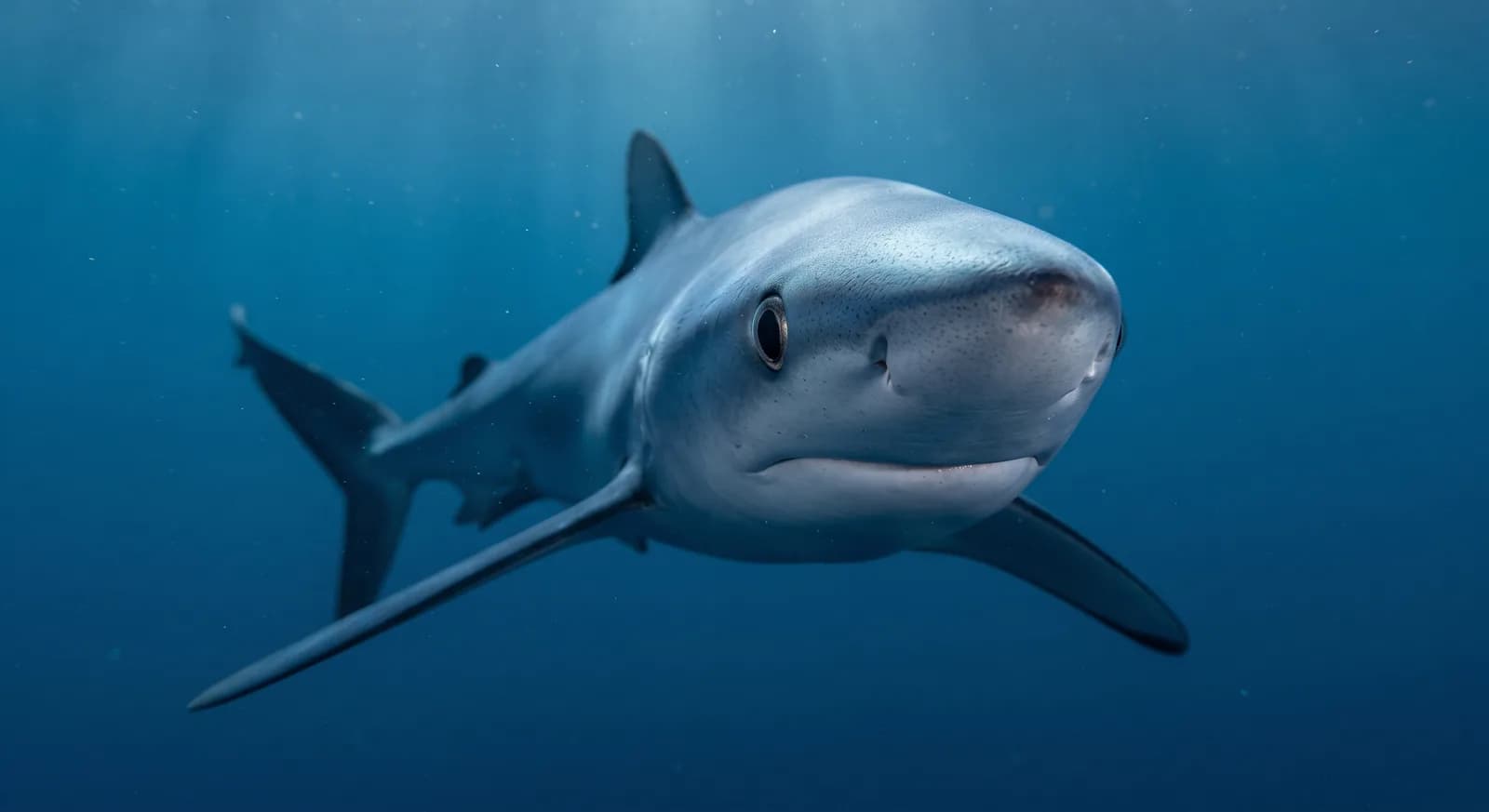
Blue Shark
Prionace glauca
Bluntnose Sixgill Shark
Hexanchus griseus
Thornback Ray
Raja clavata
Common Stingray
Dasyatis pastinaca
Rabbitfish
Chimaera monstrosa
Keep exploring
Based on what we already know about thick-lipped mullet.
Comments
Share an experience, a fun fact or a tip for seeing the thick-lipped mullet.
Be the first to comment.