One of the 15 flies on WAnimals
Insects · Diptera · Muscidae
House-fly
Musca domestica
The species is abundant and widely distributed; it faces no significant short-term risk. See full glossary
It can mechanically transmit more than 100 pathogens that cause human disease, by landing first on decaying matter and then on food. It has spread to every inhabited landmass on the planet.
Size
0.6 cm – 0.7 cm
Diet
Omnivore
Combines animal and plant food depending on availability.
Activity
Diurnal
Active mainly during the day.
Social structure
Solitary
Lives and hunts alone, joining others only to breed.
Sighting difficulty
Easy
Fun facts
- It can mechanically transmit more than 100 different pathogens.
- Its whole cycle from egg to adult can take only 7 to 10 days in ideal conditions.
- It feeds by suction and cannot take in solid food.
- It cannot chew: it only ingests liquids. It regurgitates saliva and digestive enzymes onto solid food, dissolves it and absorbs the result with a spongy proboscis. That is why it is so effective at transmitting pathogens.
- More than a hundred pathogenic organisms have been attributed to it, carried on its legs, body and digestive tract, among them those of salmonellosis, dysentery, cholera and tuberculosis.
- It tastes with its feet: its chemoreceptors are on the tarsi, so it knows whether something is edible the moment it lands on it.
- Its life cycle is dizzyingly fast: from egg to adult in under a week in warm weather, and a female can lay several hundred eggs. Under ideal conditions a single pair would leave an astronomical number of descendants in one season.
- Its compound eyes have some 4,000 facets and a visual refresh rate three times the human one, and that is what makes it so hard to swat: it sees the fly swatter coming in slow motion.
- The larva is now mass-reared as a protein source for animal feed and as an agent for treating organic waste.
Life cycle & biology
- Skeleton type
- Invertebrate - chitin exoskeleton (insect)
- Habitat & environment
- Practically cosmopolitan, closely tied to human settlement, farms and decaying organic matter the world over
- Birth weight
- A white egg roughly 1.2 mm long
- Size at birth
- A fast-growing maggot, 3-9 mm on hatching and 7-12.7 mm in the final instar
- Sexual maturity
- Reached once metamorphosis is complete, between 4 and 12 days after emerging as an adult
- Gestation / incubation
- Egg: 8-24 hours | Larva: 3-7 days | Pupa: 2-6 days (a full cycle as short as 7-10 days in ideal conditions)
- Litter / clutch size
- 75 to 150 eggs per clutch, and 350-1,000 in a female's lifetime
Sources consulted: Koppert Biocontrol; UNH Extension fact sheet; LSU AgCenter; Animal Hype; ScienceInsights; Fly-Trick; Virginia Tech Extension; PMC (insect growth regulator resistance study)
Where to find it
See its range on the interactive mapRelated species
Other species in the catalogue with the most in common with House-fly — same habitat, park, country, tags or family.
Broad-tailed Hummingbird
Selasphorus platycercus
 Least Concern
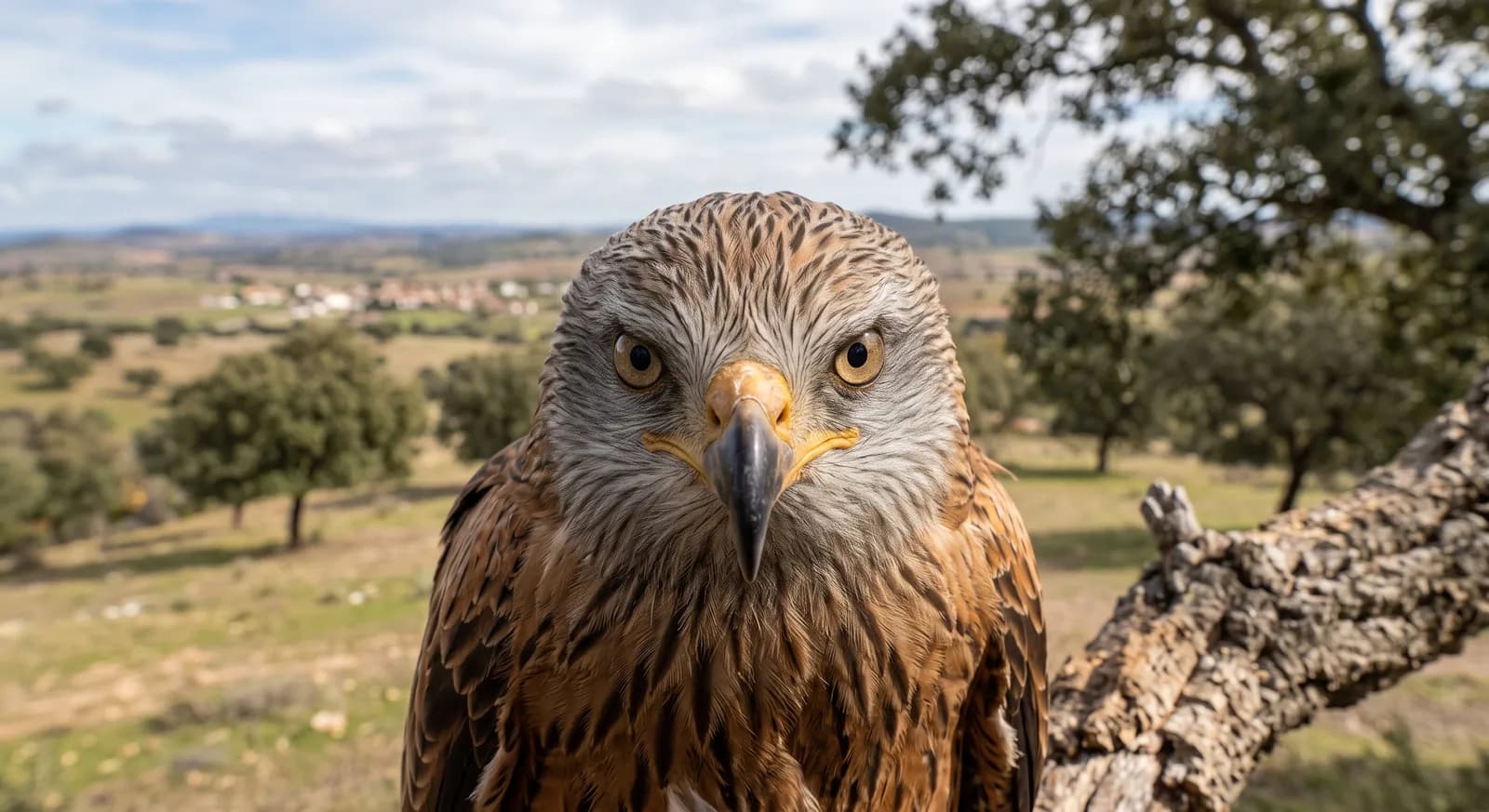
Red Kite
Milvus milvus
Common Chaffinch
Fringilla coelebs
European Robin
Erithacus rubecula
Red Admiral
Vanessa atalanta
Peacock
Aglais io
Keep exploring
Based on what we already know about house-fly.
Comments
Share an experience, a fun fact or a tip for seeing the house-fly.
Be the first to comment.