One of the 24 beetles on WAnimals
Insects · Coleoptera · Dytiscidae
Great Diving Beetle
Dytiscus marginalis
It has not yet been assessed against the IUCN criteria. See full glossary
A large diving beetle of still European waters, with an oval, greenish-black body edged in yellow. It swims by driving itself along with flattened hind legs fringed with hairs, which it moves together like oars. Both the adult and the larva are voracious predators of tadpoles, insects and fish fry.
Size
up to 3.5 cm
Diet
Carnivore
Feeds mainly on other animals.
Activity
Nocturnal
Active mainly at night.
Social structure
Solitary
Lives and hunts alone, joining others only to breed.
Sighting difficulty
Unknown
Fun facts
- fisiologíaIt stores a bubble of air under its wing cases, which lets it breathe underwater for long spells while it hunts small invertebrates.
- Its larva, known as the water tiger, has hollow jaws with which it injects digestive enzymes into its prey and then sucks out the liquefied tissue.
- It flies between ponds at night, and sometimes mistakes the gleam of a wet roof or a dark car for the surface of the water.
- It breathes from a tank. It rises to the surface back first, pokes the tip of its abdomen out and stores a bubble of air beneath its elytra, which serves it both as a reserve and as a physical gill: oxygen from the water diffuses into the bubble while it dives.
- It is a fearsome predator for its size: it attacks tadpoles, insect larvae and small fish, and can kill prey larger than itself.
- The larva is even more voracious and is known as the water tiger. It has hollow mandibles through which it injects digestive enzymes and then sucks up the liquefied prey.
- The male's front legs are fitted with suckers with which it grips the female's smooth carapace during mating; she usually has grooved elytra, and it has been proposed that those grooves are a counter-adaptation to make this harder.
- It flies well, mostly at night, and colonises new ponds. It sometimes mistakes shiny surfaces such as car roofs or greenhouses for water and lands on them.
Life cycle & biology
- Skeleton type
- Invertebrate - chitin exoskeleton (insect)
- Habitat & environment
- Ponds, pools and still, vegetated backwaters
Sources consulted: Natural History Museum de Londres; Buglife; Bergsten y Miller (2007), PLOS ONE
Where to find it
See its range on the interactive mapWhere to watch it
Parques y spots de buceo donde se ha documentado esta especie — se muestran 10 de 140 documentados.
Related species
Other species in the catalogue with the most in common with Great Diving Beetle — same habitat, park, country, tags or family.
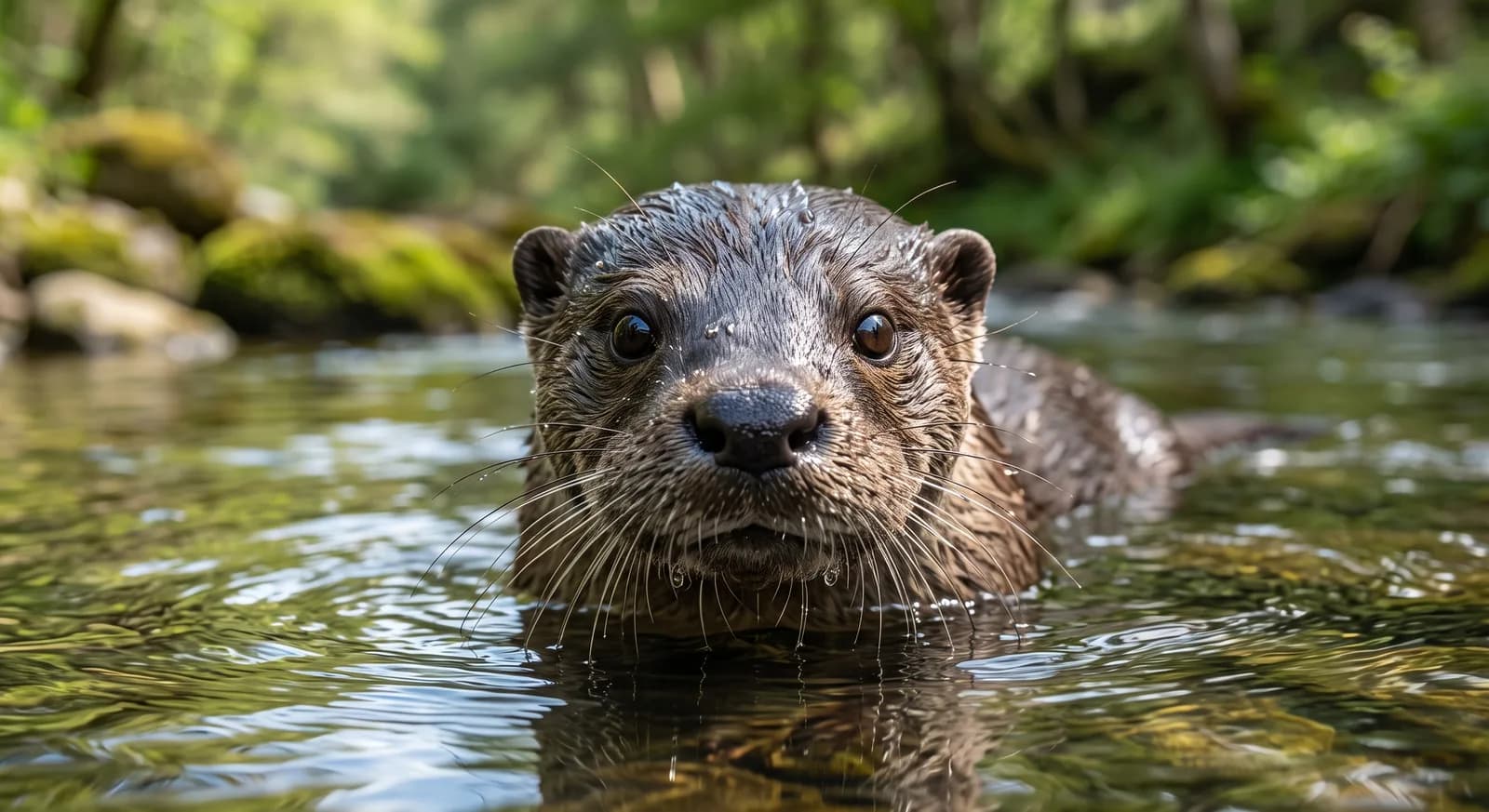 Near Threatened
European Otter
Lutra lutra
American Bullfrog
Lithobates catesbeianus
Common Tree Frog
Hyla arborea
Great Crested Newt
Triturus cristatus
Smooth Newt
Lissotriton vulgaris
Sharp-ribbed Salamander
Pleurodeles waltl
Keep exploring
Based on what we already know about great diving beetle.
Comments
Share an experience, a fun fact or a tip for seeing the great diving beetle.
Be the first to comment.