One of the 10 colubrid snakes on WAnimals
Reptiles · Squamata · Colubridae
Viperine Snake
Natrix maura
The species is abundant and widely distributed; it faces no significant short-term risk. See full glossary
Despite its name and its superficial resemblance to the European vipers, it is entirely harmless and non-venomous; the likeness is a striking case of defensive (Batesian) mimicry.
Size
65 cm – 90 cm
Lifespan
8 years
Diet
Carnivore
Feeds mainly on other animals.
Activity
Diurnal
Active mainly during the day.
Social structure
Solitary
Lives and hunts alone, joining others only to breed.
Sighting difficulty
Easy
Fun facts
- It has a zigzag pattern down its back much like a true viper's.
- It catches fish and amphibians — frogs, toads and tadpoles — in the water.
- It lives in rivers, ponds and brackish water of south-western Europe and north-western Africa.
Life cycle & biology
- Skeleton type
- Vertebrate - internal bony skeleton (reptile)
- Habitat & environment
- Rivers, ponds and brackish water of south-western Europe and north-western Africa
- Birth weight
- Tiny at hatching
- Size at birth
- Tiny at hatching
- Sexual maturity
- Male: ~3 years | Female: ~5 years
- Gestation / incubation
- 6 weeks a 3 months
- Litter / clutch size
- 2 to 27 eggs per clutch (6-7 on average, rising with the female's size)
Sources consulted: A-Z Animals; ResearchGate (Viperine Snake species account); Wildside Holidays; Fishipedia; Wikipedia (Natrix maura); Animalia.bio
Where to find it
See its range on the interactive mapWhere to watch it
Parques y spots de buceo donde se ha documentado esta especie — se muestran 10 de 59 documentados.
Related species
Other species in the catalogue with the most in common with Viperine Snake — same habitat, park, country, tags or family.
Grass Snake
Natrix natrix
Smooth Snake
Coronella austriaca
Aesculapian Snake
Zamenis longissimus
Horseshoe Whip Snake
Hemorrhois hippocrepis
Four-lined Snake
Elaphe quatuorlineata
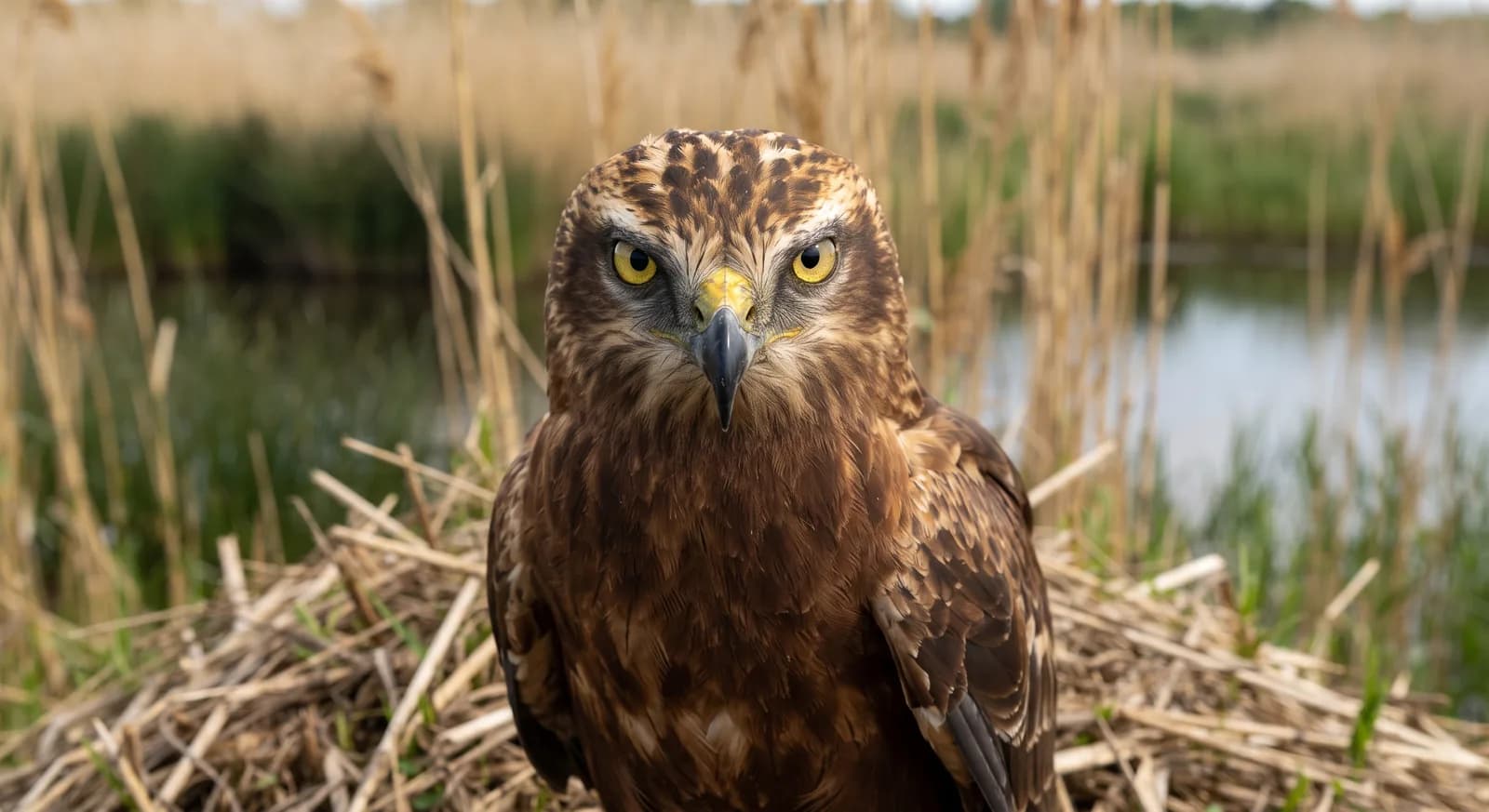 Least Concern
Western Marsh Harrier
Circus aeruginosus
Keep exploring
Based on what we already know about viperine snake.
Comments
Share an experience, a fun fact or a tip for seeing the viperine snake.
Be the first to comment.