One of the 2 shrews on WAnimals
Mammals · Eulipotyphla · Soricidae
Eurasian Water Shrew
Neomys fodiens
The species is abundant and widely distributed; it faces no significant short-term risk. See full glossary
It is the only European shrew specialised in hunting underwater, helped by stiff bristles on its feet and tail that act as makeshift fins. Its saliva carries a toxin able to subdue prey far larger than itself.
Weight
12 g – 18 g
Size
6 cm – 10 cm
Lifespan
1 years
Diet
Piscivore
Feeds mainly on fish.
Activity
Nocturnal
Active mainly at night.
Social structure
Solitary
Lives and hunts alone, joining others only to breed.
Sighting difficulty
Easy
Fun facts
- It is the only European shrew specialised in hunting underwater.
- Its venomous saliva can subdue prey such as voles, far larger than itself.
- It can stay under for dives of up to 20 seconds.
Life cycle & biology
- Skeleton type
- Vertebrate - internal bony skeleton (mammal)
- Habitat & environment
- Banks of freshwater rivers, streams and ponds across much of Eurasia, as far as the Russian Pacific and North Korea
- Birth weight
- ~1 gram
- Size at birth
- Tiny and helpless at birth
- Sexual maturity
- 6-8 months
- Gestation / incubation
- 20-24 days
- Litter / clutch size
- 3 to 15 young per litter (most commonly 5-8), up to 2-3 litters per year
Sources consulted: Animal Diversity Web; World Species; Wildlife Trusts; Wildlife Online; Somerset Mammal Group; Wikipedia; Animalia.bio; SureScreen Scientifics
Where to find it
See its range on the interactive mapBest time: All year round in clean-water streams and along their banks; it is glimpsed diving, surrounded by the air bubbles trapped in its fur.
Where to watch it
Parques y spots de buceo donde se ha documentado esta especie — se muestran 10 de 196 documentados.
Related species
Other species in the catalogue with the most in common with Eurasian Water Shrew — same habitat, park, country, tags or family.
Pygmy White-toothed Shrew
Suncus etruscus
Eurasian Common Shrew
Sorex araneus
Greater White-toothed Shrew
Crocidura russula
Polecat
Mustela putorius
American Mink
Neovison vison
 Least Concern
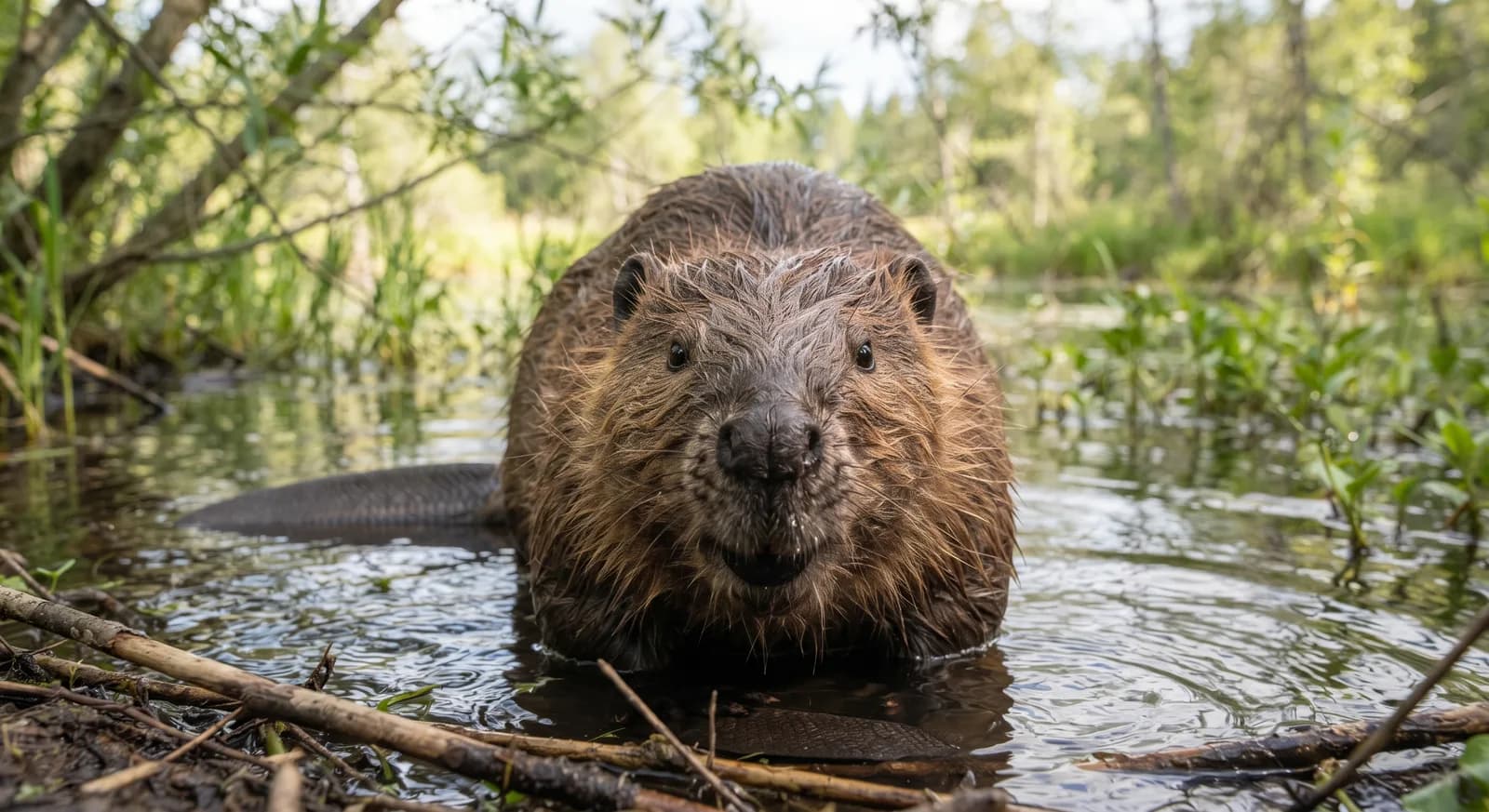
Eurasian Beaver
Castor fiber
Keep exploring
Based on what we already know about eurasian water shrew.
Comments
Share an experience, a fun fact or a tip for seeing the eurasian water shrew.
Be the first to comment.