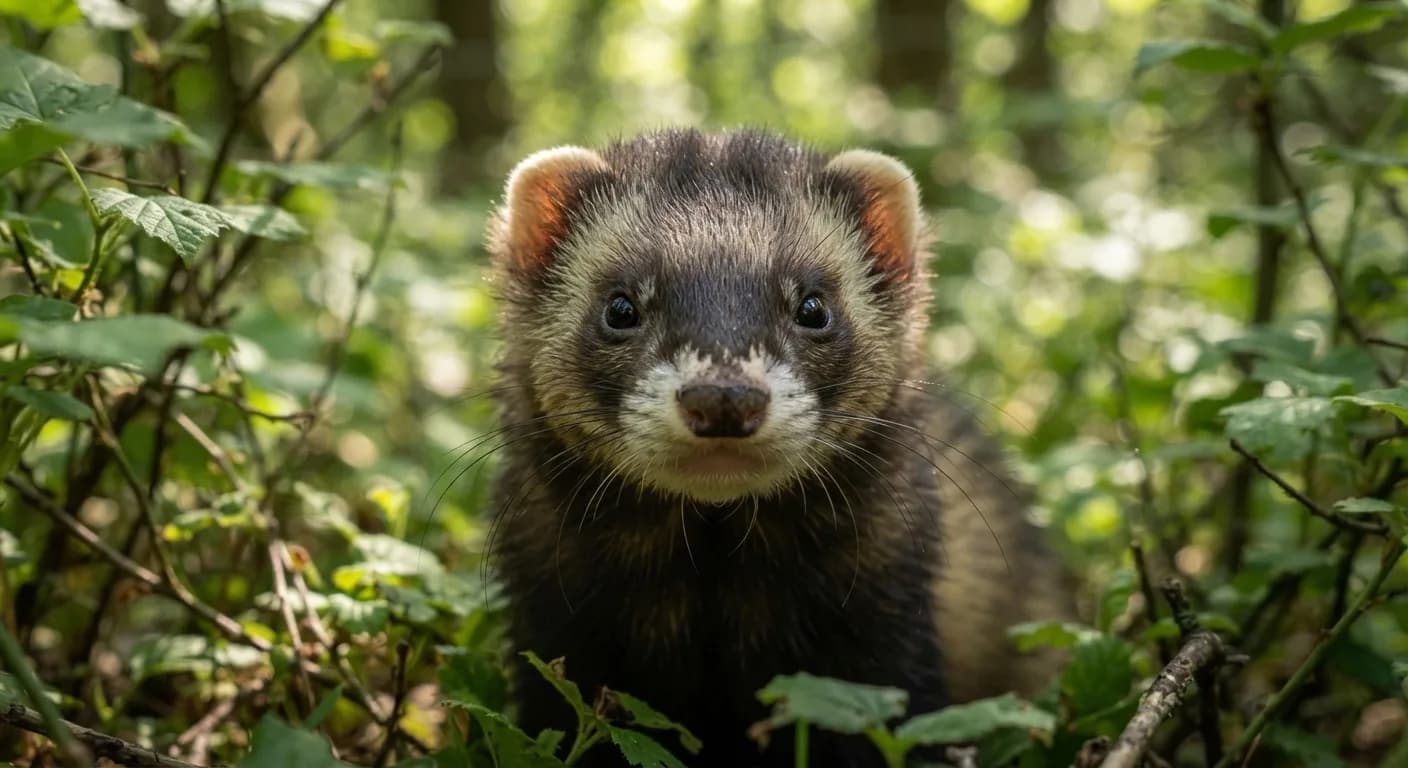
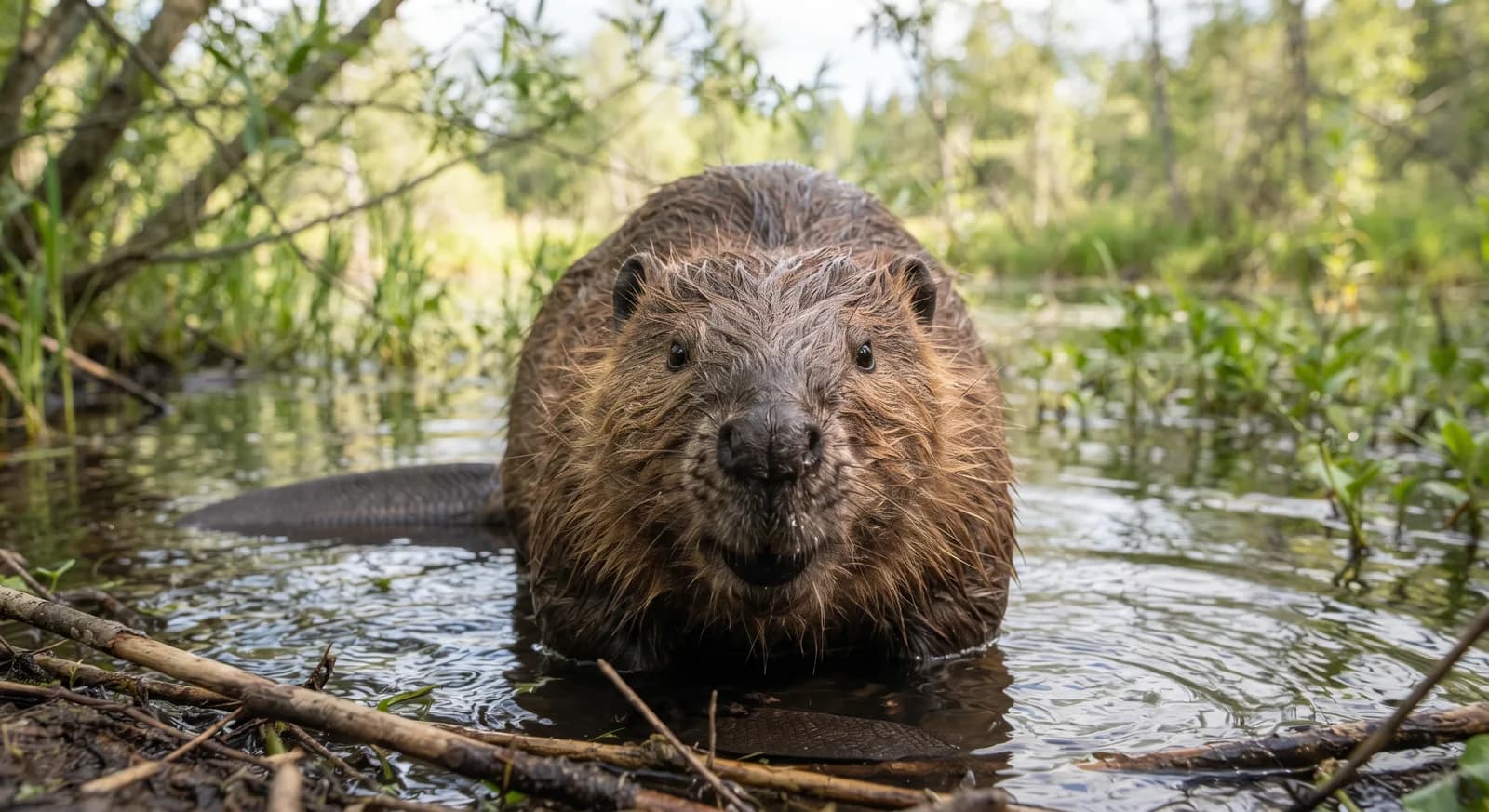
One of the 2 beavers on WAnimals
Mammals · Rodentia · Castoridae
Castor fiber
The species is abundant and widely distributed; it faces no significant short-term risk.
It is monogamous, forming stable pairs that breed together year after year — unusual among rodents. Its dams and lodges transform river ecosystems profoundly.
Weight
12.5 kg – 38 kg
Size
74 cm – 90 cm
Life expectancy
9 years
Diet
Herbivore
Feeds mainly on plants.
Activity
Nocturnal
Active mainly at night.
Social structure
In pairs
Usually lives in pairs, sometimes for life.
Sighting difficulty
Easy
AI-generated images: illustrations, not photographs.
Sources consulted: A-Z Animals; Animal Diversity Web; AnAge (genomics.senescence.info); Wildlife Online; Mammal Society; PMC (fetal development study); PMC (haematology study)
Parks and dive sites where this species has been documented — showing 10 of 20.
Other species in the catalogue with the most in common with Eurasian Beaver — same habitat, park, country, tags or family.
Based on what we already know about eurasian beaver.
Share an experience, a fun fact or a tip for seeing the eurasian beaver.
Be the first to comment.
The pins mark the parks where its presence is documented.