One of the 2 terrapins on WAnimals
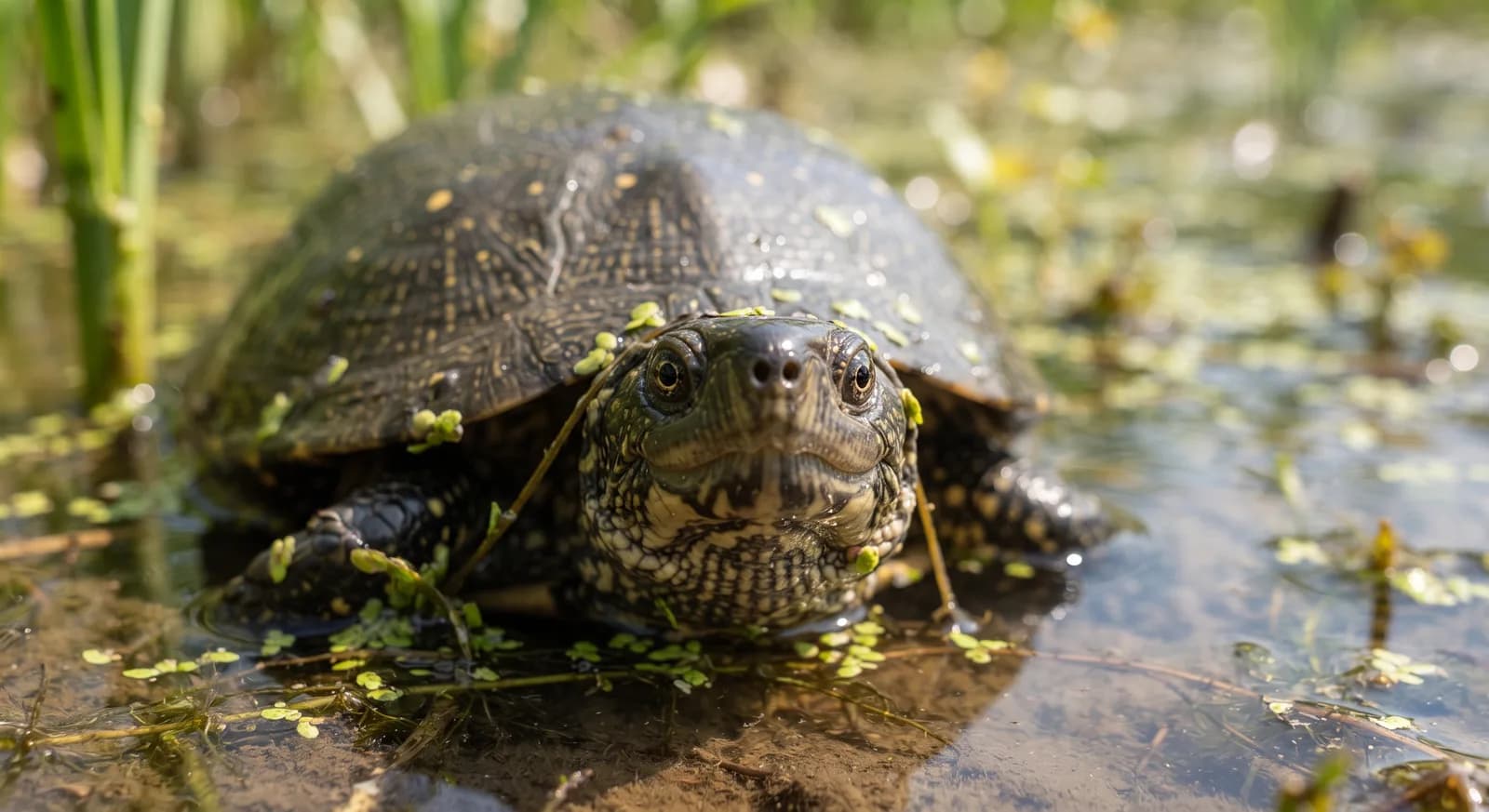
Reptiles · Testudines · Emydidae
European Pond Turtle
Emys orbicularis
It could become endangered in the near future if current threats go unchecked. See full glossary
It is one of the potentially longest-lived reptiles in Europe; it is considered biologically plausible that some individuals pass the century.
Size
12 cm – 38 cm
Lifespan
15 years
Diet
Omnivore
Combines animal and plant food depending on availability.
Activity
Irregular activity
Active at irregular times, by day or night depending on circumstances.
Social structure
Solitary
Lives and hunts alone, joining others only to breed.
Sighting difficulty
Moderate
Fun facts
- It feeds on aquatic invertebrates, small fish, amphibians and plant matter.
- It lives in the lakes, ponds, slow rivers and wetlands of much of Europe.
- One documented animal is said to have lived 120 years in a botanical garden in southern France, though the figure is not fully verified.
- fisiologíaIt can stay submerged for long stretches in winter, buried in mud with its metabolism slowed right down.
Life cycle & biology
- Skeleton type
- Vertebrate - internal bony skeleton (reptile)
- Habitat & environment
- Lakes, ponds, slow rivers and wetlands across much of Europe, with populations reaching into North Africa and western Asia
- Birth weight
- Hatches from an egg 15-25 mm long
- Size at birth
- Hatches from an egg 15-25 mm long
- Sexual maturity
- 5-6 years
- Gestation / incubation
- 90-100 days (some embryos overwinter inside the egg until the following spring)
- Litter / clutch size
- 8 to 10 eggs per clutch, with several clutches possible in a season
- Lifespan in captivity
- One documented animal lived 120 years in a botanical garden in southern France (a figure not verified with certainty)
Sources consulted: Cambridge Core (body size clutch size study); JungleDragon; ResearchGate (body size clutch size study); Animal Diversity Web; AnAge (genomics.senescence.info)
Where to find it
See its range on the interactive mapBest time: From March to October, on sunny days, when it basks on logs and along the banks of pools and slow-flowing streams.
Where to watch it
Parks and dive sites where this species has been documented.
Related species
Other species in the catalogue with the most in common with European Pond Turtle — same habitat, park, country, tags or family.
Pond Slider
Trachemys scripta
 Near Threatened
European Otter
Lutra lutra
Ferruginous Duck
Aythya nyroca
West European Hedgehog
Erinaceus europaeus
Common Muskrat
Ondatra zibethicus
Water Rail
Rallus aquaticus
Keep exploring
Based on what we already know about european pond turtle.
Comments
Share an experience, a fun fact or a tip for seeing the european pond turtle.
Be the first to comment.