One of the 10 newts on WAnimals
Amphibians · Caudata · Salamandridae
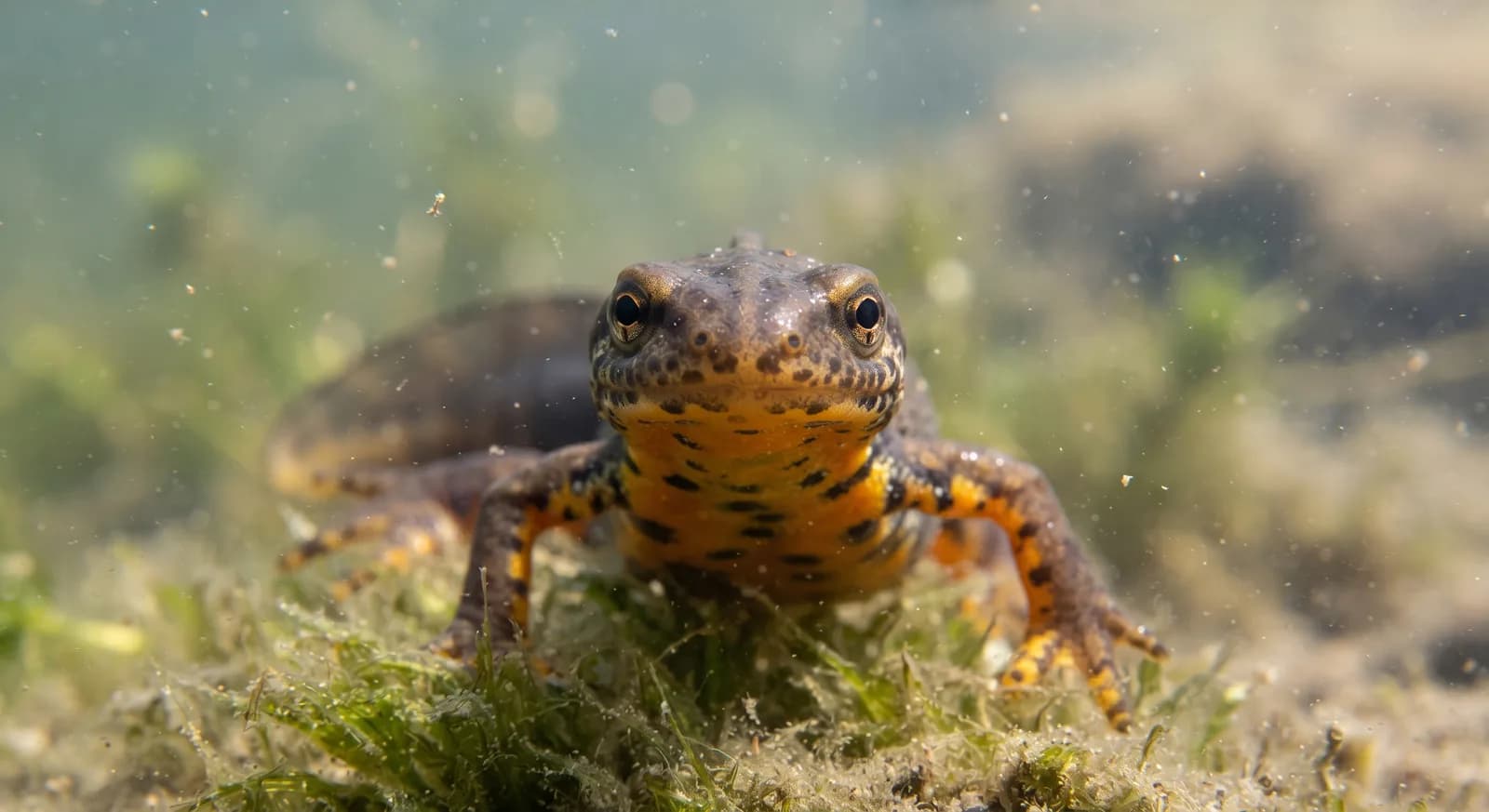
Alpine Newt
Ichthyosaura alpestris
The species is abundant and widely distributed; it faces no significant short-term risk. See full glossary
In the breeding season the male grows a striking dorsal crest and vivid blue, orange and black colours to court the female with a ritual underwater dance.
Weight
1 g – 6 g
Size
7 cm – 12 cm
Lifespan
15 years
Diet
Carnivore
Feeds mainly on other animals.
Activity
Nocturnal
Active mainly at night.
Social structure
Solitary
Lives and hunts alone, joining others only to breed.
Sighting difficulty
Easy
Fun facts
- The male grows a dorsal crest and vivid colours in the breeding season.
- The female wraps each egg individually in the leaves of water plants.
- It has established stable introduced populations in the United Kingdom and New Zealand.
Life cycle & biology
- Skeleton type
- Vertebrate - internal bony skeleton (amphibian)
- Habitat & environment
- Mountain woodland and meadow across much of continental Europe, moving to ponds and pools to breed; introduced to the United Kingdom and New Zealand
- Birth weight
- A tiny larva on hatching, each wrapped by the mother in the leaf of a water plant
- Size at birth
- A larva a few millimetres long on hatching, reaching as much as 5 cm before metamorphosis
- Sexual maturity
- 2-3 years
- Gestation / incubation
- 56-96 days of larval development after the egg hatches (3-5 days for that first hatching)
- Litter / clutch size
- 30 to 300 eggs a season, laid singly and wrapped in leaves
Sources consulted: Dimensions.com; ResearchGate (captive breeding hormonal stimulation study); Reptco care sheet; ResearchGate (age and size at maturity review); Animalia.bio; Wikipedia (Alpine newt)
Where to find it
See its range on the interactive mapWhere to watch it
Parks and dive sites where this species has been documented.
Related species
Other species in the catalogue with the most in common with Alpine Newt — same habitat, park, country, tags or family.
Palmate Newt
Lissotriton helveticus
 Least Concern
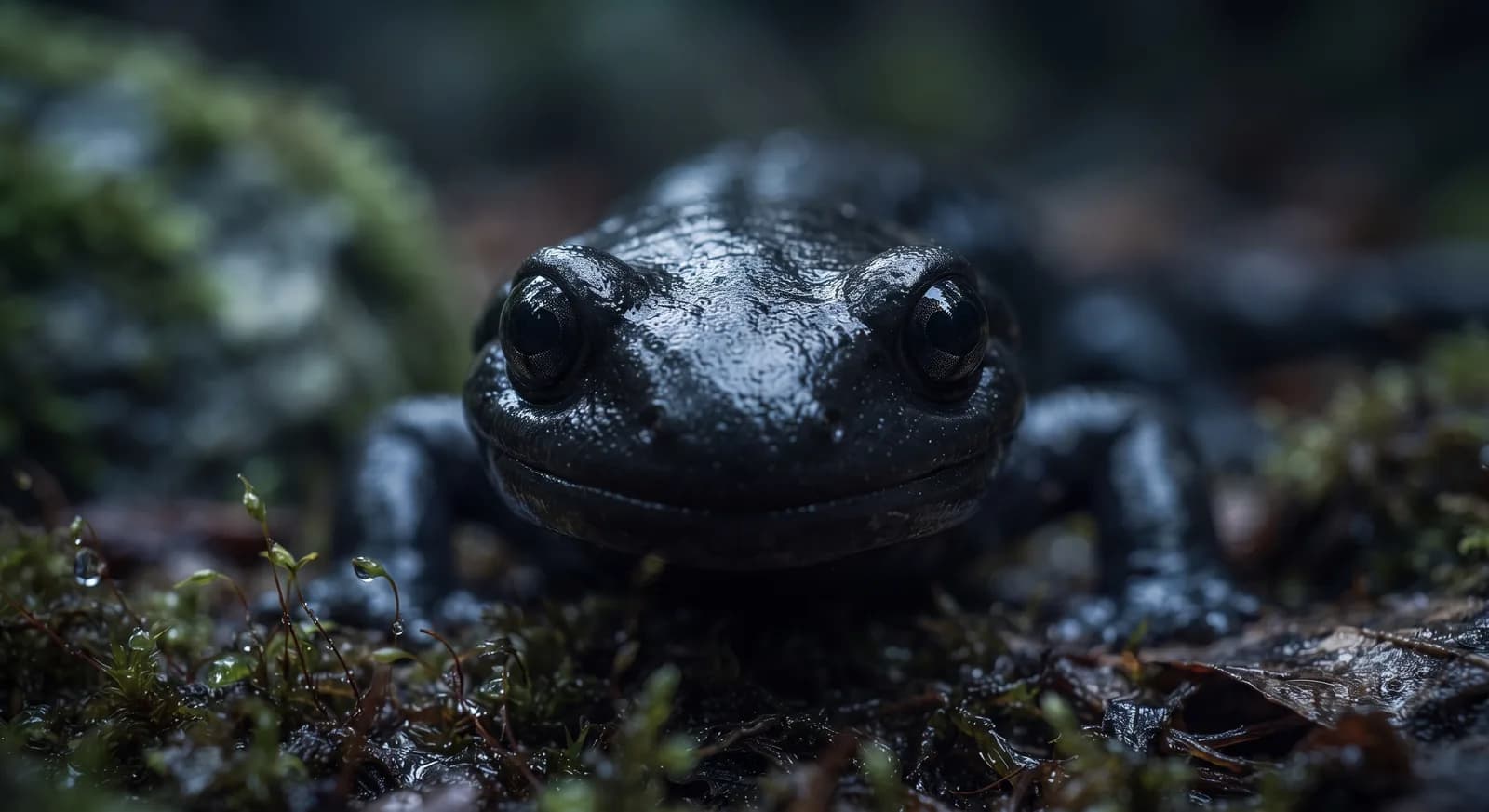
Alpine Salamander
Salamandra atra
Great Crested Newt
Triturus cristatus
Marbled Newt
Triturus marmoratus
Sharp-ribbed Salamander
Pleurodeles waltl
Smooth Newt
Lissotriton vulgaris
Keep exploring
Based on what we already know about alpine newt.
Comments
Share an experience, a fun fact or a tip for seeing the alpine newt.
Be the first to comment.