One of the 8 pelicans on WAnimals
Birds · Pelecaniformes · Pelecanidae
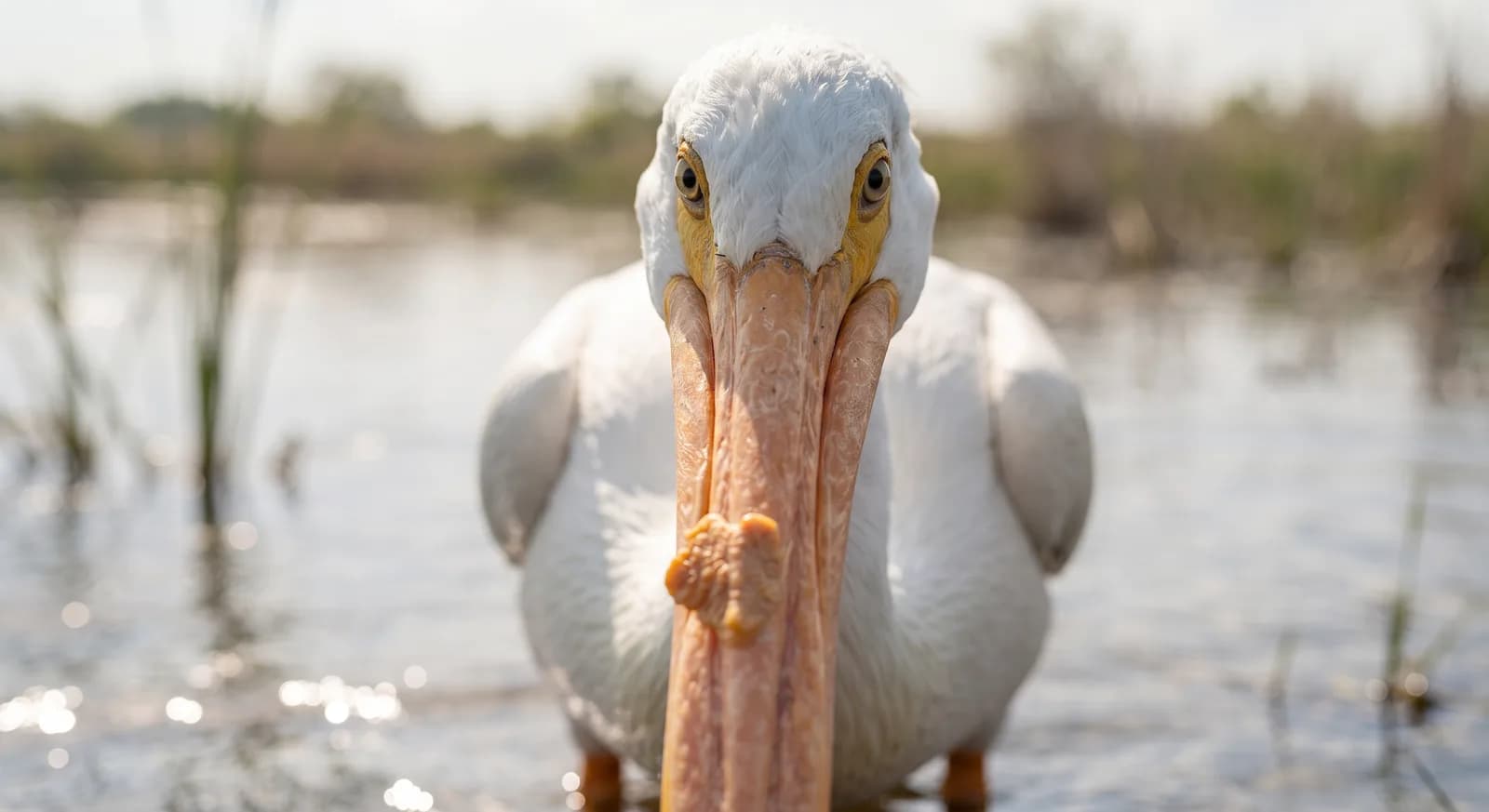
American White Pelican
Pelecanus erythrorhynchos
The species is abundant and widely distributed; it faces no significant short-term risk. See full glossary
A very large soaring waterbird, white apart from the primaries and secondaries, which are black and show mainly in flight. The bill is orange, very large and broad. In the breeding season it grows a horny crest on the upper mandible, a feature unique to this species. Both sexes look alike, though the male is somewhat larger.
Weight
5 kg – 9 kg
Size
1.2 m – 1.8 m
Diet
Piscivore
Feeds mainly on fish.
Activity
Diurnal
Active mainly during the day.
Social structure
Colony
Lives in large concentrations, often for breeding reasons.
Sighting difficulty
Easy
Estimated population
The total population has increased considerably since 1985
Fun facts
- It does not plunge-dive like the brown pelican: it fishes cooperatively, with several birds herding fish together into the shallows.
- Each individual eats around 1.5 kg of fish a day, mainly carp, shad, perch and catfish.
- It flies in groups of up to 3,500 birds, in V formation or in single file, covering as much as 500 km.
Life cycle & biology
- Skeleton type
- Vertebrate - internal bony skeleton (bird)
- Habitat & environment
- Freshwater lakes, chiefly in Texas and Florida outside the breeding season. It nests in colonies of several hundred pairs on islands in North American freshwater lakes; the northernmost colonies are on the rapids of the Slave River, between Alberta and the Northwest Territories
- Litter / clutch size
- It incubates its eggs by standing over them, a behaviour uncommon among birds
Sources consulted: IUCN Red List; U.S. Fish and Wildlife Service; Audubon Field Guide; Damisela; EcuRed; iNaturalist; Elliott 1992; Gmelin 1789
Where to find it
See its range on the interactive mapBest time: Winter in the Gulf states and Florida; summer in Canada and the northern United States
Where to watch it
Parks and dive sites where this species has been documented.
Related species
Other species in the catalogue with the most in common with American White Pelican — same habitat, park, country, tags or family.
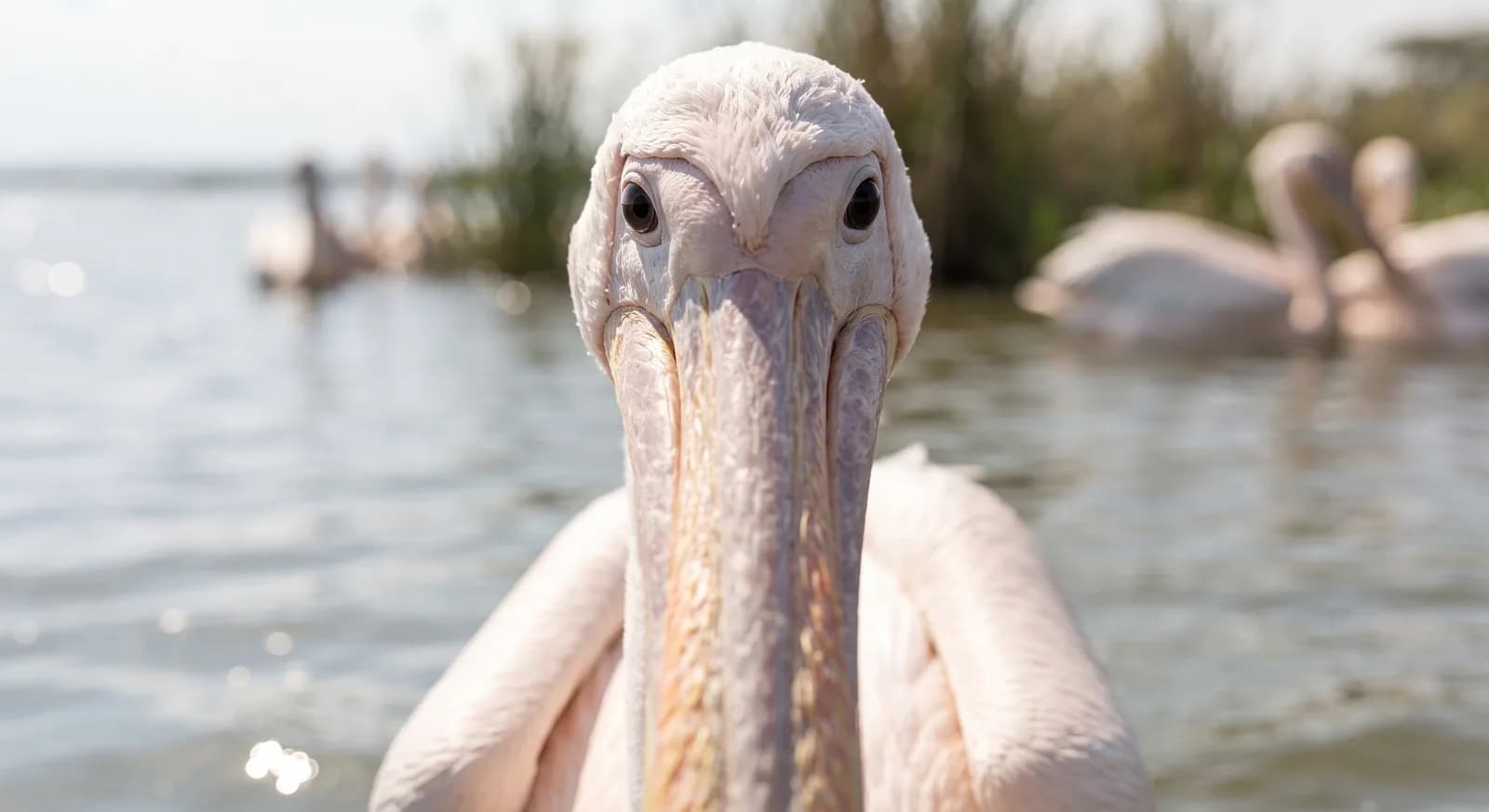
Pink-Backed Pelican
Pelecanus rufescens
 Least Concern
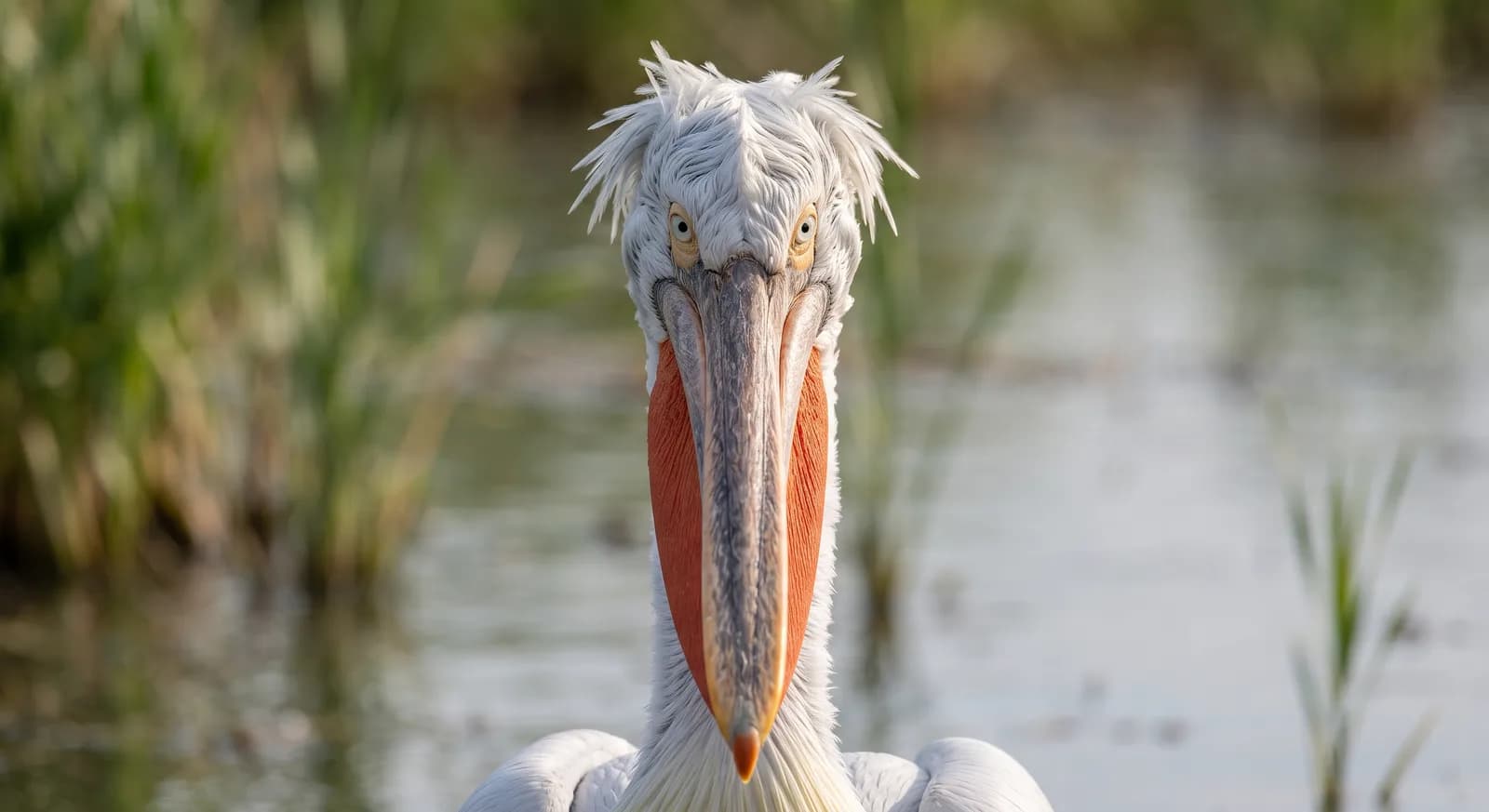
Great White Pelican
Pelecanus onocrotalus
 Near Threatened
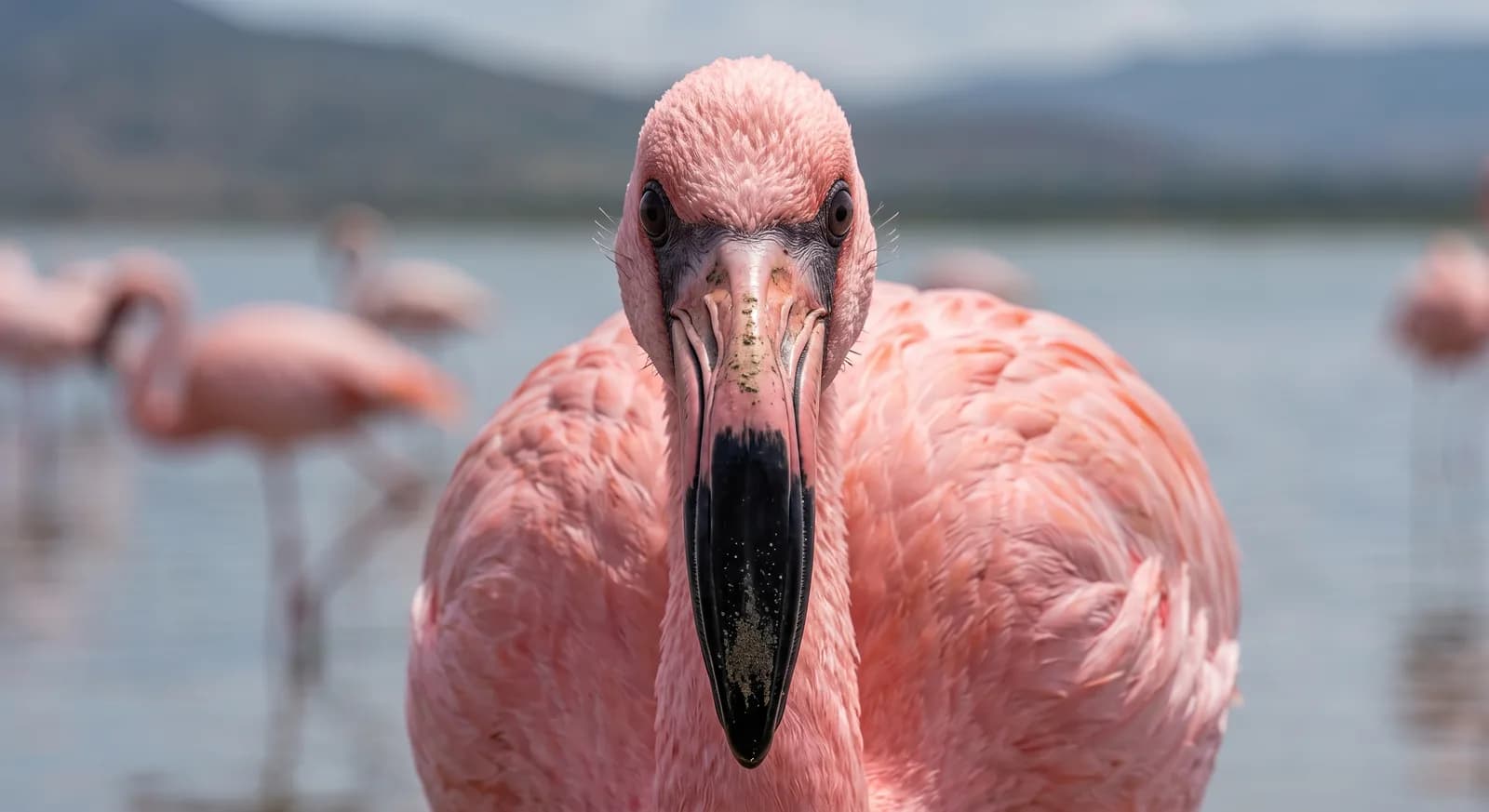
Dalmatian Pelican
Pelecanus crispus
 Least Concern
Greater Flamingo
Phoenicopterus roseus
Common Swift
Apus apus
Black-winged Stilt
Himantopus himantopus
Keep exploring
Based on what we already know about american white pelican.
Comments
Share an experience, a fun fact or a tip for seeing the american white pelican.
Be the first to comment.