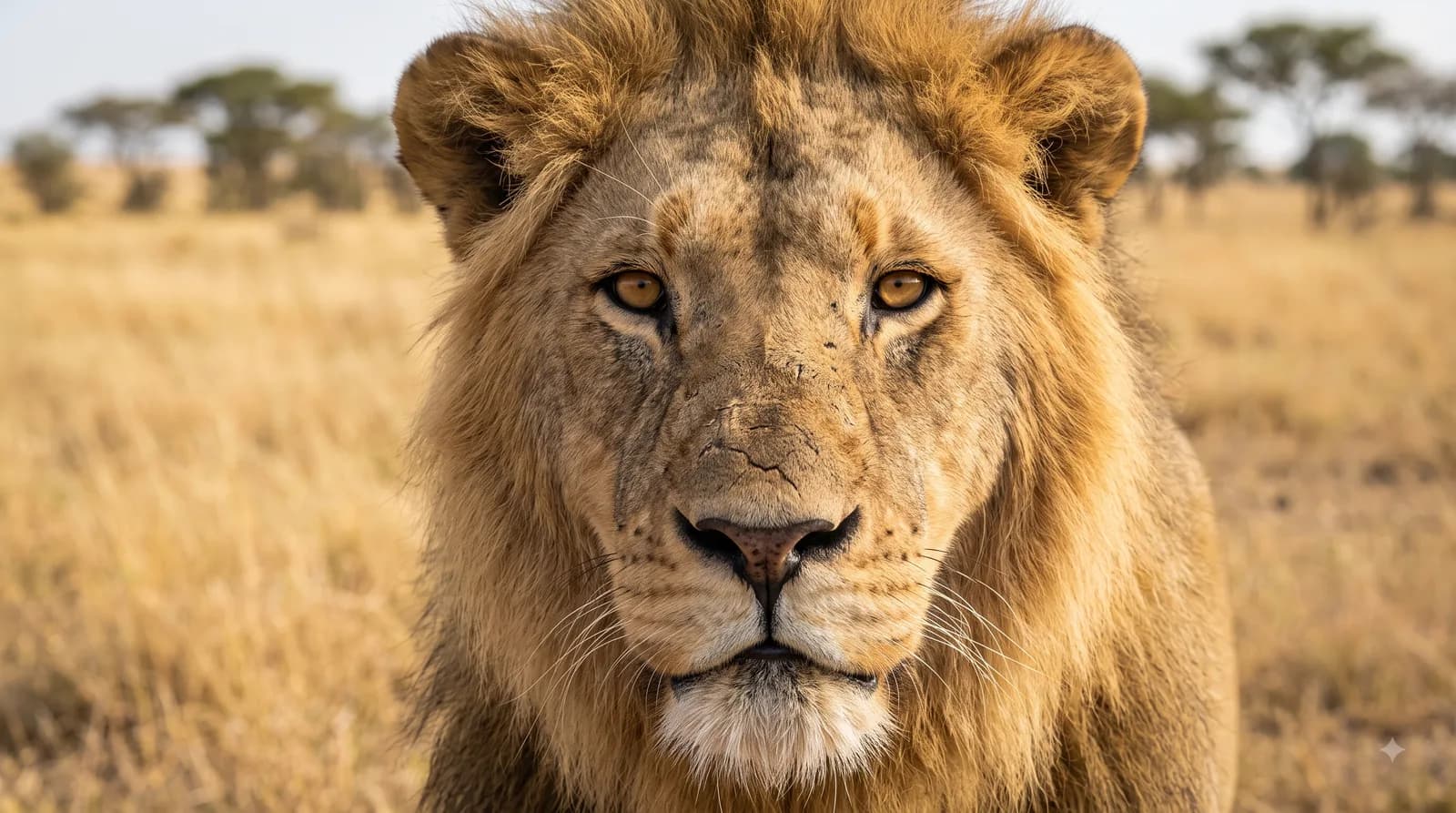
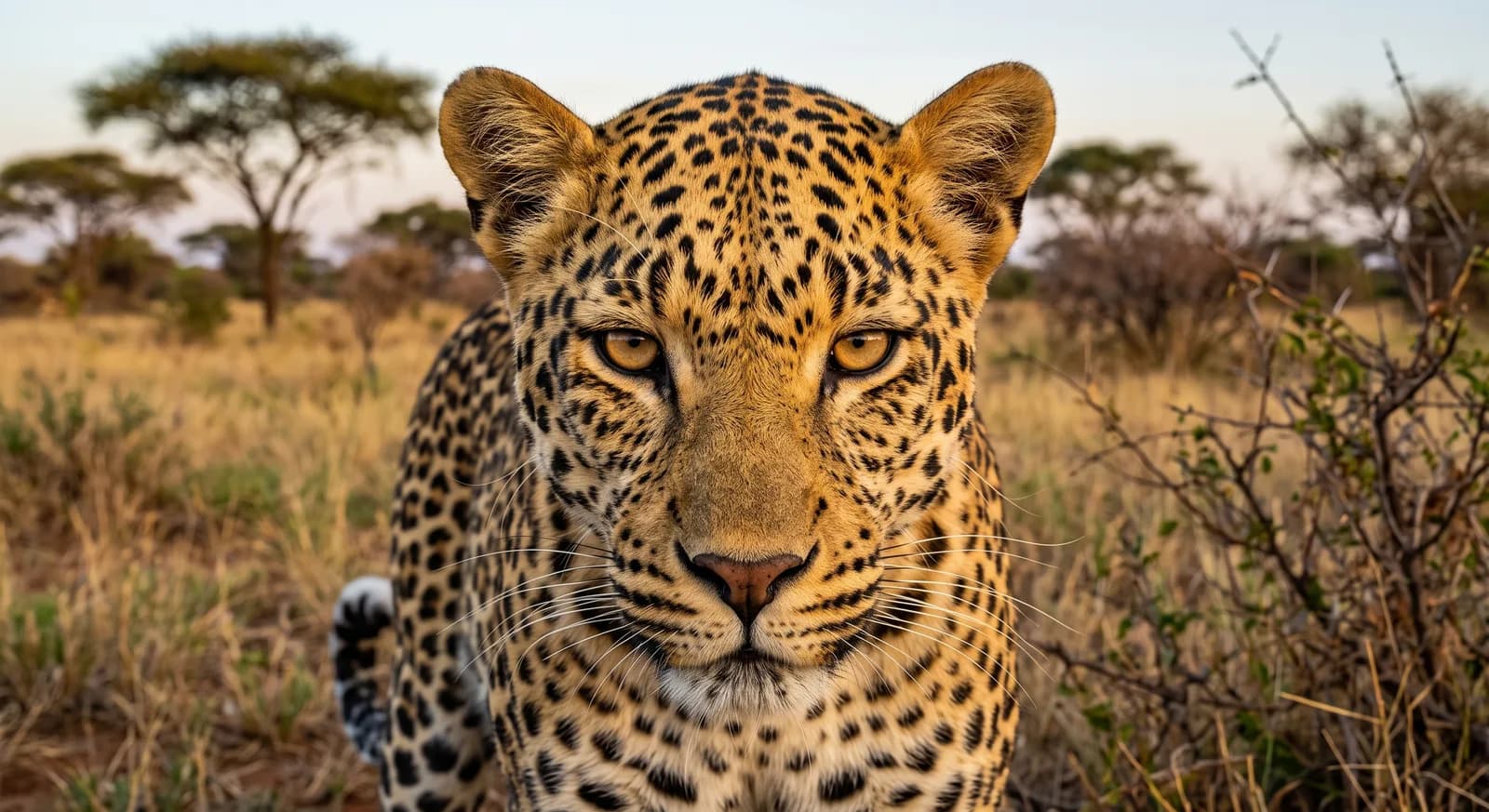
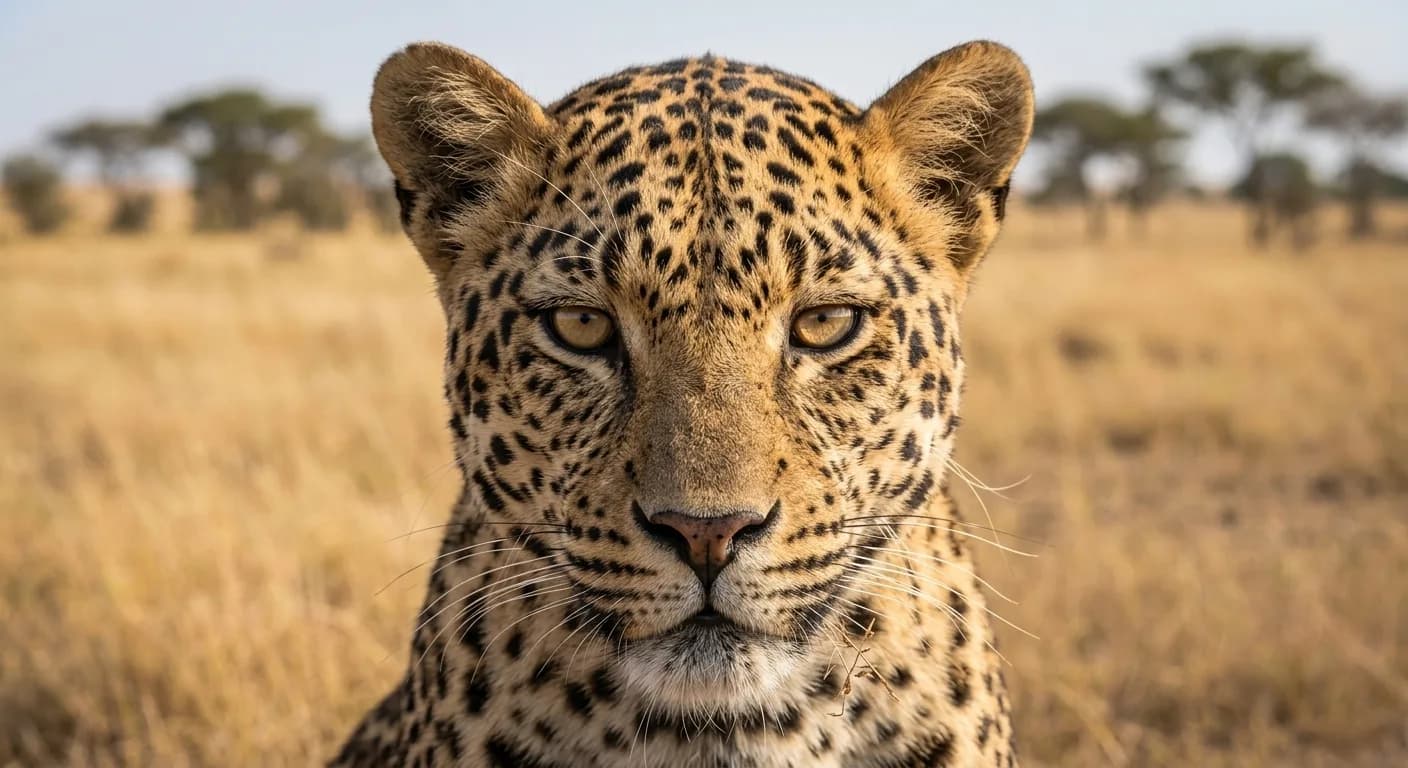
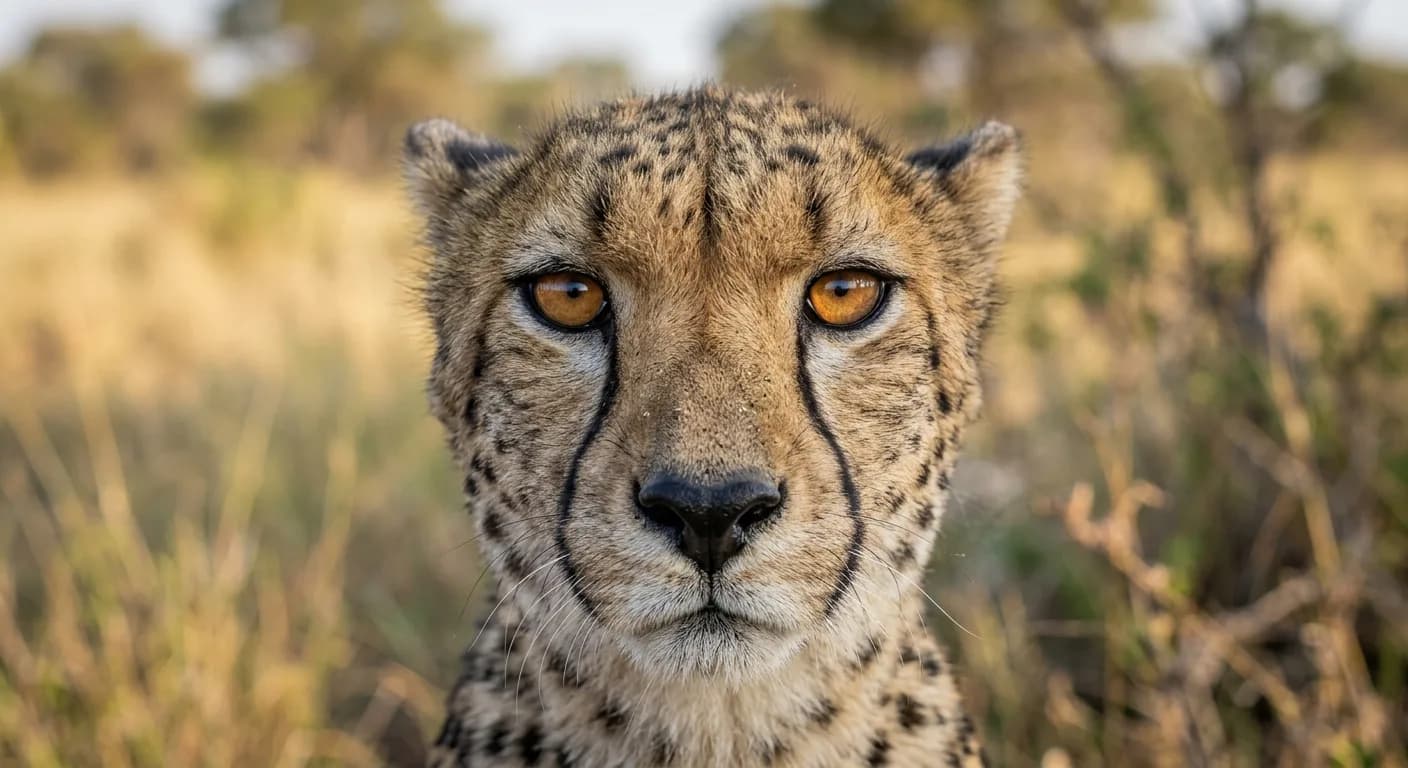
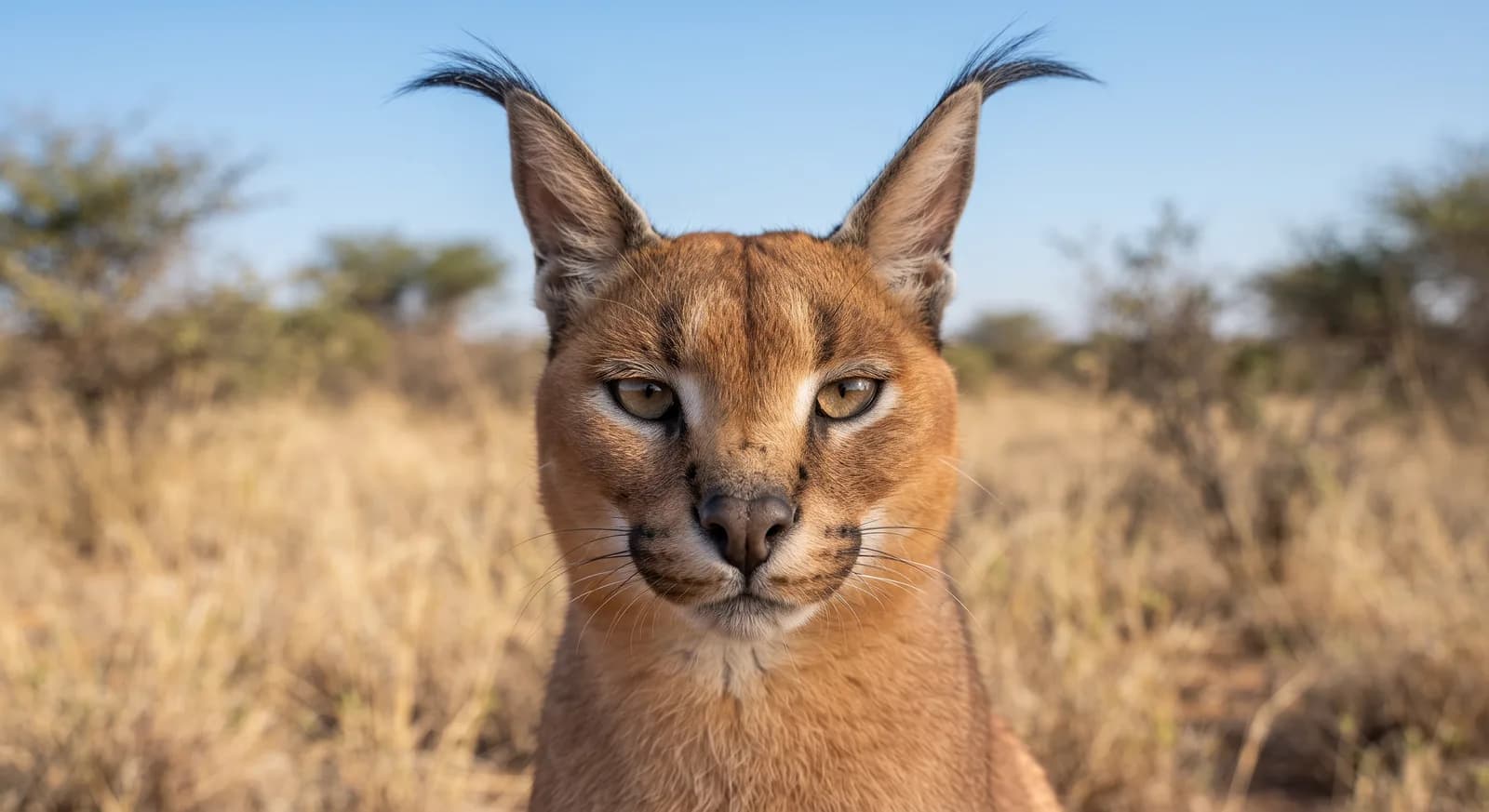
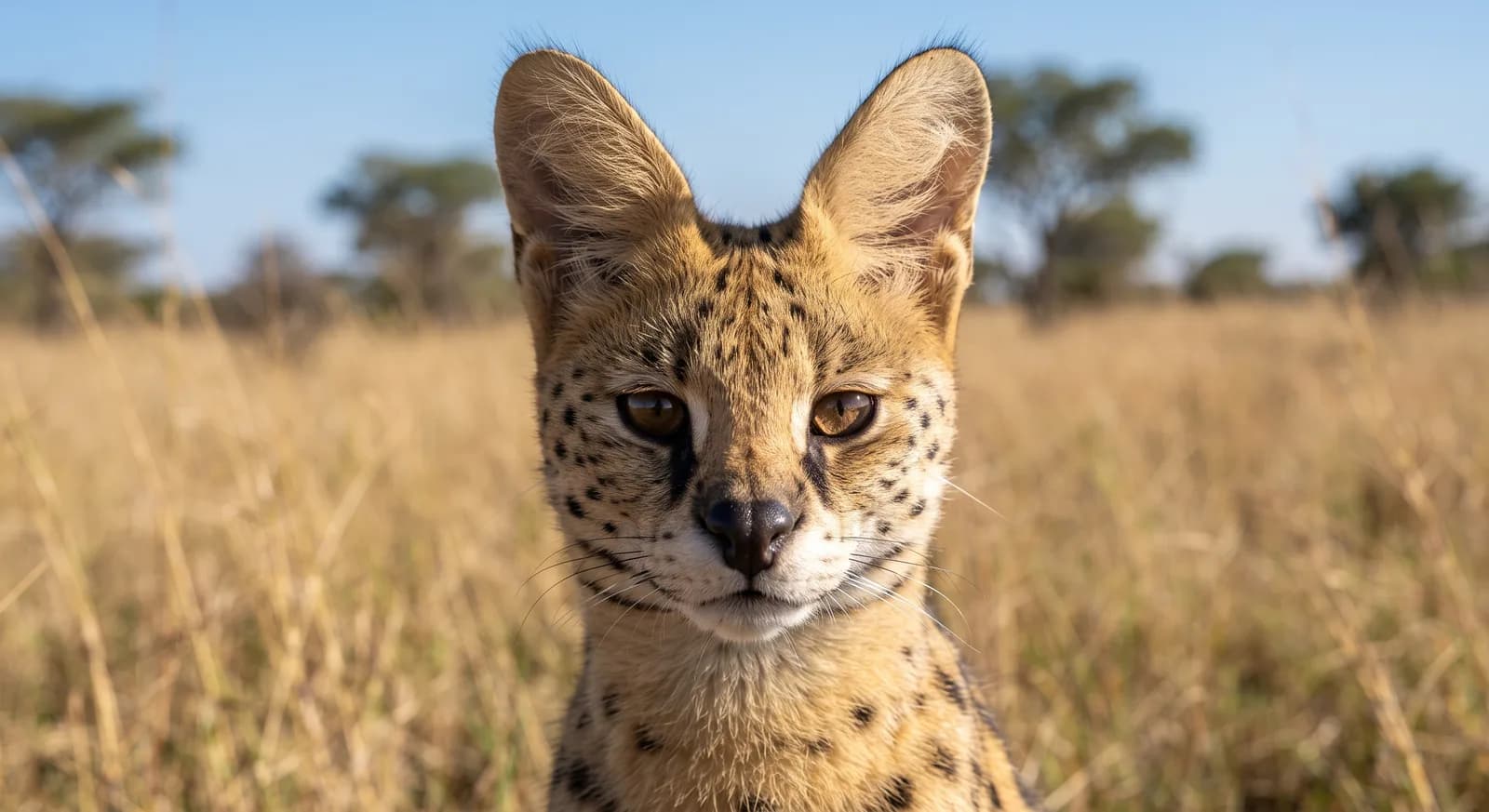
AI-generated images: illustrations, not photographs.
Fun facts
Males can weigh up to 250 kg and are distinguished by their mane.
A pride can number up to 30 animals.
They sleep or rest for up to 20 hours a day.
Life cycle and biology
Skeleton type
Vertebrate - internal bony skeleton (mammal)
Habitat and environment
Savannas, grasslands and open scrub of sub-Saharan Africa; a relict population survives in the Gir Forest, India
Birth weight
1.1 - 2 kg (average ~1.3 kg)
Size at birth
Blind at birth, crawling after a few days and walking at 3-4 weeks
Sexual maturity
Female: ~3.5-4 years (first pregnancy) | Male: physiologically mature at ~26 months, but rarely manages to breed before 5 because of social competition
Gestation / incubation
~108-110 days
Litter / clutch size
1 to 6 cubs per litter (typically 2-4)
Life expectancy in captivity
20-27 years (verified record of 27-28 years)
Sources consulted: Britannica · Animal Diversity Web · DesertUSA · Feline Conservation Foundation · AnAge (genomics.senescence.info) · SDZWA Library Fact Sheet · PBS Nature · IUCN Red List, Vulnerable bajo el criterio A2c · el African Lion Database cifra en un 34 % la contracción del área de distribución en tres generaciones (2004-2025) · IUCN Red List (Panthera leo, Vulnerable A2abcd) · African Lion Database 2025
Where to find it
Best time: June to October in the Serengeti and the Maasai Mara
Loading map…
Where to see it
Parks and dive sites where this species has been documented — showing 10 of 52.
Related species
Other species in the catalogue with the most in common with Lion — same habitat, park, country, tags or family.
Same taxonomic family
Same taxonomic family
Same taxonomic family
Same taxonomic family
Same taxonomic family
Same taxonomic family
How to help
The lion is classified as vulnerable. Organisations such as Lion Recovery Fund work specifically on its conservation and that of its habitat; looking into their programmes is a good starting point if you want to get involved.