Insects · Hymenoptera · Apidae
Western Honey Bee
Apis mellifera
It has not yet been assessed against the IUCN criteria. See full glossary
It lives in eusocial colonies of up to 60,000 with a single breeding queen. It pollinates roughly a third of the world's food crops.
Weight
0 g – 0 g
Size
1.2 cm – 2 cm
Lifespan
2 years
Diet
Nectarivore
Feeds mainly on flower nectar.
Activity
Diurnal
Active mainly during the day.
Social structure
Colony
Lives in large concentrations, often for breeding reasons.
Sighting difficulty
Unknown
Fun facts
- A colony can hold up to 60,000 bees with a single breeding queen.
- The queen can lay up to 2,000 eggs a day at the height of the season.
- It pollinates roughly a third of the world's food crops.
- comunicaciónIt communicates with the rest of the hive through a dance whose coded movements give the exact direction and distance of a food source.
- fisiologíaIt regulates the temperature inside the hive by fanning its wings in unison, holding it steady however much the weather outside varies.
Life cycle & biology
- Skeleton type
- Invertebrate - chitin exoskeleton
- Habitat & environment
- Practically any habitat with flowers: fields, woodland, towns and farmland across almost the whole world
- Birth weight
- An egg under 2 mm; a microscopic newly hatched larva
- Size at birth
- The larva feeds in its wax cell for 4-7 days, depending on caste
- Sexual maturity
- Queen: able to breed within days of emerging, after the nuptial flight
- Gestation / incubation
- Egg to adult: queen 16 days | worker 21 days | drone 24 days
- Litter / clutch size
- The queen can lay 1,500-2,000 eggs a day at the height of the season
- Lifespan in captivity
- Queen: up to 8 years documented in exceptional cases
Sources consulted: ScienceDirect (Page & Peng 2001); AnAge (genomics.senescence.info); Animal Diversity Web; PMC (Evolution and mechanisms of long life in queen honey bees); BuzzAboutBees
Where to find it
See its range on the interactive mapRelated species
Other species in the catalogue with the most in common with Western Honey Bee — same habitat, park, country, tags or family.
Buff-tailed Bumblebee
Bombus terrestris
Western Honey Bee
Apis mellifera scutellata
Violet Carpenter Bee
Xylocopa violacea
Mayan Melipona
Melipona beecheii
Giant Honey Bee
Apis dorsata
 Not Evaluated
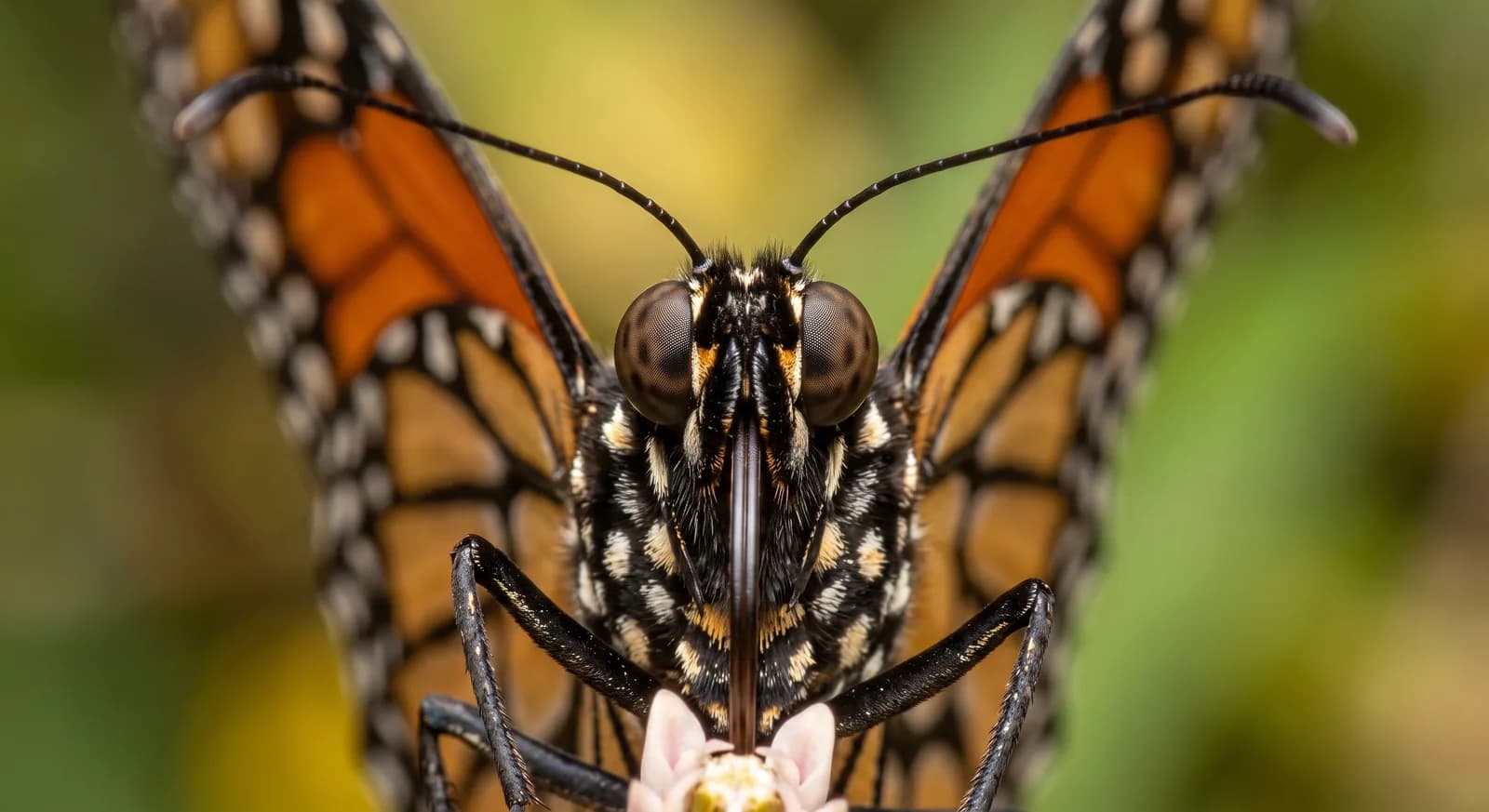
Monarch
Danaus plexippus
Keep exploring
Based on what we already know about western honey bee.
Comments
Share an experience, a fun fact or a tip for seeing the western honey bee.
Be the first to comment.