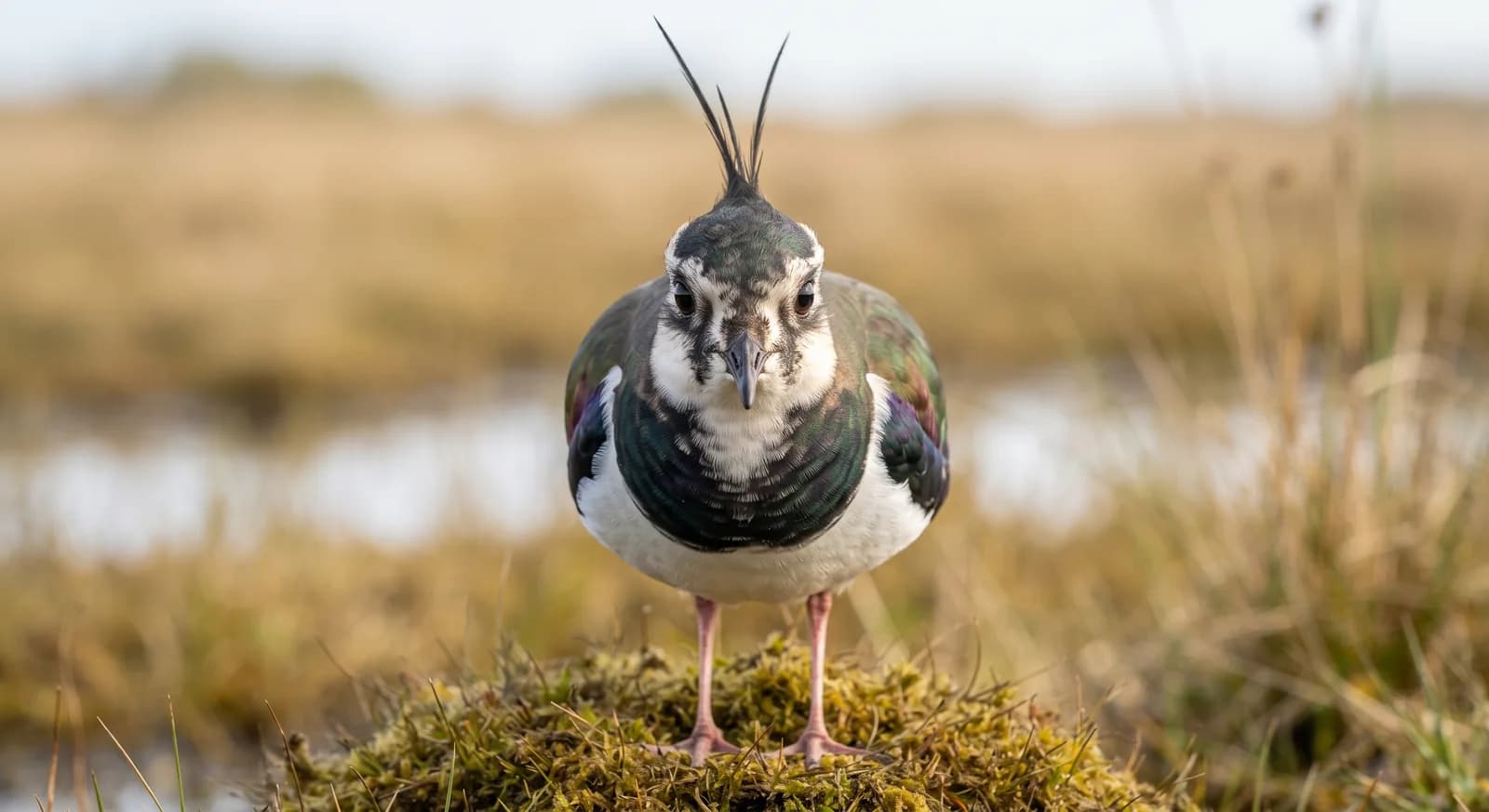
Birds · Charadriiformes · Charadriidae
Northern Lapwing
Vanellus vanellus
It could become endangered in the near future if current threats go unchecked. See full glossary
To protect its chicks it feigns a broken wing and drags itself away along the ground, deliberately drawing predators away from the nest before flying off perfectly well.
Weight
128 g – 330 g
Size
28 cm – 31 cm
Lifespan
4 years
Diet
Carnivore
Feeds mainly on other animals.
Activity
Diurnal
Active mainly during the day.
Social structure
Herd
Lives in large groups as a strategy against predators.
Sighting difficulty
Moderate
Fun facts
- defensaIt can feign a broken wing, limping away from the nest to draw a predator off its eggs or chicks before suddenly taking flight.
Life cycle & biology
- Skeleton type
- Vertebrate - pneumatised bony skeleton (bird)
- Habitat & environment
- Wet meadows, farmland and marshes across much of Europe, North Africa and Asia
- Birth weight
- Exact weight at hatching not found as a precise figure
- Size at birth
- Precocial, covered in brown and black mottled down, able to feed itself soon after hatching
- Sexual maturity
- 2 years (some sources say breeding is possible from the first year)
- Gestation / incubation
- 21-28 days
- Litter / clutch size
- 4 eggs per clutch
Sources consulted: AnAge (genomics.senescence.info); Animal Diversity Web; Birds Wiki Fandom; Animalia.bio; Oiseaux-birds.com; Allevamento Poggio di Ponte; bioRxiv (incubation rhythms study)
Where to find it
See its range on the interactive mapWhere to watch it
Parques y spots de buceo donde se ha documentado esta especie — se muestran 10 de 206 documentados.
Related species
Other species in the catalogue with the most in common with Northern Lapwing — same habitat, park, country, tags or family.
Little Ringed Plover
Charadrius dubius
 Least Concern
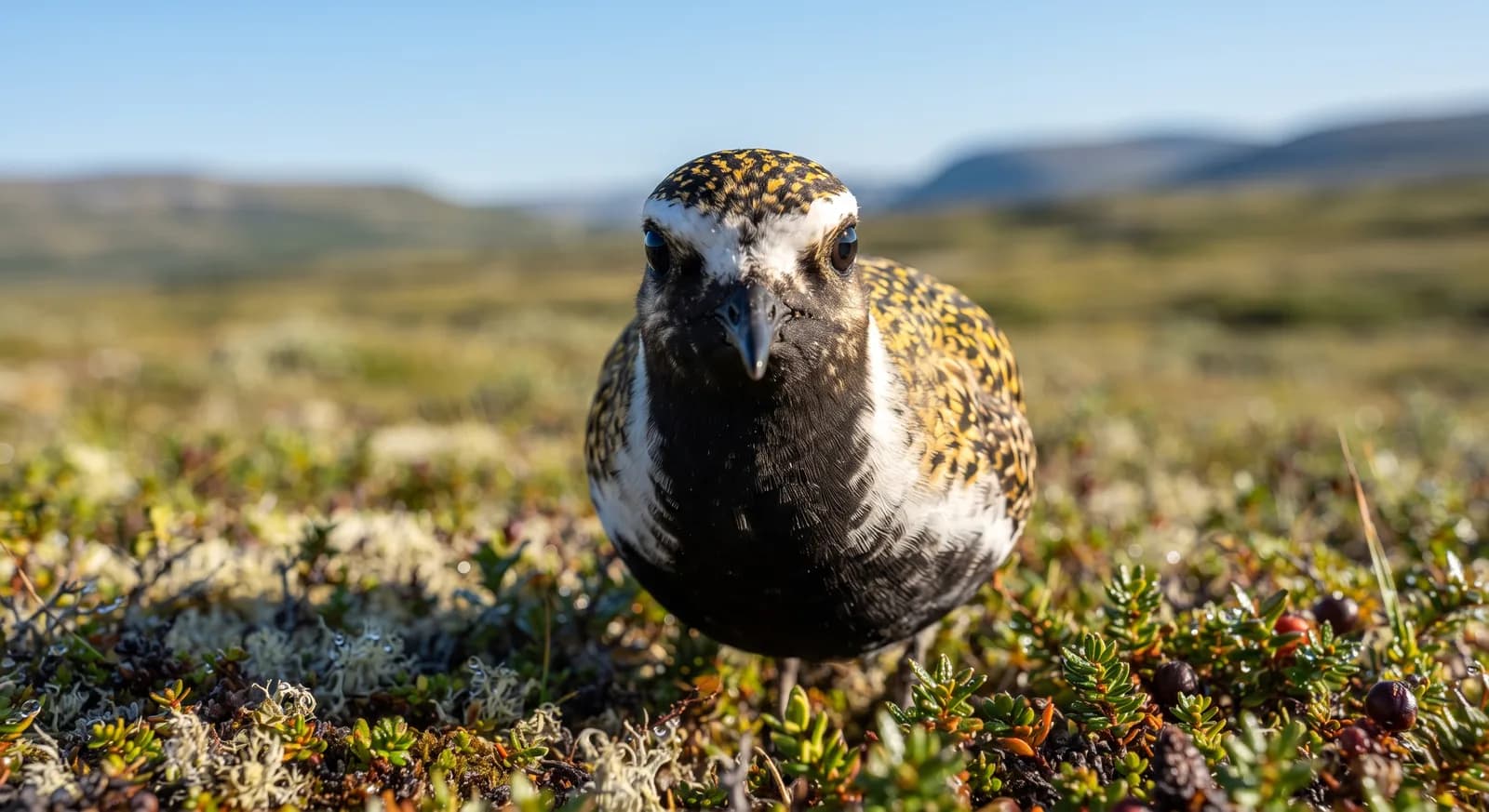
European Golden Plover
Pluvialis apricaria
Kentish Plover
Charadrius alexandrinus
Common Ringed Plover
Charadrius hiaticula
Grey Plover
Pluvialis squatarola
Dotterel
Charadrius morinellus
Keep exploring
Based on what we already know about northern lapwing.
Comments
Share an experience, a fun fact or a tip for seeing the northern lapwing.
Be the first to comment.