One of the 6 plovers on WAnimals
Birds · Charadriiformes · Charadriidae
Grey Plover
Pluvialis squatarola
The species is abundant and widely distributed; it faces no significant short-term risk. See full glossary
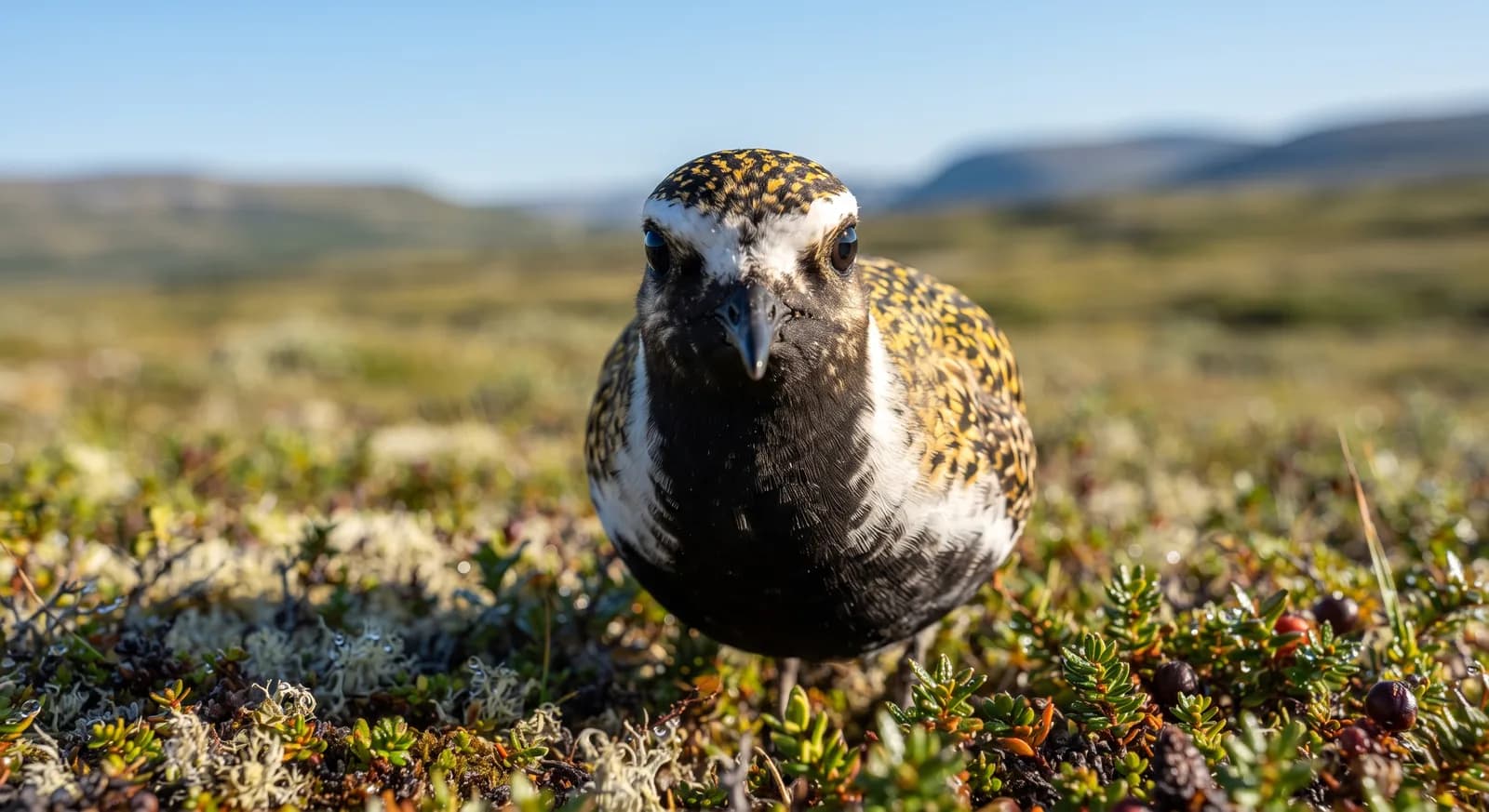
The grey plover breeds on the Arctic tundra of Siberia, Alaska and northern Canada and spends the winter in marshes and estuaries on practically every temperate and tropical coast on the planet. In breeding plumage it is boldly black and white; in winter, a subdued mottled grey. It is one of the most territorial waders in winter: it defends the same stretch of marsh against its own kind all season.
Weight
170 g – 320 g
Size
27 cm – 31 cm
Lifespan
25 years
Diet
Insectivore
Feeds mainly on insects and other invertebrates.
Activity
Irregular activity
Active at irregular times, by day or night depending on circumstances.
Social structure
Solitary
Lives and hunts alone, joining others only to breed.
Sighting difficulty
Easy
Fun facts
- GeneralIt travels as much as 10,000 km between the tundra and the marshes of Europe and Africa.
- It is one of the most widely distributed wintering waders in the world: it is found in winter from the North Sea to Australia, South Africa and Chile.
- It feeds at night as well when the tide allows, locating prey by the noise and vibration they make in the mud, and that ability lets it exploit the whole tidal cycle.
Life cycle & biology
- Skeleton type
- Vertebrate - internal bony skeleton (bird)
- Habitat & environment
- Arctic tundra when breeding; saltmarsh and beaches in winter
- Birth weight
- Precocial: born covered in down and leaves the nest within a few hours
- Size at birth
- Precocial: born covered in down and leaves the nest within a few hours
- Sexual maturity
- 2 years
- Gestation / incubation
- 27 days
- Litter / clutch size
- 4
Sources consulted: https://es.wikipedia.org/wiki/Pluvialis_squatarola
Where to find it
See its range on the interactive mapBest time: From September to April in Iberian marshes, beaches and estuaries, when the winterers arrive from the Arctic.
Where to watch it
Parques y spots de buceo donde se ha documentado esta especie — se muestran 10 de 32 documentados.
Related species
Other species in the catalogue with the most in common with Grey Plover — same habitat, park, country, tags or family.
Kentish Plover
Charadrius alexandrinus
 Least Concern
European Golden Plover
Pluvialis apricaria
Pacific Golden Plover
Pluvialis fulva
American Golden Plover
Pluvialis dominica
Common Ringed Plover
Charadrius hiaticula
Dotterel
Charadrius morinellus
Keep exploring
Based on what we already know about grey plover.
Comments
Share an experience, a fun fact or a tip for seeing the grey plover.
Be the first to comment.