One of the 6 plovers on WAnimals
Birds · Charadriiformes · Charadriidae
European Golden Plover
Pluvialis apricaria
The species is abundant and widely distributed; it faces no significant short-term risk. See full glossary
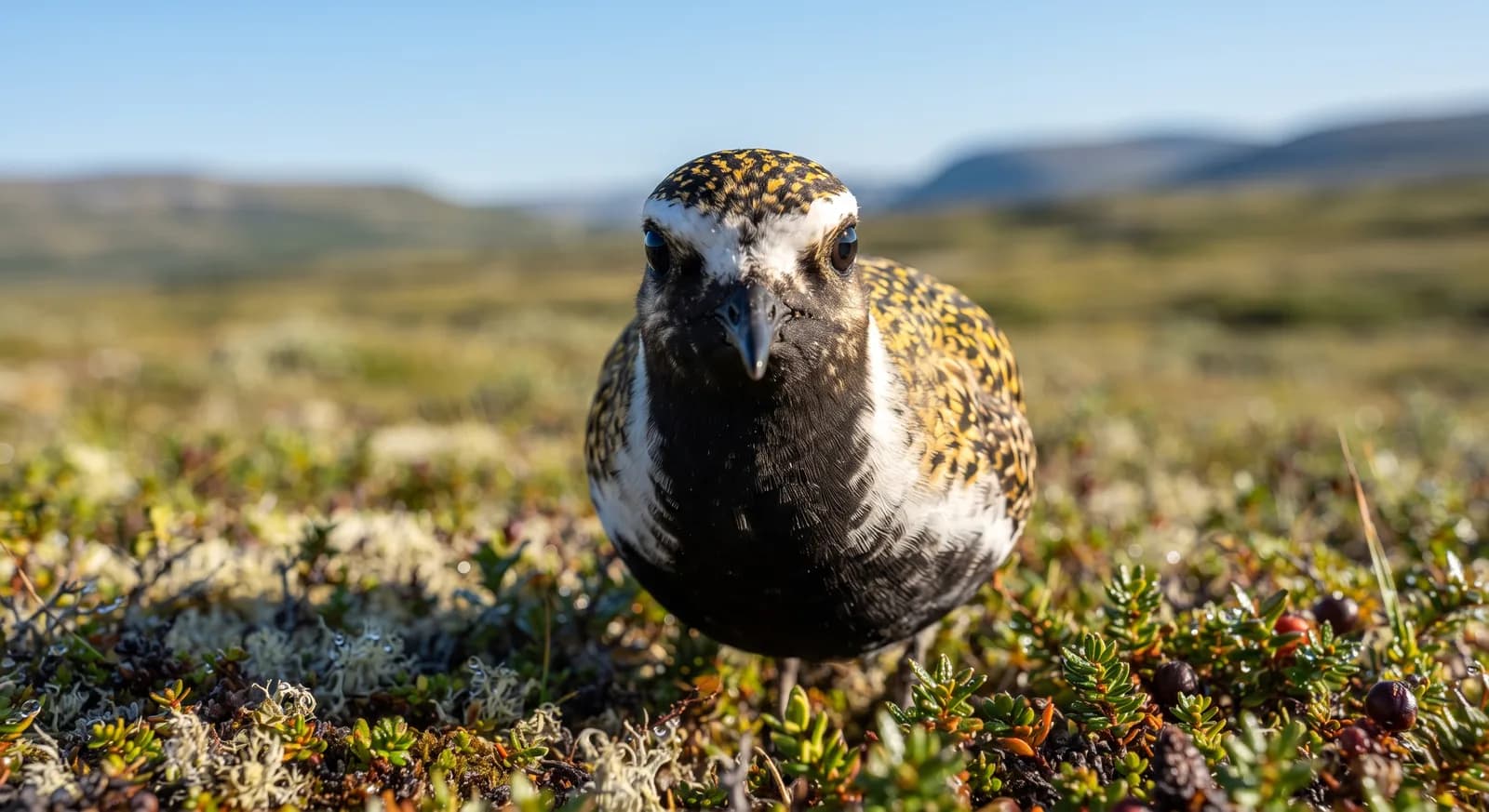
The European golden plover breeds on the peat bogs and tundra of northern Europe and spends the winter in large flocks across the farmland and marshes of the west and south of the continent, including much of the Iberian Peninsula. In breeding plumage the back is spangled with golden flecks and the belly is black; in winter it loses the black and becomes an unobtrusive beige bird. Its winter flocks can gather thousands of birds alongside lapwings.
Weight
140 g – 250 g
Size
26 cm – 29 cm
Lifespan
15 years
Diet
Insectivore
Feeds mainly on insects and other invertebrates.
Activity
Diurnal
Active mainly during the day.
Sighting difficulty
Easy
Fun facts
- It was the unwitting cause of the Guinness Book of Records: an argument over whether the European golden plover was the fastest game bird in Europe led the managing director of the Guinness brewery to commission a book that would settle that sort of pub dispute.
- Its winter flocks perform coordinated flights of thousands of birds, often mixed with lapwings, wheeling in unison and flashing alternately their dark backs and pale bellies.
Life cycle & biology
- Skeleton type
- Vertebrate - internal bony skeleton (bird)
- Habitat & environment
- Peat bogs, moorland and tundra for breeding; farmland, stubble and marshes of southern Europe for wintering
- Sexual maturity
- 2 years
- Gestation / incubation
- 30 days of incubation
- Litter / clutch size
- 4 eggs
Sources consulted: https://en.wikipedia.org/wiki/European_golden_plover
Where to find it
See its range on the interactive mapWhere to watch it
Parks and dive sites where this species has been documented.
Related species
Other species in the catalogue with the most in common with European Golden Plover — same habitat, park, country, tags or family.
Grey Plover
Pluvialis squatarola
Little Ringed Plover
Charadrius dubius
Common Ringed Plover
Charadrius hiaticula
 Near Threatened
Northern Lapwing
Vanellus vanellus
Kentish Plover
Charadrius alexandrinus
Dotterel
Charadrius morinellus
Keep exploring
Based on what we already know about european golden plover.
Comments
Share an experience, a fun fact or a tip for seeing the european golden plover.
Be the first to comment.