Birds · Passeriformes · Corvidae
Western Jackdaw
Corvus monedula
The species is abundant and widely distributed; it faces no significant short-term risk. See full glossary
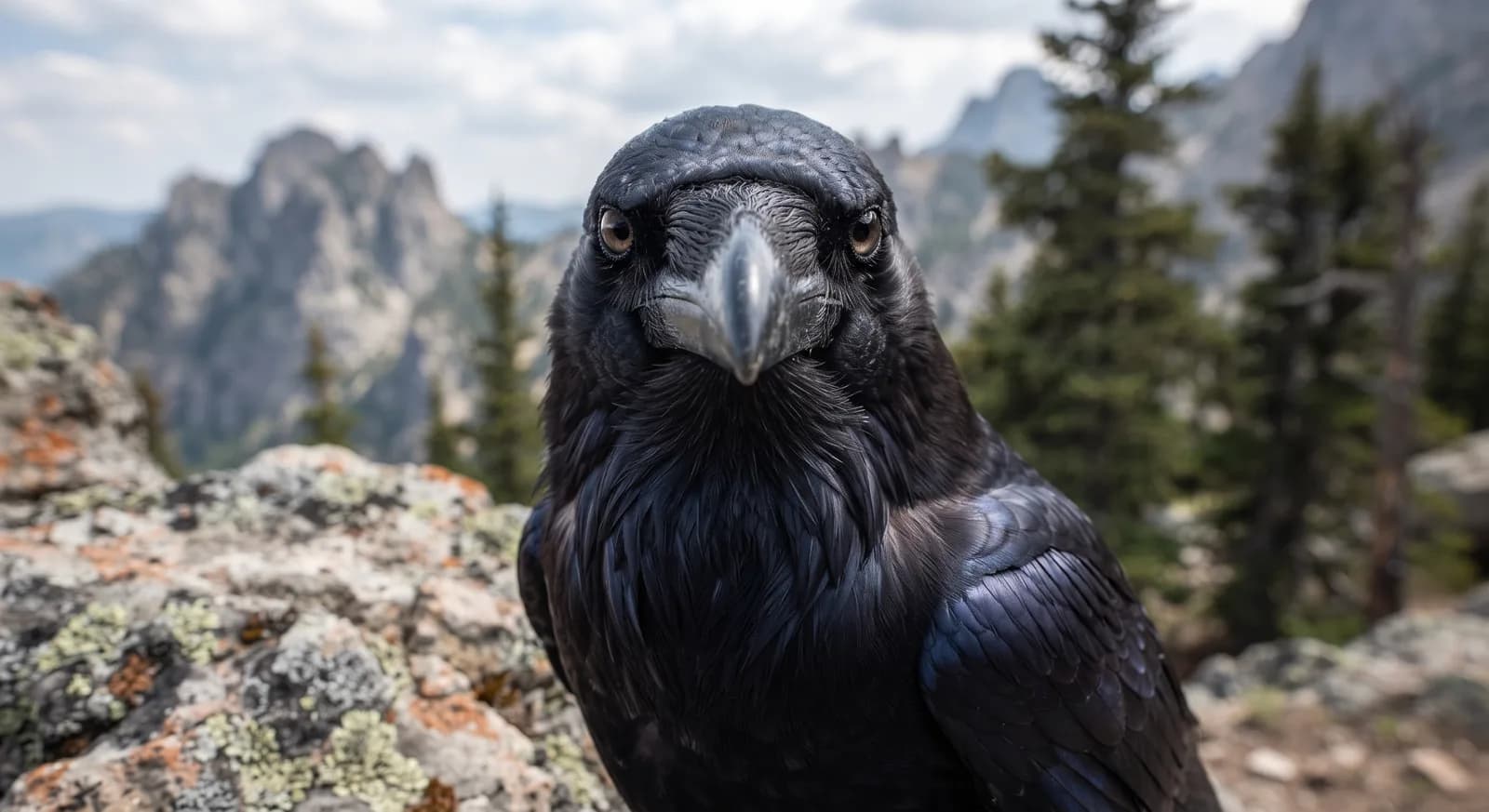
It is recognisable by its silver-grey nape and piercing pale grey, almost white eyes, a distinctive feature among the crows. It nests in tree holes, rock crevices and often in the chimneys of buildings.
Weight
220 g – 270 g
Size
34 cm – 39 cm
Lifespan
7 years
Diet
Omnivore
Combines animal and plant food depending on availability.
Activity
Diurnal
Active mainly during the day.
Social structure
Colony
Lives in large concentrations, often for breeding reasons.
Sighting difficulty
Easy
Fun facts
- It is easily told by its pale grey, almost white eyes.
- It often nests in chimneys and cavities in buildings.
- It forms large communal flocks outside the breeding season, sometimes alongside other crows.
Life cycle & biology
- Skeleton type
- Vertebrate - pneumatised bony skeleton (bird)
- Habitat & environment
- Open woodland, steppe, sea cliffs and towns of Europe, western Asia and north-western Africa
- Birth weight
- Exact weight at hatching not found as a precise figure
- Size at birth
- Altricial, blind and naked on hatching
- Sexual maturity
- 2 years (though they pair up in their first year)
- Gestation / incubation
- 17-20 days
- Litter / clutch size
- 4 to 6 eggs per clutch
Sources consulted: AnAge; Birdfact; Biology Insights; Birda; South Dakota Birds; Cornell Lab All About Birds; Songbird Survival; eBird
Where to find it
See its range on the interactive mapWhere to watch it
Parques y spots de buceo donde se ha documentado esta especie — se muestran 10 de 186 documentados.
Related species
Other species in the catalogue with the most in common with Western Jackdaw — same habitat, park, country, tags or family.
Iberian Azure-winged Magpie
Cyanopica cooki
Northern Nutcracker
Nucifraga caryocatactes
Eurasian Jay
Garrulus glandarius
Eurasian Magpie
Pica pica
Carrion Crow
Corvus corone
 Least Concern
Common Raven
Corvus corax
Keep exploring
Based on what we already know about western jackdaw.
Comments
Share an experience, a fun fact or a tip for seeing the western jackdaw.
Be the first to comment.