One of the 4 dragonflies on WAnimals
Insects · Odonata · Libellulidae
Four-Spotted Chaser
Libellula quadrimaculata
The species is abundant and widely distributed; it faces no significant short-term risk. See full glossary
A dragonfly with a dark greenish or brown thorax and an olive abdomen that narrows towards the tip, with the last segments black. It owes its name to the dark brown spots set over the node of each wing, two per wing. The hindwings also carry a strongly marked reddish patch at the base.
Size
4 cm – 5 cm
Diet
Carnivore
Feeds mainly on other animals.
Activity
Diurnal
Active mainly during the day.
Social structure
Solitary
Lives and hunts alone, joining others only to breed.
Sighting difficulty
Easy
Fun facts
- There is a form called praenubila with greatly exaggerated wing spots, which appears to depend on water temperature during the larval stage and is commoner in Europe than in America.
- It is the official state insect of Alaska.
- The males are markedly territorial: they post themselves on tall plants to watch the whole sheet of water and return to the same perch after every patrol.
- It stars in spectacular, poorly explained mass migrations. Swarms of millions of individuals have been documented crossing Europe, one of them in 1862 in Germany described as a cloud that took hours to pass.
- Those irruptions seem to be triggered by larval overcrowding and by parasites, and have been documented since the 18th century.
- It is identified without difficulty: four dark spots, one at the node of each wing, which give it its name.
- It is aggressive and territorial despite its moderate size, and males defend perches over the water from which they dart out to intercept rivals.
- It is one of the few dragonflies that breeds well in acidic bog waters, which gives it a niche of its own.
Life cycle & biology
- Skeleton type
- Invertebrate - chitin exoskeleton (insect)
- Habitat & environment
- Ponds, lagoons, peat bogs and slow-flowing rivers throughout the Holarctic. In Europe it reaches the Arctic Circle, and in mountain areas up to 1,000 m; it is more abundant the further north one goes
- Gestation / incubation
- The larvae have a two-year development cycle
Sources consulted: IUCN Red List (e.T165469A65834060); Asturnatura; Iberian Odonata (UCM); Wikipedia (Four-spotted chaser)
Where to find it
See its range on the interactive mapBest time: From April to early September, peaking in June and July
Where to watch it
Parques y spots de buceo donde se ha documentado esta especie — se muestran 10 de 155 documentados.
Related species
Other species in the catalogue with the most in common with Four-Spotted Chaser — same habitat, park, country, tags or family.
Broad Scarlet
Crocothemis erythraea
 Least Concern
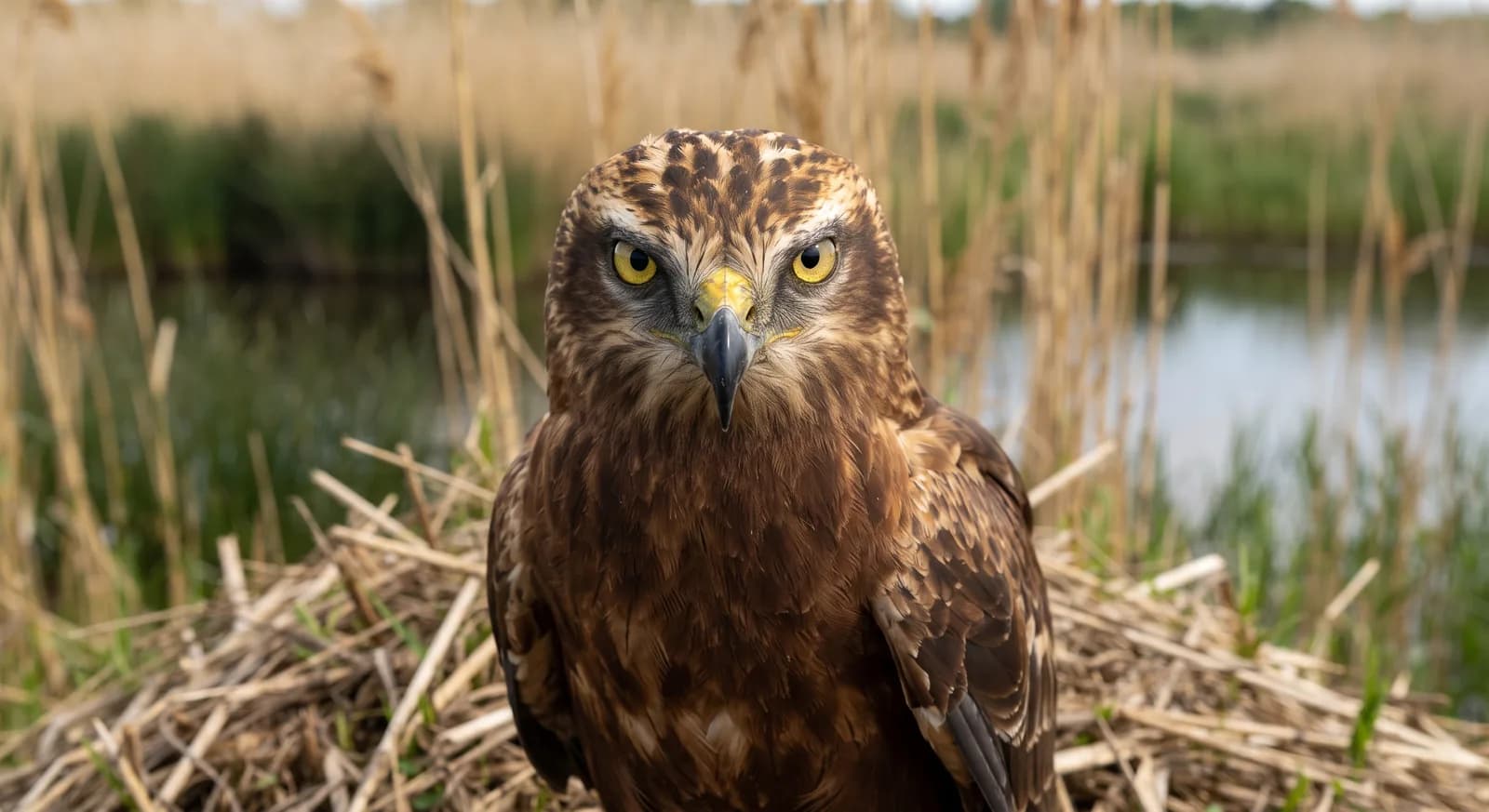
Western Marsh Harrier
Circus aeruginosus
Belted Kingfisher
Megaceryle alcyon
Spiny Softshell Turtle
Apalone spinifera
Grass Snake
Natrix natrix
Common Garter Snake
Thamnophis sirtalis
Keep exploring
Based on what we already know about four-spotted chaser.
Comments
Share an experience, a fun fact or a tip for seeing the four-spotted chaser.
Be the first to comment.