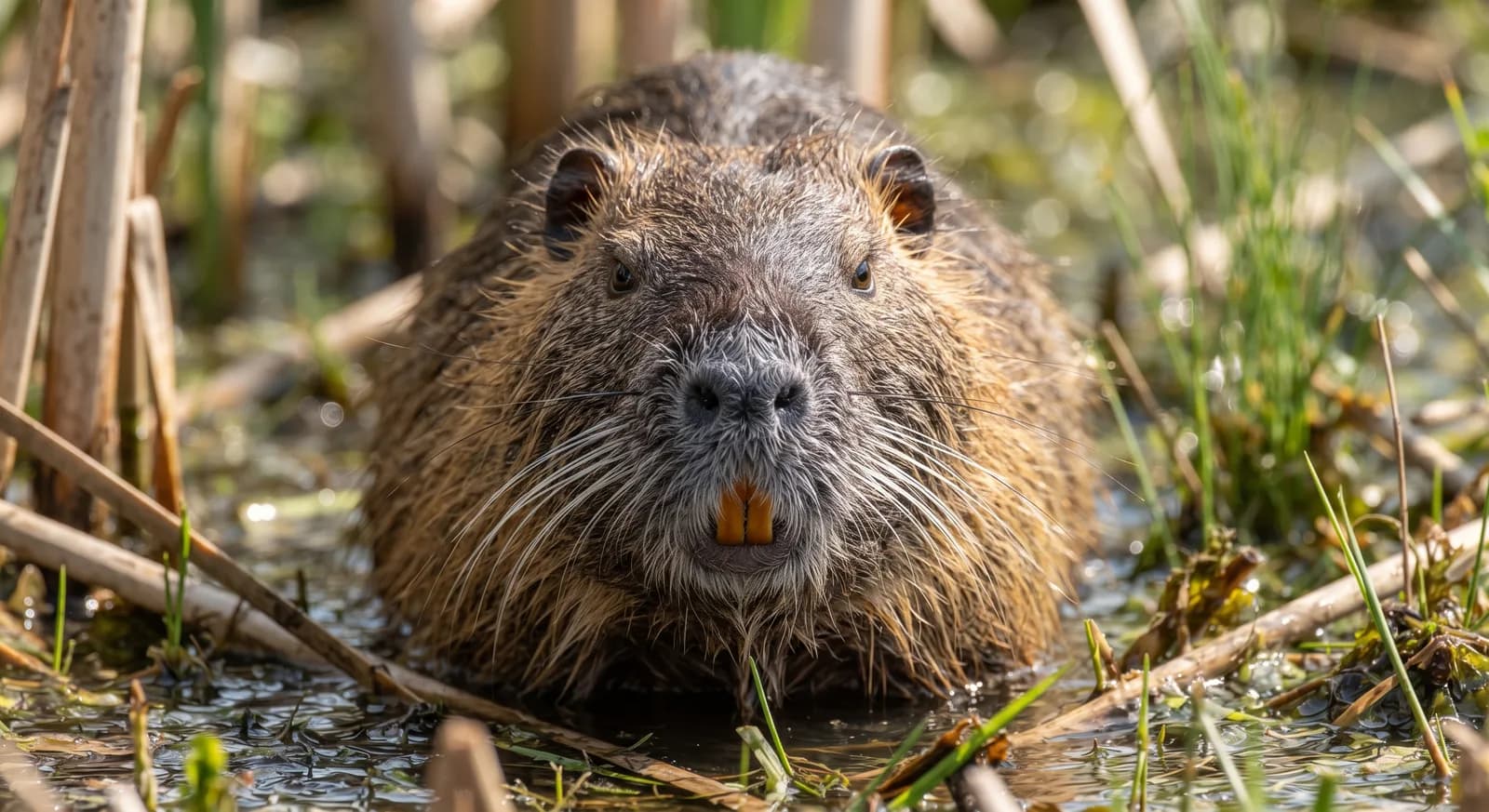
Mammals · Rodentia · Myocastoridae
Coypu
Myocastor coypus
The species is abundant and widely distributed; it faces no significant short-term risk. See full glossary
It was introduced to dozens of countries on every continent except Antarctica for the fur trade, and is now one of the most damaging invasive species in the world.
Weight
5 kg – 10 kg
Size
43 cm – 70 cm
Lifespan
10 years
Diet
Herbivore
Feeds mainly on plants.
Activity
Nocturnal
Active mainly at night.
Social structure
Colony
Lives in large concentrations, often for breeding reasons.
Sighting difficulty
Easy
Fun facts
- It can eat up to 25% of its body weight in vegetation a day and do serious damage to dykes and crops.
- It eats aquatic and emergent plants, roots and stems.
- It lives in marshes and along the banks of lakes and slow-moving streams across much of South America.
- ecologíaIt has been introduced to many countries outside its natural range for the fur trade, and in a good number of them has become an invasive species that damages dykes and canals.
Life cycle & biology
- Skeleton type
- Vertebrate - internal bony skeleton (mammal)
- Habitat & environment
- Marshes and the banks of lakes and slow-moving streams across much of South America, including brackish water
- Birth weight
- Born fully developed, eyes open and already furred
- Size at birth
- Born fully developed
- Sexual maturity
- 6 months
- Gestation / incubation
- 127-139 days (~4-4.5 months)
- Litter / clutch size
- 1 to 13 young per litter (average 3-6), with up to 3 litters per year
- Lifespan in captivity
- Documented record of up to 19 years
Sources consulted: AnAge (genomics.senescence.info); Animal Diversity Web; Britannica; USGS Species Profile; Texas Invasive Species Institute; Herrera Environmental (invasive species profile); California Species Project
Where to find it
See its range on the interactive mapWhere to watch it
Parques y spots de buceo donde se ha documentado esta especie — se muestran 10 de 13 documentados.
Related species
Other species in the catalogue with the most in common with Coypu — same habitat, park, country, tags or family.
Water Opossum
Chironectes minimus
 Least Concern
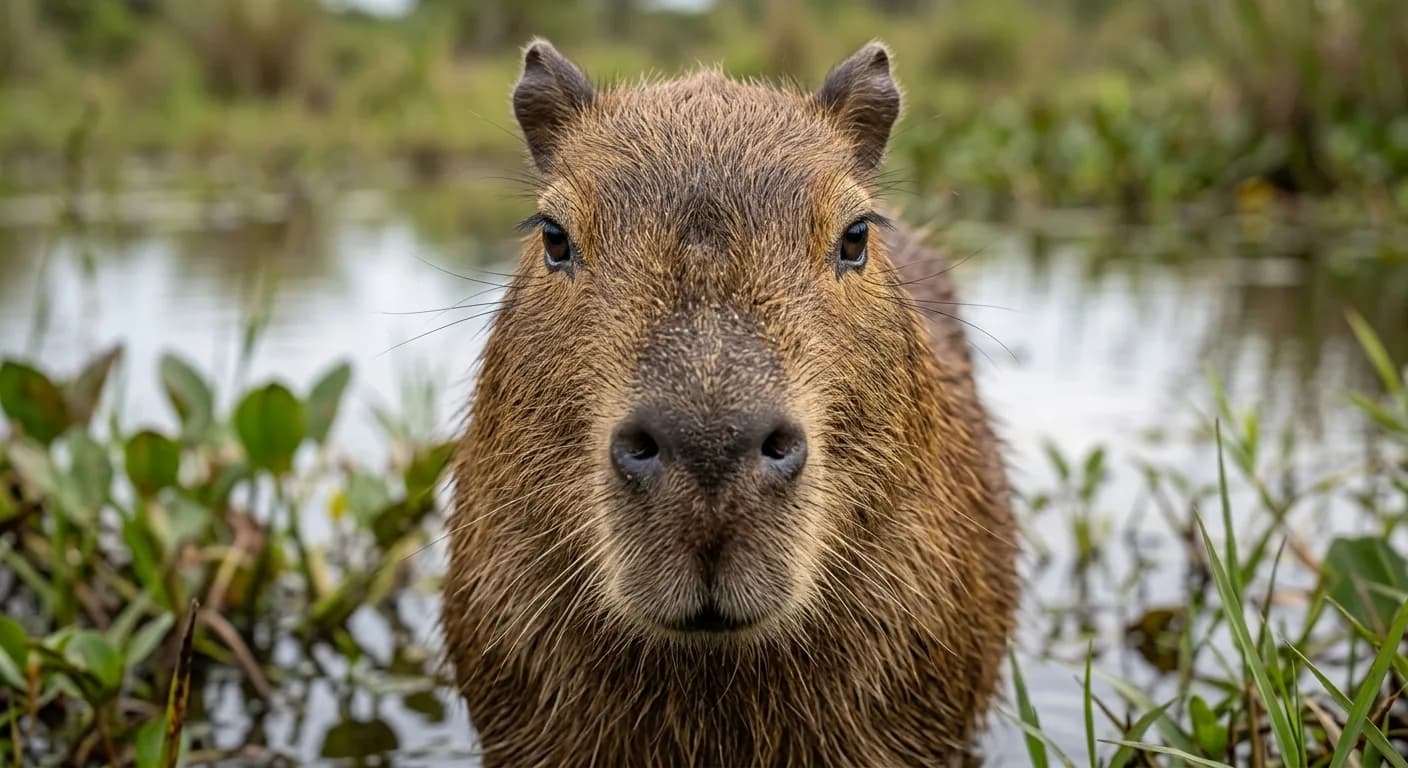
Capybara
Hydrochoerus hydrochaeris
Plains Viscacha
Lagostomus maximus
 Least Concern
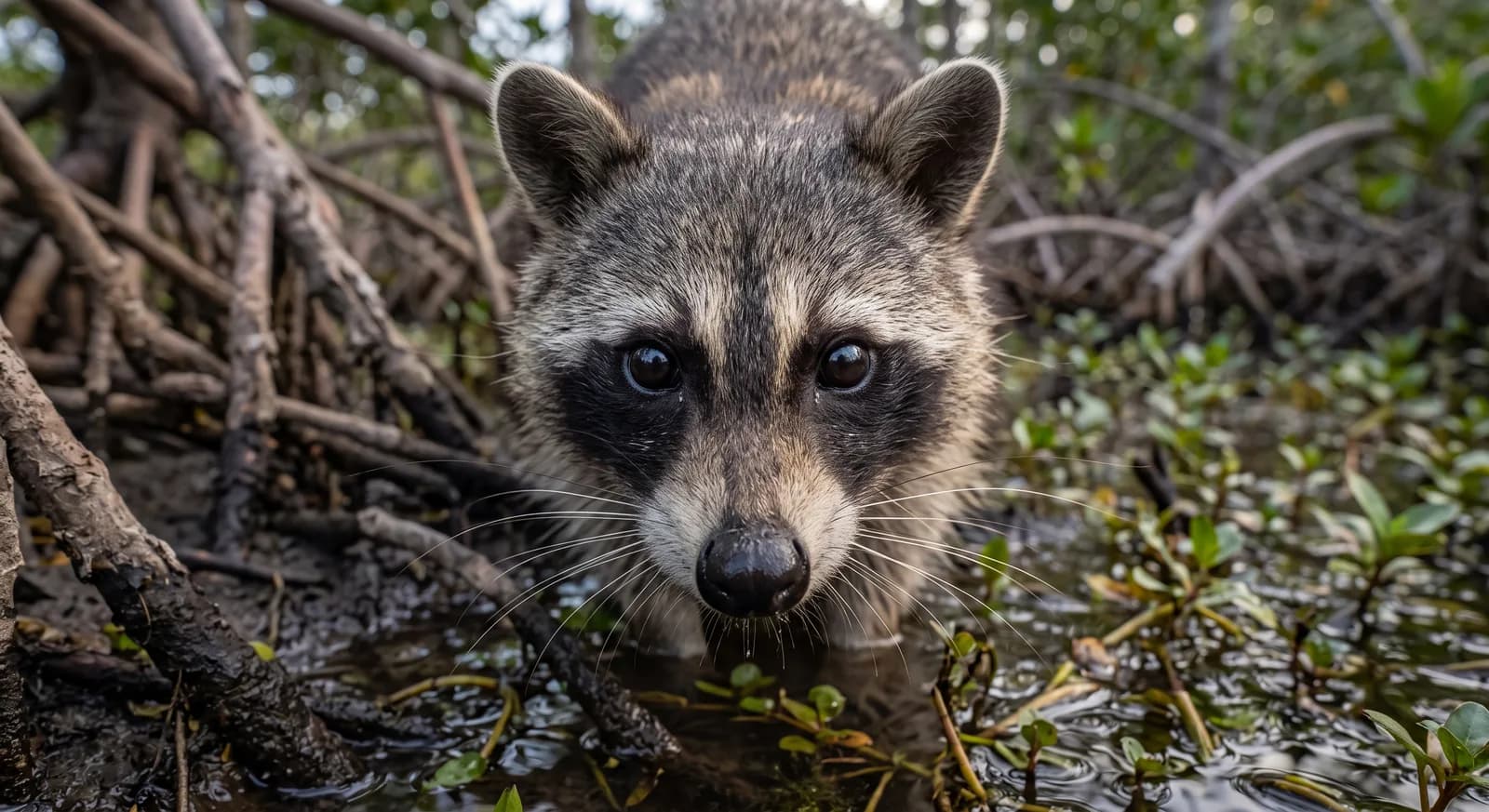
Crab-eating Raccoon
Procyon cancrivorus
White-faced Whistling-Duck
Dendrocygna viduata
Vampire Bat
Desmodus rotundus
Keep exploring
Based on what we already know about coypu.
Comments
Share an experience, a fun fact or a tip for seeing the coypu.
Be the first to comment.