Bony fish · Cypriniformes · Cyprinidae
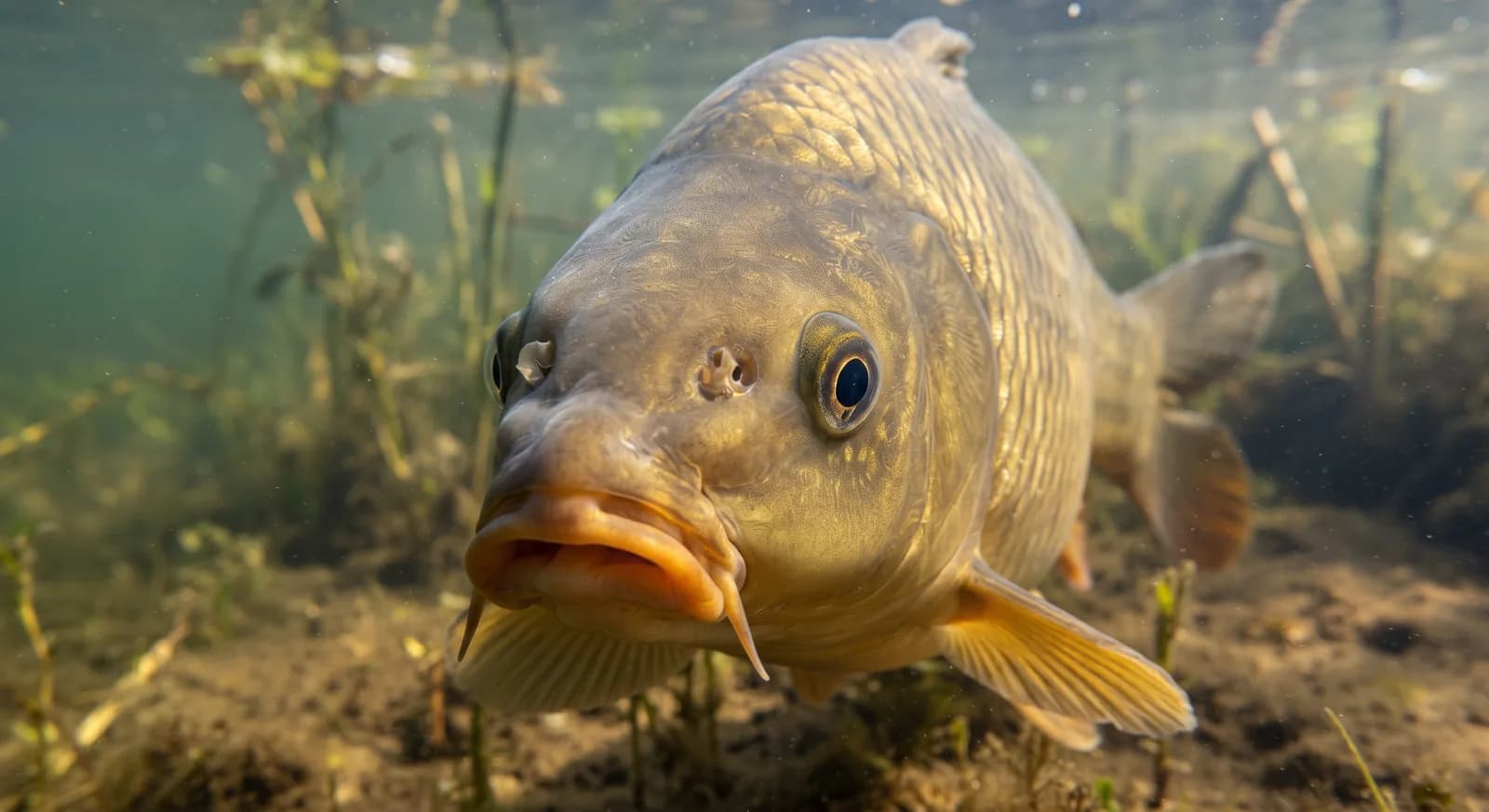
Tench
Tinca tinca
The species is abundant and widely distributed; it faces no significant short-term risk. See full glossary
It is one of the longest-lived freshwater fish in Europe, with individuals documented at over 30 years in ideal captive conditions.
Weight
up to 5.5 kg
Size
up to 70 cm
Lifespan
10 years
Diet
Omnivore
Combines animal and plant food depending on availability.
Activity
Nocturnal
Active mainly at night.
Social structure
Solitary
Lives and hunts alone, joining others only to breed.
Sighting difficulty
Easy
Fun facts
- Its tiny, almost invisible scales give it a characteristically smooth, slimy look.
- It eats insect larvae and molluscs, supplemented with plant matter from the bottom.
- It lives in well-vegetated lakes, ponds and slow-flowing rivers of Europe and Asia.
- It is among the European fish most resistant to lack of oxygen and to warm, stagnant water, and it survives where other cyprinids cannot cope.
- It buries itself in the mud for the winter and spends months almost inactive, without feeding.
- Its skin is covered in a very thick mucus. Hence the medieval legend of the physician fish: other fish were believed to rub against it to heal their wounds, and its slime was even held to work as a human remedy. There is no basis whatsoever for it.
- It has tiny scales set deep in the skin, which give it a smooth feel unusual in a cyprinid.
- In Spain the tench has deep culinary roots in Extremadura and Castilla y León, with traditional pond farms.
Life cycle & biology
- Skeleton type
- Vertebrate - internal bony skeleton (fish)
- Habitat & environment
- Lakes, ponds and slow-flowing rivers with plenty of vegetation across much of Europe and Asia
- Birth weight
- Larva 4-5 mm long on hatching
- Size at birth
- 4-5 mm long at hatching
- Sexual maturity
- 3-4 years (the male before the female)
- Gestation / incubation
- 3-6 days of incubation at 20°C
- Litter / clutch size
- 23,000 to 380,000 eggs per female, in several batches 14 days apart
- Lifespan in captivity
- A documented record of over 30 years in captivity
Sources consulted: Academia.edu; Pond Life; ResearchGate; USGS NAS; Irish Specimen Fish Committee; MDB Fish Fact Sheet; FishBase; Farnham Angling Society
Where to find it
See its range on the interactive mapWhere to watch it
Parques y spots de buceo donde se ha documentado esta especie — se muestran 10 de 74 documentados.
Related species
Other species in the catalogue with the most in common with Tench — same habitat, park, country, tags or family.
Barbel
Barbus barbus
Dace
Leuciscus leuciscus
 Least Concern
Common Carp
Cyprinus carpio
Wels
Silurus glanis
Zander
Sander lucioperca
Pond Loach
Misgurnus anguillicaudatus
Keep exploring
Based on what we already know about tench.
Comments
Share an experience, a fun fact or a tip for seeing the tench.
Be the first to comment.