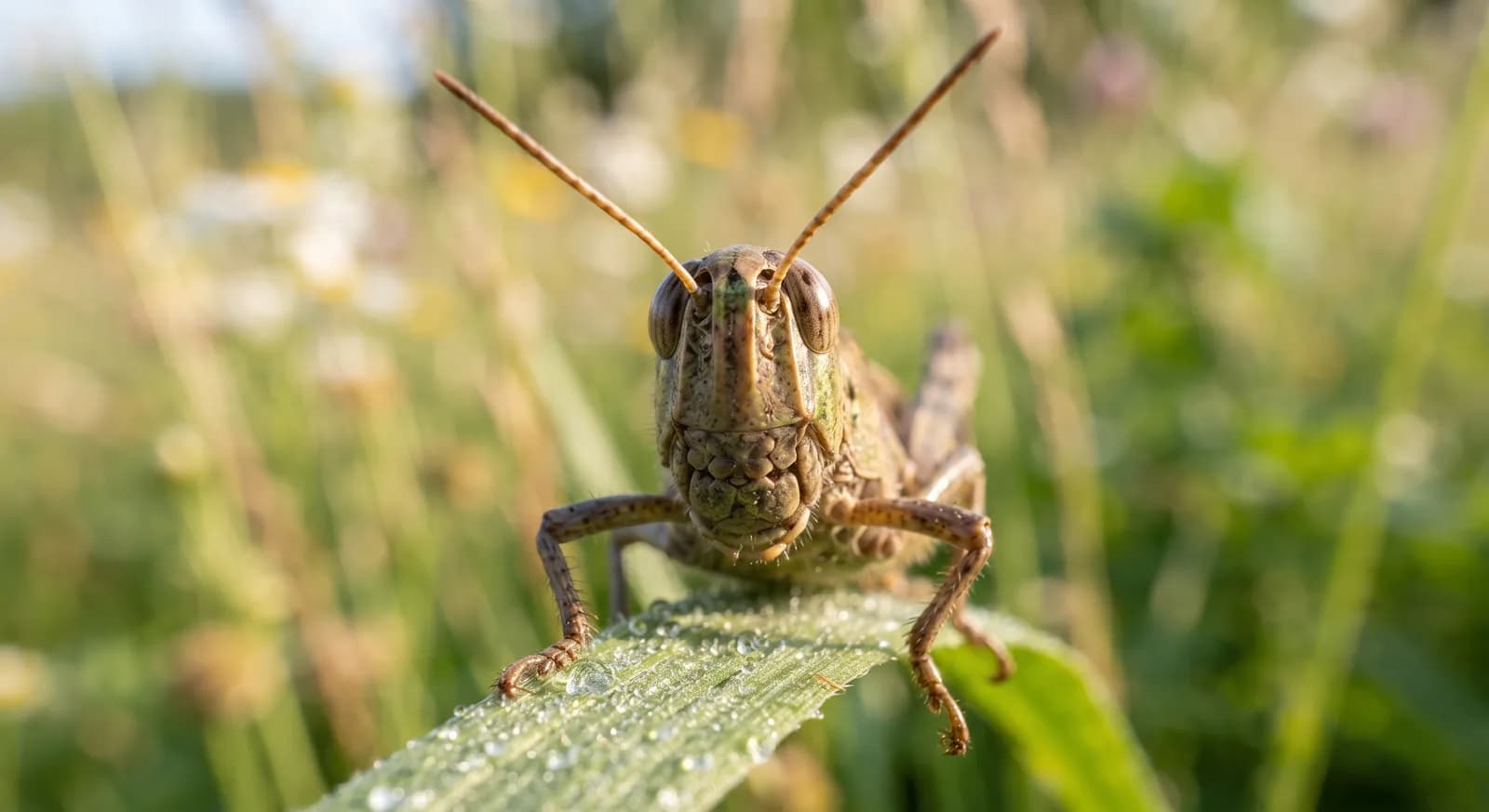
 Least Concern
Field Grasshopper
Chorthippus brunneus
Mammals · Rodentia · Cricetidae
Microtus arvalis
The species is abundant and widely distributed; it faces no significant short-term risk.
A small rodent of solid build and rounded appearance, with a short neck, broad head, blunt muzzle and short but clearly visible ears. The back is yellowish brown and the belly greyish white, with no difference between the sexes. It is very hard to tell apart from the field vole (Microtus agrestis).
Weight
30 g – 72 g
Size
8 cm – 13 cm
Life expectancy
2 years
Diet
Herbivore
Feeds mainly on plants.
Activity
Diurnal
Active mainly during the day.
Social structure
Colony
Lives in large concentrations, often for breeding reasons.
Estimated population
At the peak of the 2007 outbreak in Castile and León some 750 million individuals were estimated over 2 million hectares, with densities of up to 2,000 voles per hectare
Sources consulted: Hernández, Sánchez-González, Navarro-Castilla y Barja 2017, Enciclopedia Virtual de los Vertebrados Españoles (MNCN-CSIC) · SECEM · Luque-Larena et al. 2013, Basic and Applied Ecology 14(5) · Jareño et al. (tesis doctoral UCLM 2014) · ITACyL · Junta de Castilla y León
Best time: All year round; it alternates two- or three-hour spells of activity and rest, both by day and by night
Parks and dive sites where this species has been documented — showing 10 of 147.
Other species in the catalogue with the most in common with Common Vole — same habitat, park, country, tags or family.
Based on what we already know about common vole.
The pins mark the parks where its presence is documented.