Skip to content
WAnimals
  • Map
  • Species
  • Parks
  • Diving
Log inCreate account
WAnimals

The guide for travellers and animal lovers: discover, plan and share your wild adventures around the world.

Discover wildlife

  • Species
  • Ecosystems
  • Glossary
  • Tags

Explore places

  • Map
  • Countries
  • Parks
  • Diving

Plan experiences

  • Guides

Learn

  • Blog

Resources

  • Help centre
  • Contact
  • Install the app

Follow us

Account

  • Log in
  • Create account

© 2026 WAnimals. All rights reserved.

About usHow we build our profilesTerms of servicePrivacyLegal notice
MapSpeciesParksDiving
  1. Home
  2. Species
  3. Crevalle Jack

One of the 2 jacks on WAnimals
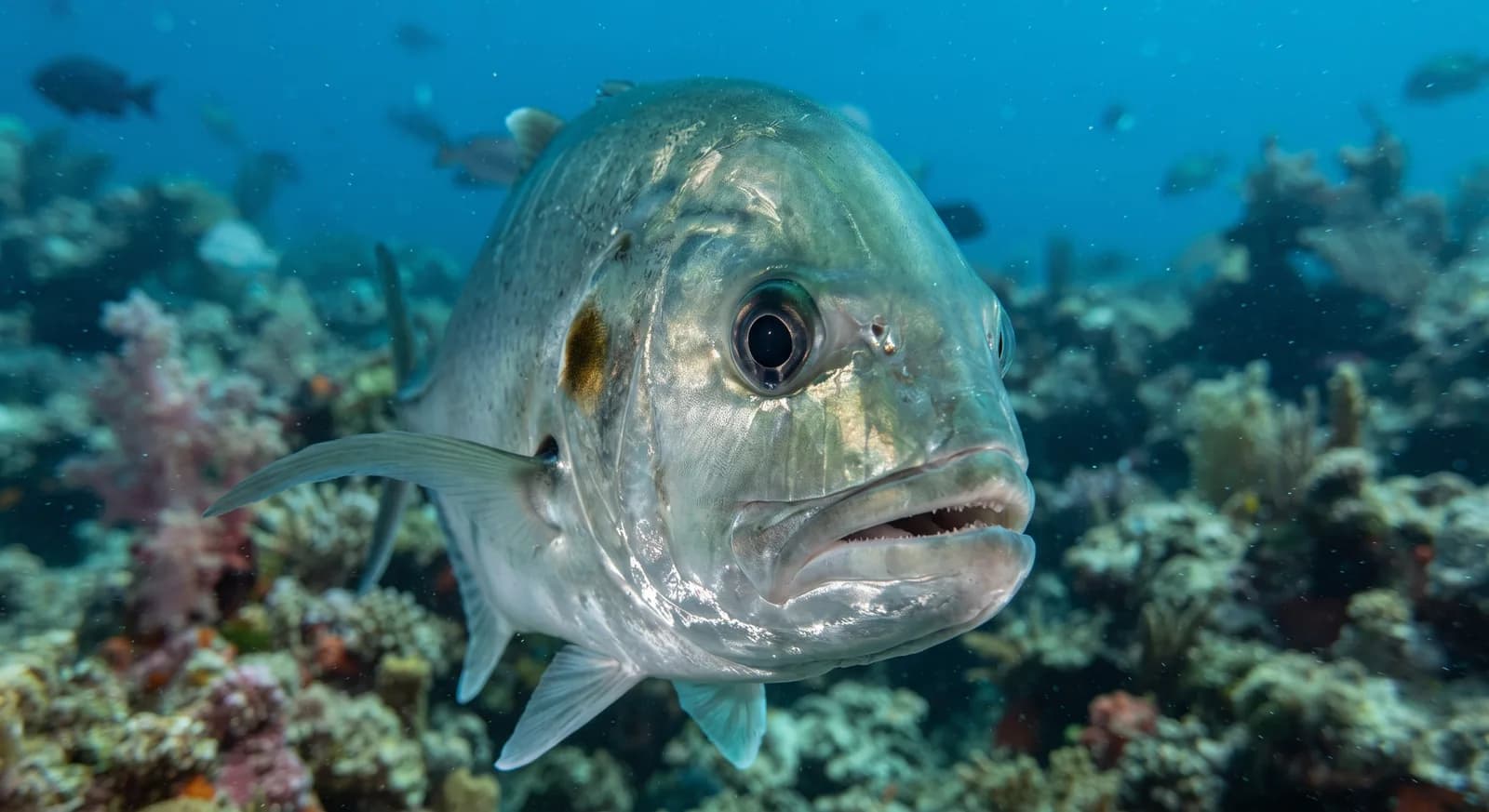
Crevalle Jack (Caranx hippos)

Bony fish · Perciformes · Carangidae

Crevalle Jack

Caranx hippos

Least Concern

The species is abundant and widely distributed; it faces no significant short-term risk.

Spotted something wrong?

A large jack with a steep head and a deep profile, with a dark blotch on the gill cover and another at the base of the pectoral fin. It hunts in coastal waters and estuaries, often in groups that corner shoals of small fish against the surface or the shore.

Size

50 cm – 1.2 m

Life expectancy

17 years

Diet

Carnivore

Feeds mainly on other animals.
Social structure

Colony

Lives in large concentrations, often for breeding reasons.

Sighting difficulty

Easy

Ocean
45countries14parks21dive sites4same family

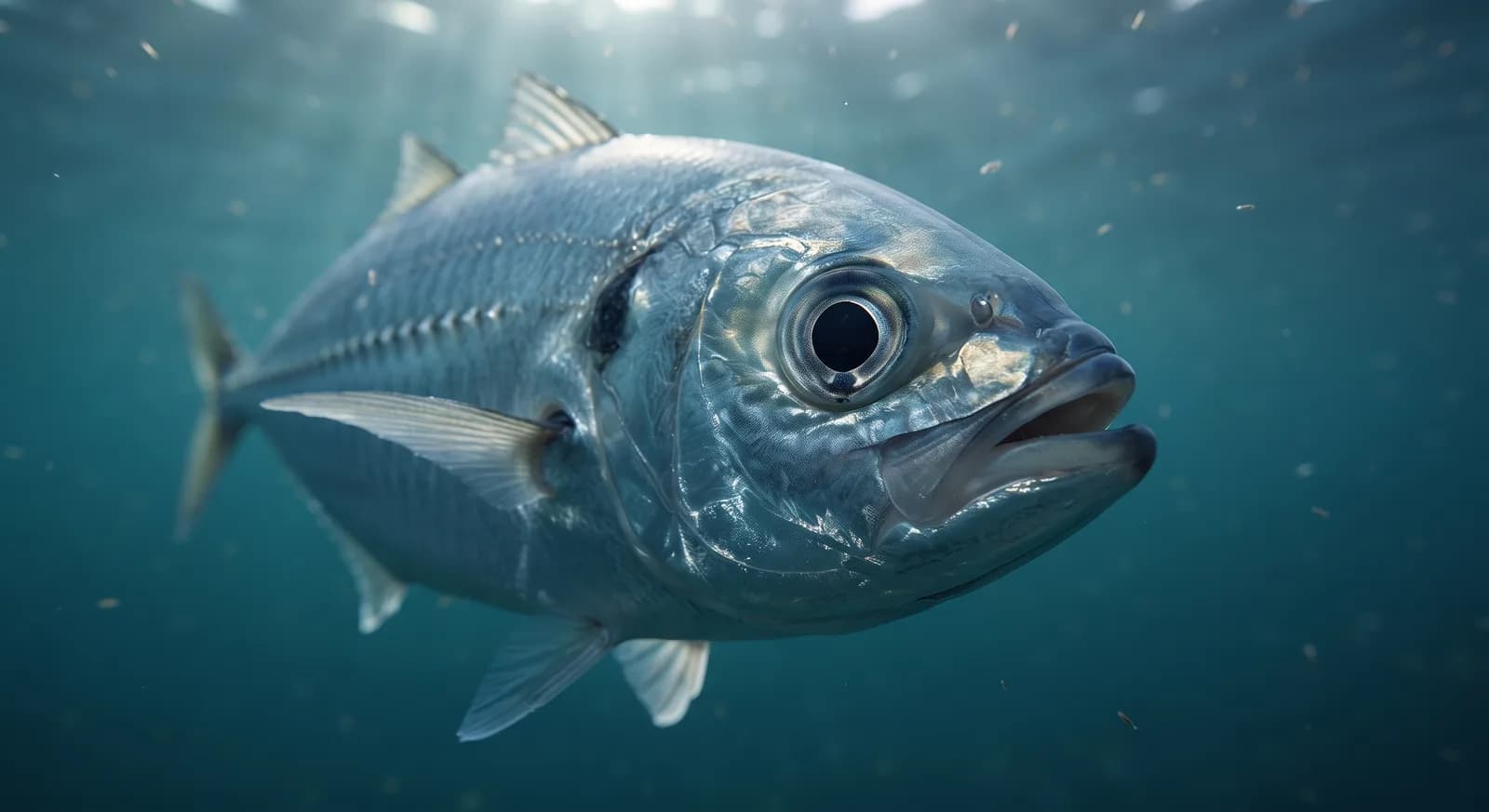
AI-generated images: illustrations, not photographs.

Fun facts

  • The sharp bony scutes along the rear of the lateral line form a cutting keel that is best avoided when handling it.
  • It hunts in groups, driving shoals of sardines up against the surface, and the din of the attack can be heard tens of metres away.
  • The juveniles move into estuaries and river mouths of very low salinity, and even run up stretches of fresh water.
  • It hunts in groups and at the surface: schools corner forage fish against the shore and attack them in a noisy rush that can be seen and heard from land.
  • Its scutes — hard, keeled modified scales — run along the rear part of the lateral line and form a keel that gives it stability at high speed.
  • It produces sounds, with audible grunts when it is taken out of the water.
  • Juveniles tolerate very low salinities and use estuaries as nurseries, which makes the species dependent on those habitats.
  • It is a game fish highly prized for its strength, although its flesh is considered mediocre and in some areas it is associated with ciguatera.

Life cycle and biology

Skeleton type
Vertebrate - internal bony skeleton (fish)
Habitat and environment
Coastal waters, estuaries and bays of the tropical and subtropical Atlantic

Sources consulted: https://en.wikipedia.org/wiki/Crevalle_jack

Where to find it

Loading map…

Where to see it

Parks and dive sites where this species has been documented — showing 20 of 35.

Related species

Other species in the catalogue with the most in common with Crevalle Jack — same habitat, park, country, tags or family.

Same taxonomic family
Shares a park
Shares a park
Shares a park
Same taxonomic family

Keep exploring

Based on what we already know about crevalle jack.

Comments

Share an experience, a fun fact or a tip for seeing the crevalle jack.

Be the first to comment.

See full glossary
This page in other languages: Español · Deutsch · Français · Português · Italiano

The pins mark the parks and dive sites where its presence is documented.

See its range on the interactive map→
Doñana National ParkSpain
Banc d'ArguinMauritania
Cabrera ArchipelagoSpain
Ebro DeltaSpain
Cíes IslandsSpain
Ria FormosaPortugal
Albufera de ValenciaSpain
Cabo de Gata-NíjarSpain
Fragas do EumeSpain
UrdaibaiSpain
Medes IslandsSpain
Cap de CreusSpain
El Hierro / La RestingaSpain
Museo Atlántico (Lanzarote)Spain
Columbretes IslandsSpain
Formentera (Es Freus)Spain
Azores (Princess Alice Bank)Portugal
Berlengas IslandsPortugal
Isla de LobosUruguay
Cavalleria (Menorca)Spain
See all 14 parks
See all 21 dive sites
Least Concern

Greater Amberjack

Seriola dumerili

Horse MackerelVulnerable

Horse Mackerel

Trachurus trachurus

Least Concern

Skipper

Scomberesox saurus

Little TunnyLeast Concern

Little Tunny

Euthynnus alletteratus

Least Concern

Atlantic Chub Mackerel

Scomber colias

Least Concern

Leerfish

Lichia amia

CountriesSpain
ParksDoñana National ParkSpain
TagsCarnivore
Carnivore
Colonial
Fish
Ocean

North America31

South America7

Africa5

Europe2

Spain
Portugal
Mauritania
Morocco
Uruguay
Angola
Anguilla
Antigua and Barbuda
Aruba
Bahamas
Barbados
Belize
Bermuda
British Virgin Islands
Cayman Islands
Costa Rica
Cuba
Curaçao
Dominica
Dominican Republic
Grenada
Guadeloupe
Haiti
Honduras
Jamaica
Martinique
Mexico
Nicaragua
Panama
Puerto Rico
Saint Kitts and Nevis
Saint Lucia
Saint Vincent and Grenadines
Trinidad and Tobago
Turks and Caicos Islands
U.S. Virgin Islands
United States
Argentina
Brazil
Colombia
Guyana
Suriname
Uruguay
Venezuela
Angola
Gambia
Mauritania
Morocco
Senegal
Portugal
Spain