Skip to content
WAnimals
  • Map
  • Species
  • Parks
  • Diving
Log inCreate account
WAnimals

The guide for travellers and animal lovers: discover, plan and share your wild adventures around the world.

Discover wildlife

  • Species
  • Ecosystems
  • Glossary
  • Tags

Explore places

  • Map
  • Countries
  • Parks
  • Diving

Plan experiences

  • Guides

Learn

  • Blog

Resources

  • Help centre
  • Contact
  • Install the app

Follow us

Account

  • Log in
  • Create account

© 2026 WAnimals. All rights reserved.

About usHow we build our profilesTerms of servicePrivacyLegal notice
MapSpeciesParksDiving
  1. Home
  2. Species
  3. Skipjack

One of the 2 bonitos on WAnimals
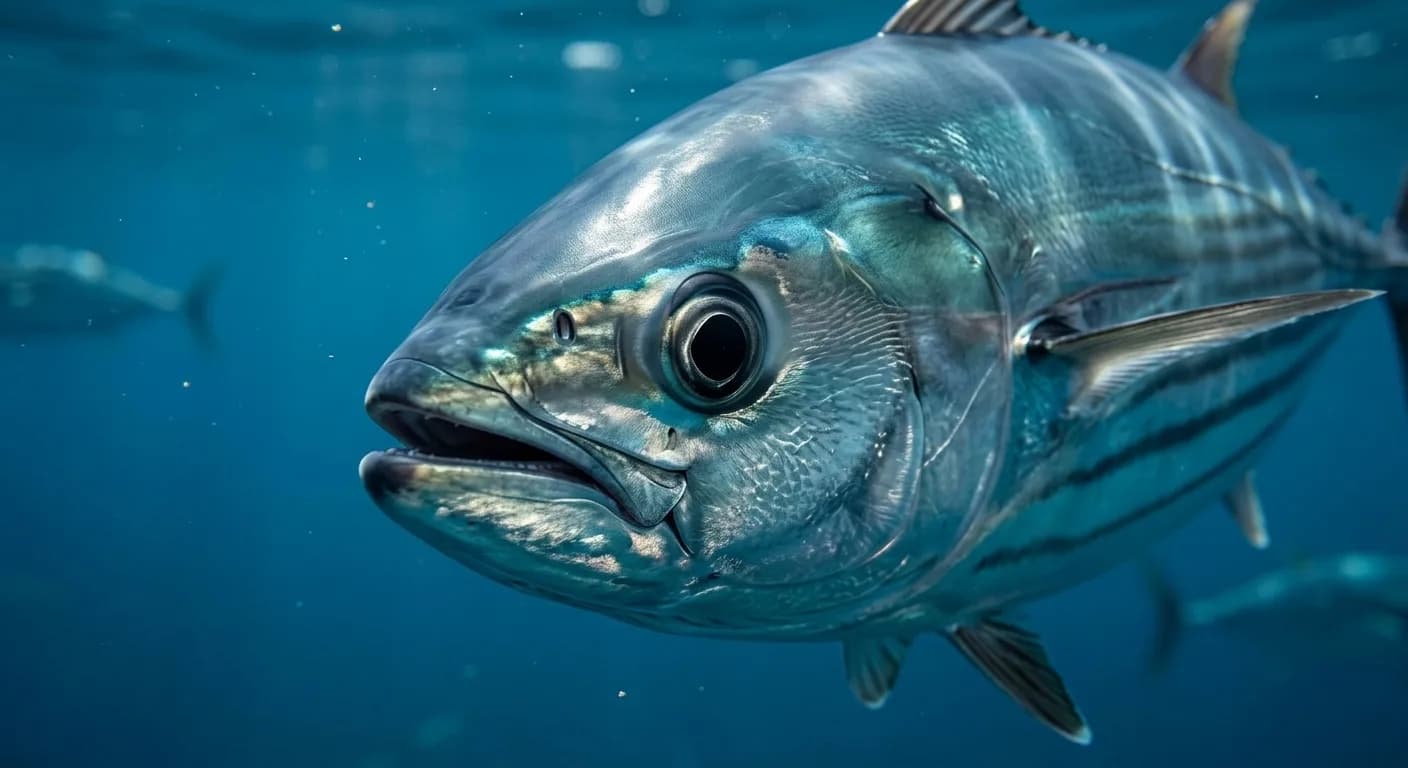
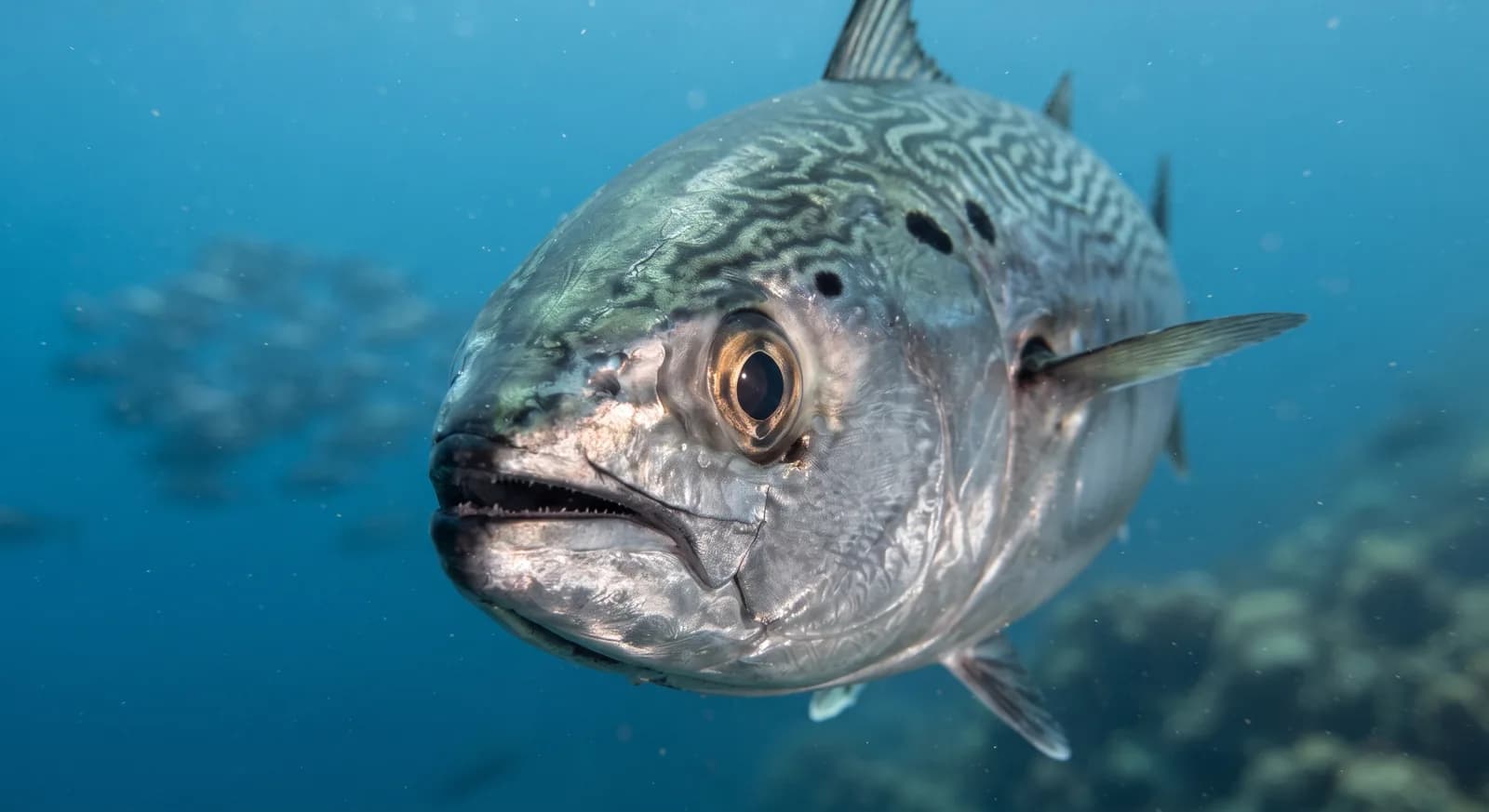
Skipjack (Katsuwonus pelamis)

Bony fish · Scombriformes · Scombridae

Skipjack

Katsuwonus pelamis

Least Concern

The species is abundant and widely distributed; it faces no significant short-term risk.

Spotted something wrong?

Katsuwonus pelamis is a fish of the family Scombridae in the order Perciformes. Its three official FAO names are: listado in Spanish, skipjack tuna in English and bonite à ventre rayé in French. In Chile it is known as atún listado, barrilete, cachurreta or auhopu.

Weight

19 kg on average

Size

up to 1.1 m

Life expectancy

12 years
Diet

Carnivore

Feeds mainly on other animals.

Activity

Diurnal

Active mainly during the day.

Social structure

Colony

Lives in large concentrations, often for breeding reasons.

Sighting difficulty

Easy

Ocean
56countries4parks222dive sites7same family

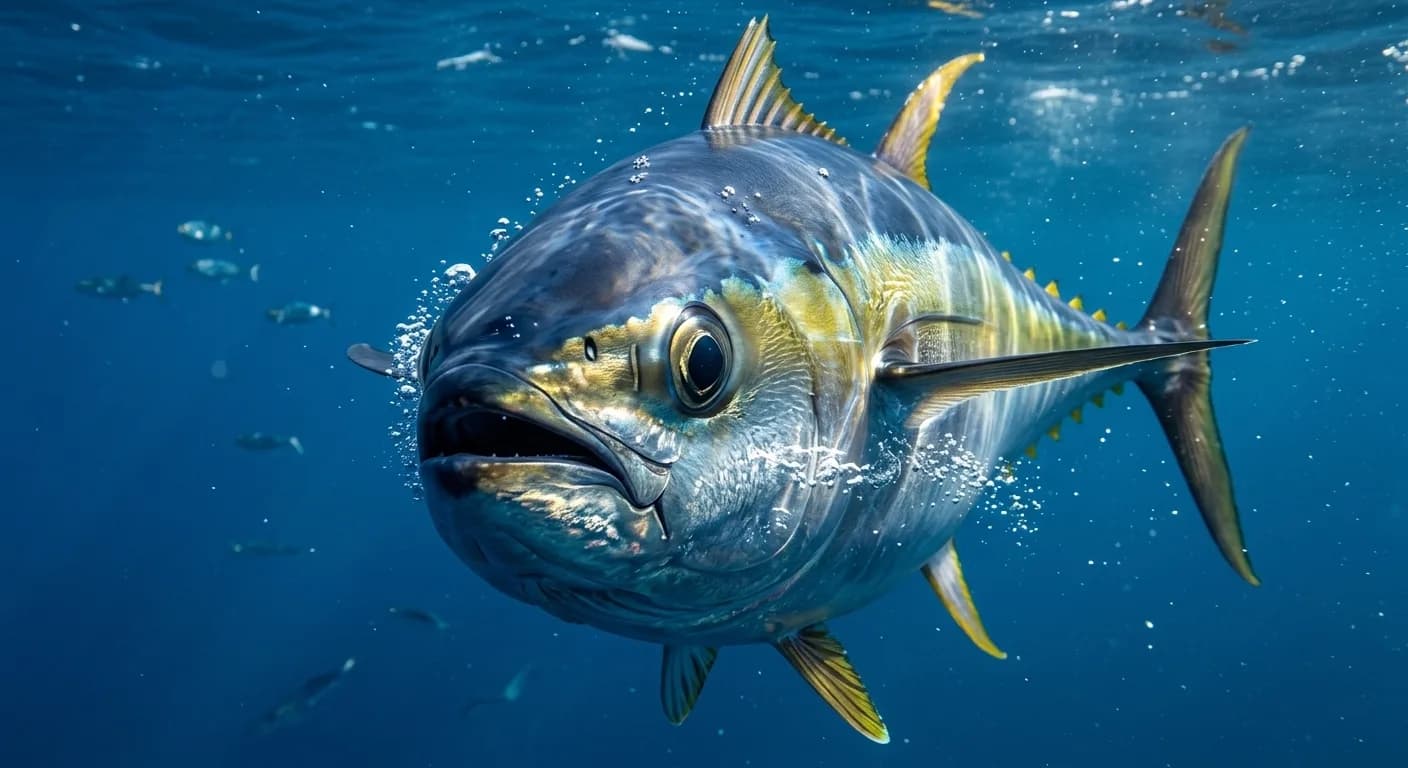
AI-generated images: illustrations, not photographs.

Fun facts

  • It is the world's most heavily caught tuna by volume, and the one that goes into most tins of light tuna.
  • It is short-lived for a tuna: it lives no more than twelve years, compared with forty for the bluefin tuna. That makes its populations respond quickly to fishing, for better and for worse.
  • In tropical waters mature females spawn almost daily.
  • It forms very tight schools sorted by size and gathers beneath floating objects, something fisheries exploit with fish aggregating devices.
  • It is identified by the four to six dark longitudinal stripes on its belly, which no other tuna has.

Life cycle and biology

Skeleton type
Vertebrate - internal bony skeleton (bony fish)
Habitat and environment
Tropical and warm-temperate oceanic pelagic waters worldwide, between 0 and 260 m and between 15 and 30 °C; absent from the Black Sea
Sexual maturity
3 years

Sources consulted: https://es.wikipedia.org/wiki/Katsuwonus_pelamis

Where to find it

Loading map…

Where to see it

Parks and dive sites where this species has been documented — showing 14 of 226.

Related species

Other species in the catalogue with the most in common with Skipjack — same habitat, park, country, tags or family.

Same taxonomic family
Shares a park
Shares a park

Keep exploring

Based on what we already know about skipjack.

Comments

Share an experience, a fun fact or a tip for seeing the skipjack.

Be the first to comment.

See full glossary
This page in other languages: Español · Deutsch · Français · Português · Italiano

The pins mark the parks and dive sites where its presence is documented.

See its range on the interactive map→
Fernando de NoronhaBrazil
Banc d'ArguinMauritania
Great Barrier ReefAustralia
PapahānaumokuākeaUnited States
Palancar ReefMexico
Isla Mujeres (whale shark)Mexico
Roatán IslandHonduras
Utila (whale shark)Honduras
Cayos CochinosHonduras
Ilha GrandeBrazil
Arraial do CaboBrazil
Darwin IslandEcuador
Wolf IslandEcuador
Cocos IslandCosta Rica
See all 222 dive sites
Least Concern

Atlantic Bonito

Sarda sarda

Yellowfin TunaLeast Concern

Yellowfin Tuna

Thunnus albacares

Little TunnyLeast Concern

Little Tunny

Euthynnus alletteratus

Least Concern

Atlantic Chub Mackerel

Scomber colias

Magnificent FrigatebirdLeast Concern

Magnificent Frigatebird

Fregata magnificens

Banded HumbugLeast Concern

Banded Humbug

Dascyllus aruanus

CountriesIndonesia
ParksFernando de NoronhaBrazil
TagsCarnivore
Carnivore
Diurnal
Colonial
Fish
Ocean

Oceania20

Asia12

Africa9

North America9

South America6

Indonesia
Philippines
United States
Australia
Mexico
Thailand
American Samoa
Australia
Cook Islands
Fiji
French Polynesia
Guam
Kiribati
Marshall Islands
Micronesia
Nauru
New Caledonia
Niue
Northern Mariana Islands
Palau
Papua New Guinea
Samoa
Solomon Islands
Tonga
Tuvalu
Vanuatu
Brunei
Cambodia
China
Indonesia
Japan
Malaysia
Philippines
Singapore
Taiwan
Thailand
Timor-Leste
Vietnam
Angola
Cabo Verde
Cameroon
Gabon
Gambia
Guinea-Bissau
Mauritania
São Tomé and Príncipe
Senegal
Bermuda
Costa Rica
El Salvador
Guatemala
Honduras
Mexico
Nicaragua
Panama
United States
Brazil
Colombia
Ecuador
French Guiana
Guyana
Suriname