One of the 4 pipits on WAnimals
Birds · Passeriformes · Motacillidae
Water Pipit
Anthus spinoletta
The species is abundant and widely distributed; it faces no significant short-term risk. See full glossary
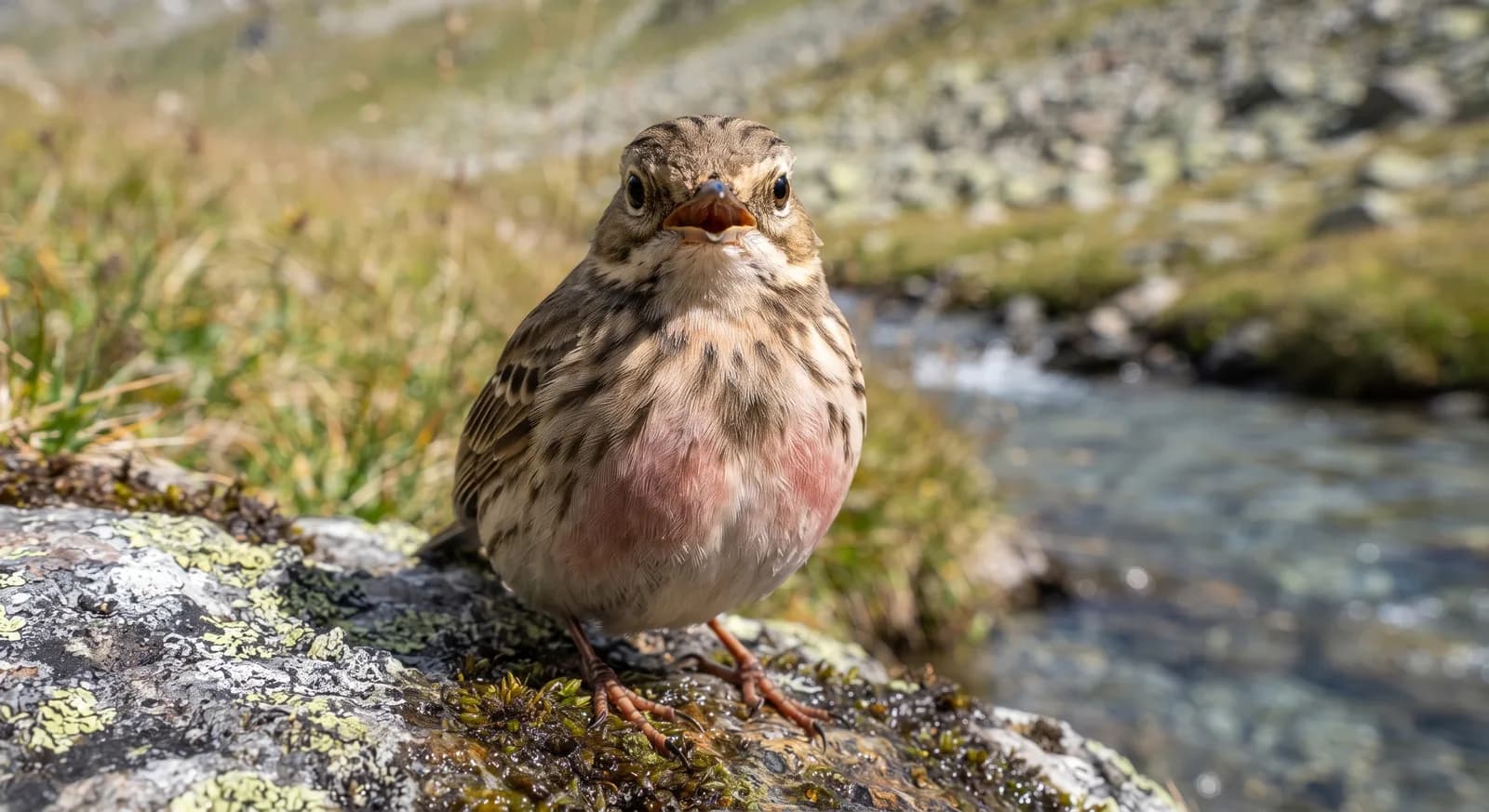
A pipit of the middle and high mountains, somewhat larger than the meadow pipit, from which it is told by its dark legs, a white supercilium and chestnut rather than greenish plumage. In summer the back is pale brown with white streaks and the belly white with a faint yellowish pink tinge, visible only at very close range. A grey band runs from the eye to the crown. In winter the plumage darkens and the whitish bands stand out more.
Weight
36 g on average
Diet
Insectivore
Feeds mainly on insects and other invertebrates.
Activity
Diurnal
Active mainly during the day.
Social structure
In pairs
Usually lives in pairs, sometimes for life.
Sighting difficulty
Easy
Estimated population
391,000-705,000 breeding pairs in the EU-27, over a breeding area of 319,000 km²
Fun facts
- It makes a very marked altitudinal migration: it breeds high in the mountains and comes down in winter to rice fields and marshes, sometimes to sea level.
- A 2013 study reconstructed its movements from a hundred years of ringing and recovery data.
- Its plumage changes markedly between summer and winter, which complicates identification in the field outside the breeding season.
Life cycle & biology
- Skeleton type
- Vertebrate - internal bony skeleton (bird)
- Habitat & environment
- A fragmented breeding distribution across the mountain areas of central and southern Europe. It breeds on alpine pastures and high meadows with short grass and scattered rocks, shrubs or trees, almost always with damp patches and often on slopes. In winter it descends to coastal saltpans, lagoons, marshes, grassy lake and river margins, sewage works, watercress beds, rice fields and other irrigated crops
- Sexual maturity
- 11.9 months
- Gestation / incubation
- 14 days
- Litter / clutch size
- 4
Sources consulted: IUCN Red List; Informe Art. 12 de la Directiva Aves (Agencia Europea de Medio Ambiente); European Red List of Birds 2015; Animalia.bio; Barišić 2013 (análisis de cien años de anillamiento); Linnaeus 1758
Where to find it
See its range on the interactive mapBest time: Summer on alpine pastures; in winter it moves down to coastal wetlands and rice fields
Where to watch it
Parks and dive sites where this species has been documented.
Related species
Other species in the catalogue with the most in common with Water Pipit — same habitat, park, country, tags or family.
White Wagtail
Motacilla alba
Grey Wagtail
Motacilla cinerea
Western Yellow Wagtail
Motacilla flava
Meadow Pipit
Anthus pratensis
 Least Concern
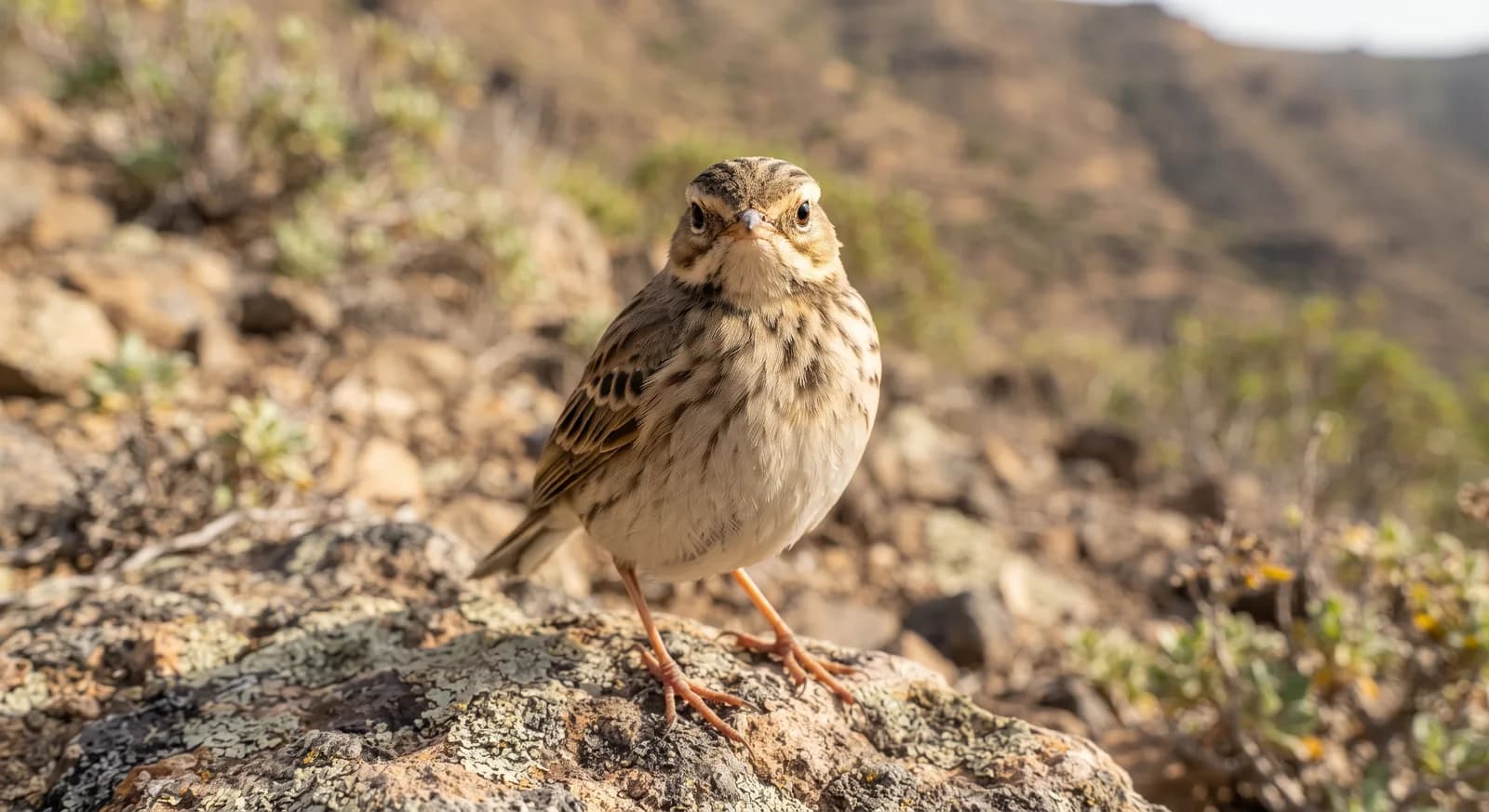
Berthelot's Pipit
Anthus berthelotii
Eurasian Blue Tit
Cyanistes caeruleus
Keep exploring
Based on what we already know about water pipit.
Comments
Share an experience, a fun fact or a tip for seeing the water pipit.
Be the first to comment.