One of the 24 beetles on WAnimals
Insects · Coleoptera · Gyrinidae
Whirligig Beetle
Gyrinus natator
It has not yet been assessed against the IUCN criteria. See full glossary
A small, glossy black beetle that skates in groups across the surface of the water in frantic circles. It lives right at the interface between air and water, and catches insects that have fallen onto the surface film.
Size
5 cm – 8 cm
Diet
Carnivore
Feeds mainly on other animals.
Activity
Diurnal
Active mainly during the day.
Social structure
Colony
Lives in large concentrations, often for breeding reasons.
Sighting difficulty
Unknown
Fun facts
- Its eyes are divided into two independent halves: the upper one looks into the air and the lower one into the water, so that it watches both at once.
- It detects obstacles and prey from the ripples it generates on the surface and that bounce back, a system comparable to sonar.
- Its middle and hind legs have become flattened paddles that beat up to sixty times a second, among the fastest movements of any animal limb.
- Its eyes are split in two: one pair looks upwards, into the air, and the other downwards, into the water. It sees above and below the surface at the same time.
- It swims in extremely fast circles on the surface film, hence its name. Its middle and hind legs are transformed into flattened paddles that beat up to sixty times per second.
- It navigates by ripples. With its antennae it detects the ripples it generates itself as they bounce off obstacles, a system comparable to a surface sonar that lets it wheel about in a swarm without colliding.
- Those groups are defensive: by gathering in dozens or hundreds, each individual is less likely to be the one a predator picks.
- It secretes a foul-smelling milky substance when handled, hence its English name of skunk beetle.
- It can fly and colonise new ponds, and it can also dive, taking a bubble of air down with it beneath its elytra.
Life cycle & biology
- Skeleton type
- Invertebrate - chitin exoskeleton (insect)
- Habitat & environment
- The surface of ponds, lagoons and still backwaters
Sources consulted: Buglife; Natural History Museum de Londres; Voise y Casas (2010), Journal of the Royal Society Interface
Where to find it
See its range on the interactive mapWhere to watch it
Parques y spots de buceo donde se ha documentado esta especie — se muestran 10 de 139 documentados.
Related species
Other species in the catalogue with the most in common with Whirligig Beetle — same habitat, park, country, tags or family.
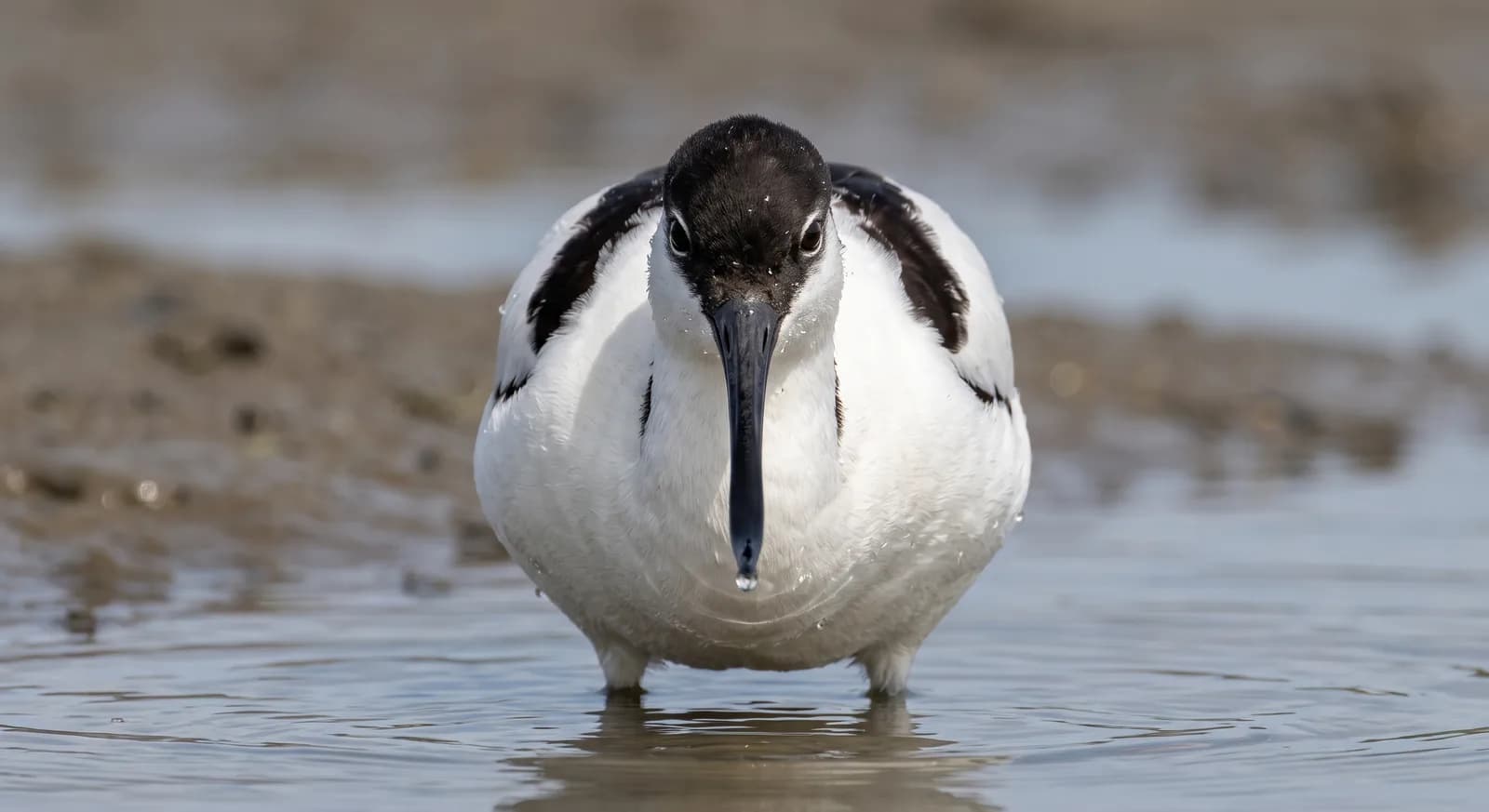 Least Concern
Pied Avocet
Recurvirostra avosetta
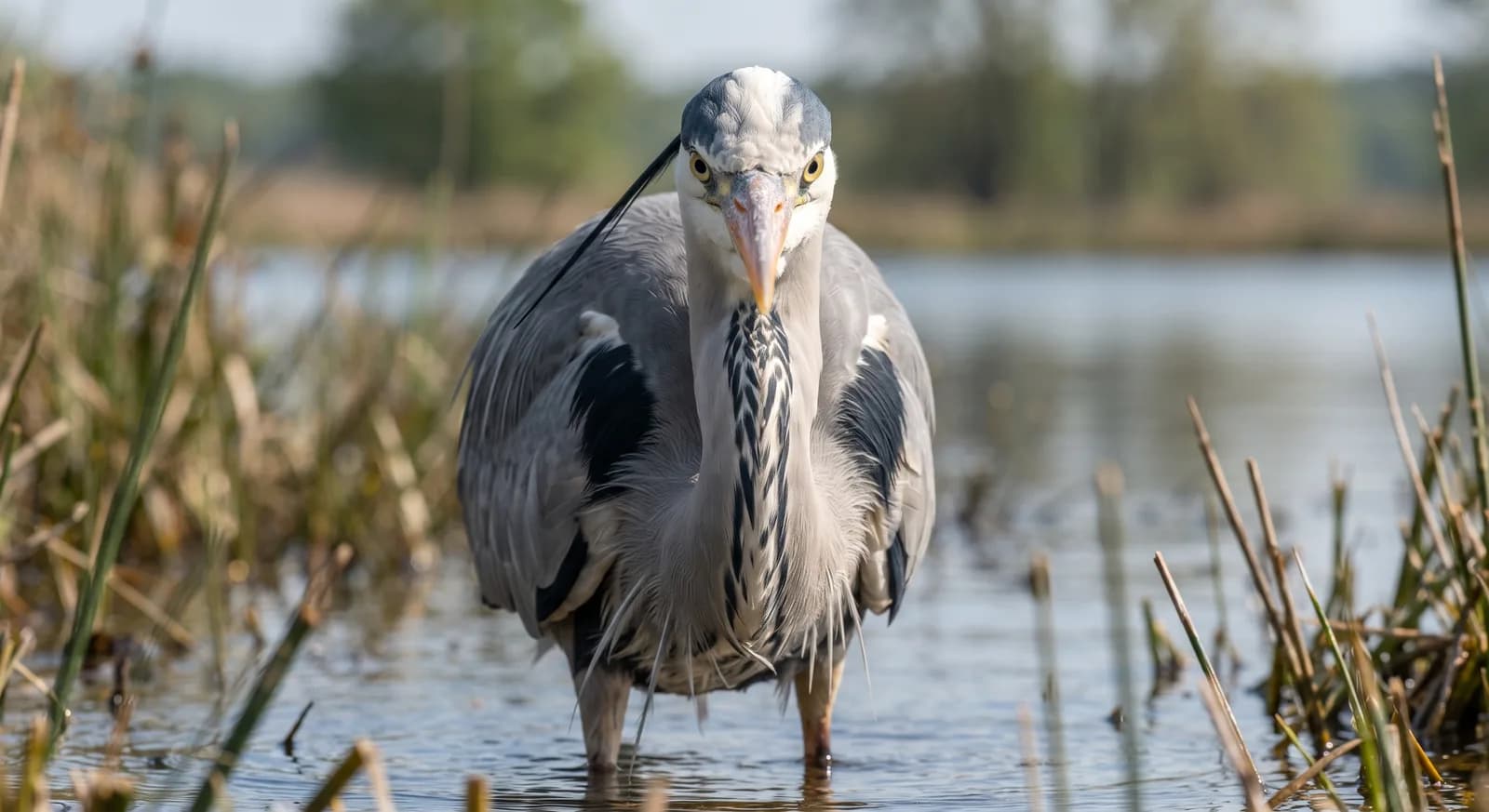 Least Concern
Grey Heron
Ardea cinerea
Little Egret
Egretta garzetta
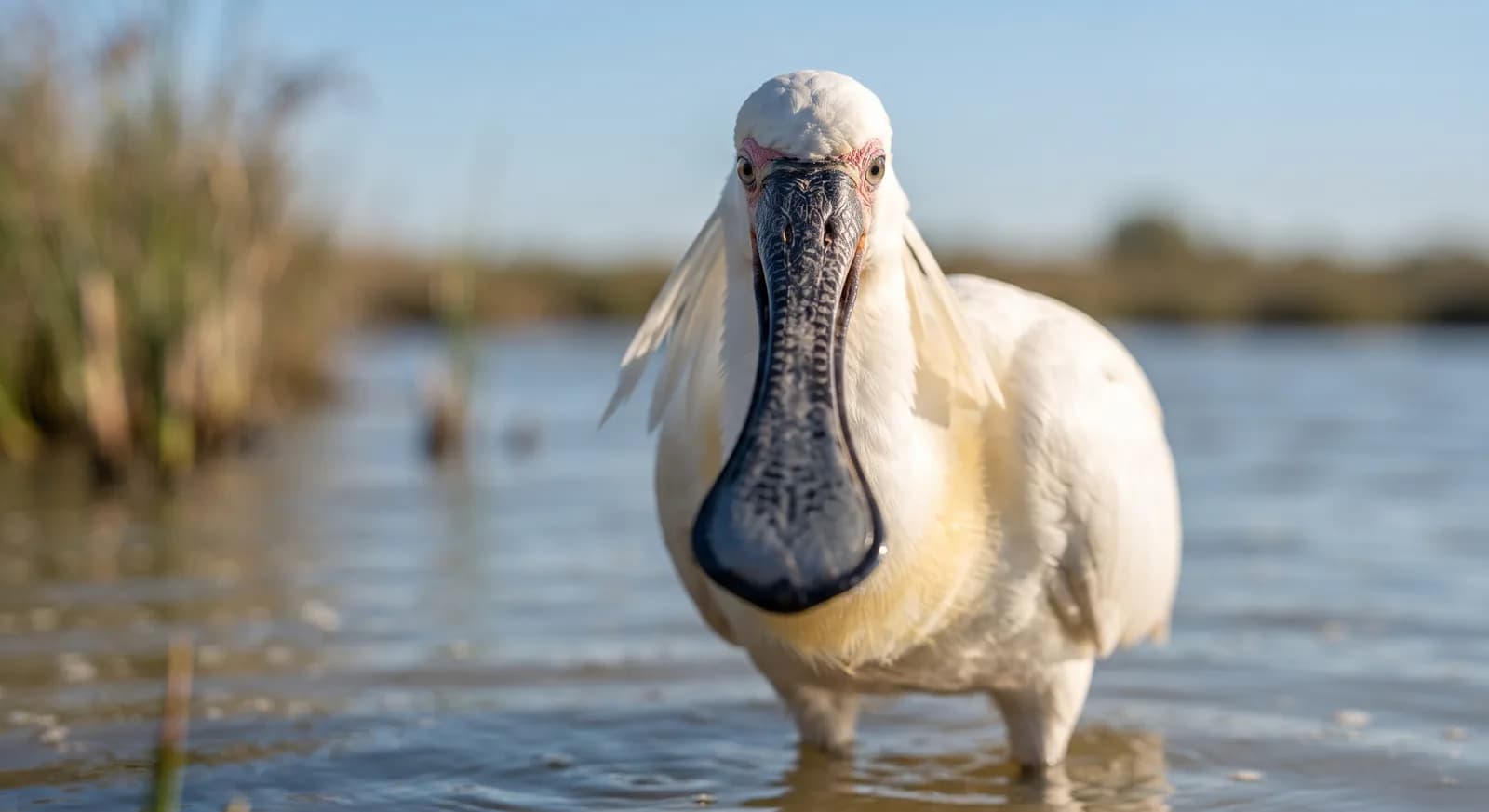 Least Concern
Eurasian Spoonbill
Platalea leucorodia
Four-Spotted Chaser
Libellula quadrimaculata
Beautiful Demoiselle
Calopteryx virgo
Keep exploring
Based on what we already know about whirligig beetle.
Comments
Share an experience, a fun fact or a tip for seeing the whirligig beetle.
Be the first to comment.