One of the 5 buntings on WAnimals
Birds · Passeriformes · Emberizidae
Yellowhammer
Emberiza citrinella
The species is abundant and widely distributed; it faces no significant short-term risk. See full glossary
A robust bunting with a thick bill adapted to seeds. The male has an unmistakable bright yellow head, yellow underparts, a densely streaked brown back and a chestnut rump. The female repeats the same pattern in much duller tones and with more streaking.
Weight
30 g on average
Size
15.5 cm – 17 cm
Diet
Herbivore
Feeds mainly on plants.
Activity
Diurnal
Active mainly during the day.
Social structure
In pairs
Usually lives in pairs, sometimes for life.
Sighting difficulty
Easy
Estimated population
The European population is estimated at between 39 and 54 million individuals, most of them in Russia. In Spain, at between 488,000 and 796,000 according to Carrascal and Palomino (2018), or between 276,000 and 389,000 according to the SACRE programme
Fun facts
- The pattern of fine, tangled lines on its eggs earned it the old English names of "scribble lark" and "writing lark", and is the origin of the Spanish name for the whole genus.
- Its song has a rhythm that the English remember as "a little bit of bread and no cheese".
- It hybridises with the pine bunting (Emberiza leucocephalos), its closest relative, where the two overlap.
Life cycle & biology
- Skeleton type
- Vertebrate - internal bony skeleton (bird)
- Habitat & environment
- Atlantic countryside where hedgerows, meadows, copses and scrub alternate. In Spain it is confined to a northern belt of Eurosiberian climate, from Galicia to Catalonia, from 500 m up to 2,000 m in the Pyrenees
- Size at birth
- The chicks hatch altricial and covered in down
- Sexual maturity
- 12 months
- Gestation / incubation
- 12-14 days, by the female. The chicks fledge 11 to 13 days later
- Litter / clutch size
- 3-5 eggs with a very distinctive fine network of dark lines, in a cup-shaped nest hidden on or near the ground. Two or three clutches a year from April on
Sources consulted: SEO/BirdLife (ficha y III Atlas de las aves en época de reproducción en España); IUCN Red List; Asturnatura; Martínez-Padilla 2022, III Atlas; Antón-Tello 2022, Enciclopedia Virtual de los Vertebrados Españoles (MNCN-CSIC); Lista Roja Europea de Aves 2021; Libro Rojo de las Aves de España 2021; Gainzarain 2012
Where to find it
See its range on the interactive mapBest time: From April to August in the northern strip; in winter it spreads south and to lower ground
Where to watch it
Parques y spots de buceo donde se ha documentado esta especie — se muestran 10 de 170 documentados.
Related species
Other species in the catalogue with the most in common with Yellowhammer — same habitat, park, country, tags or family.
Rock Bunting
Emberiza cia
Corn Bunting
Emberiza calandra
Reed Bunting
Emberiza schoeniclus
 Least Concern
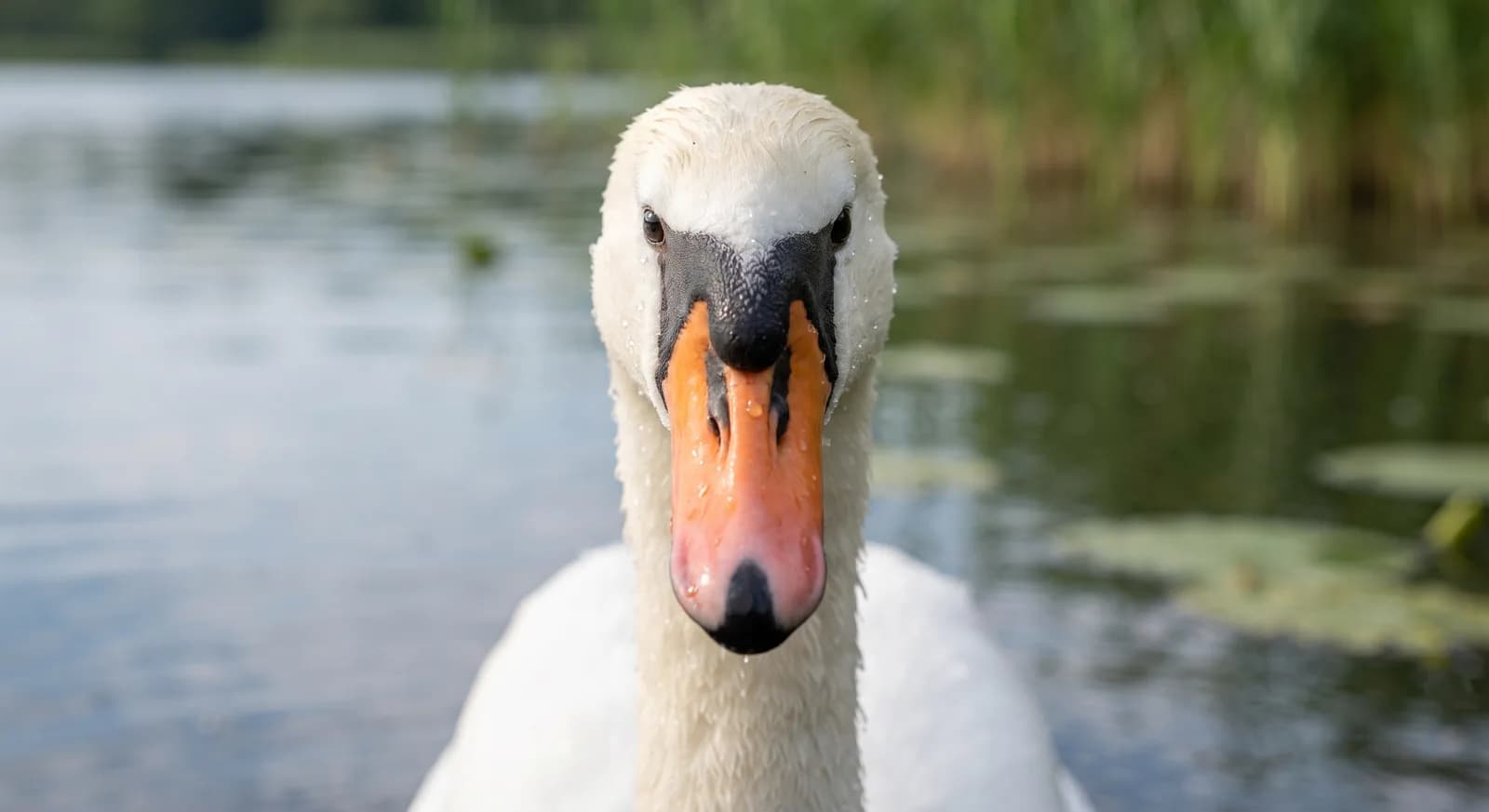
Mute Swan
Cygnus olor
Whooper Swan
Cygnus cygnus
Willow Ptarmigan
Lagopus lagopus
Keep exploring
Based on what we already know about yellowhammer.
Comments
Share an experience, a fun fact or a tip for seeing the yellowhammer.
Be the first to comment.