Birds · Passeriformes · Emberizidae
Corn Bunting
Emberiza calandra
The species is abundant and widely distributed; it faces no significant short-term risk. See full glossary
The largest of the European buntings, bulky in appearance and with heavily streaked earthy plumage that recalls a lark's. Its bill is thick and has a small tooth on the upper mandible with which it cracks grain. Unlike other buntings, it has no white bands on the tail.
Weight
49 g on average
Size
16 cm – 19 cm
Lifespan
3 years
Diet
Herbivore
Feeds mainly on plants.
Activity
Diurnal
Active mainly during the day.
Social structure
In pairs
Usually lives in pairs, sometimes for life.
Sighting difficulty
Easy
Estimated population
An average of 10 million birds is estimated in Spain, with the largest populations in the centre and south of the peninsula
Fun facts
- GeneralIt sings from posts and wires, a metallic sound like a bunch of keys.
- Its song, which it repeats more than a thousand times a day, has been likened to the jangling of a bunch of keys.
- The small tooth on its upper mandible has given it popular Spanish names such as dentón, londra de muela or pájaro del diente.
- It is easy to identify in flight because it flies with its legs dangling, which is unusual among passerines.
Life cycle & biology
- Skeleton type
- Vertebrate - internal bony skeleton (bird)
- Habitat & environment
- Cereal fields, waste ground and cereal steppe
- Birth weight
- Altricial: born blind, naked or with sparse down and entirely dependent
- Size at birth
- Altricial: born blind, naked or with sparse down and entirely dependent
- Sexual maturity
- 12 months
- Gestation / incubation
- 12-14 days, by the female alone; the male only helps feed the chicks in the final stage
- Litter / clutch size
- 4-6 white or bluish eggs with irregular streaks and speckles, with two or even three clutches a season. The chicks leave the nest at 7-10 days, before they can fly
Sources consulted: SEO/BirdLife (ficha y III Atlas de las aves en época de reproducción en España); IUCN Red List; Asturnatura; Piculo Mateo 2020, Enciclopedia Virtual de los Vertebrados Españoles (MNCN-CSIC); Piculo 2022, III Atlas; Donald et al. 2001; Brambilla, Guidali y Negri 2009, Ornis Fennica 86
Where to find it
See its range on the interactive mapBest time: All year round, though it sings mainly between April and June from posts, wires and high branches
Where to watch it
Parques y spots de buceo donde se ha documentado esta especie — se muestran 10 de 141 documentados.
Related species
Other species in the catalogue with the most in common with Corn Bunting — same habitat, park, country, tags or family.
Rock Bunting
Emberiza cia
Yellowhammer
Emberiza citrinella
Reed Bunting
Emberiza schoeniclus
Canada Goose
Branta canadensis
 Least Concern
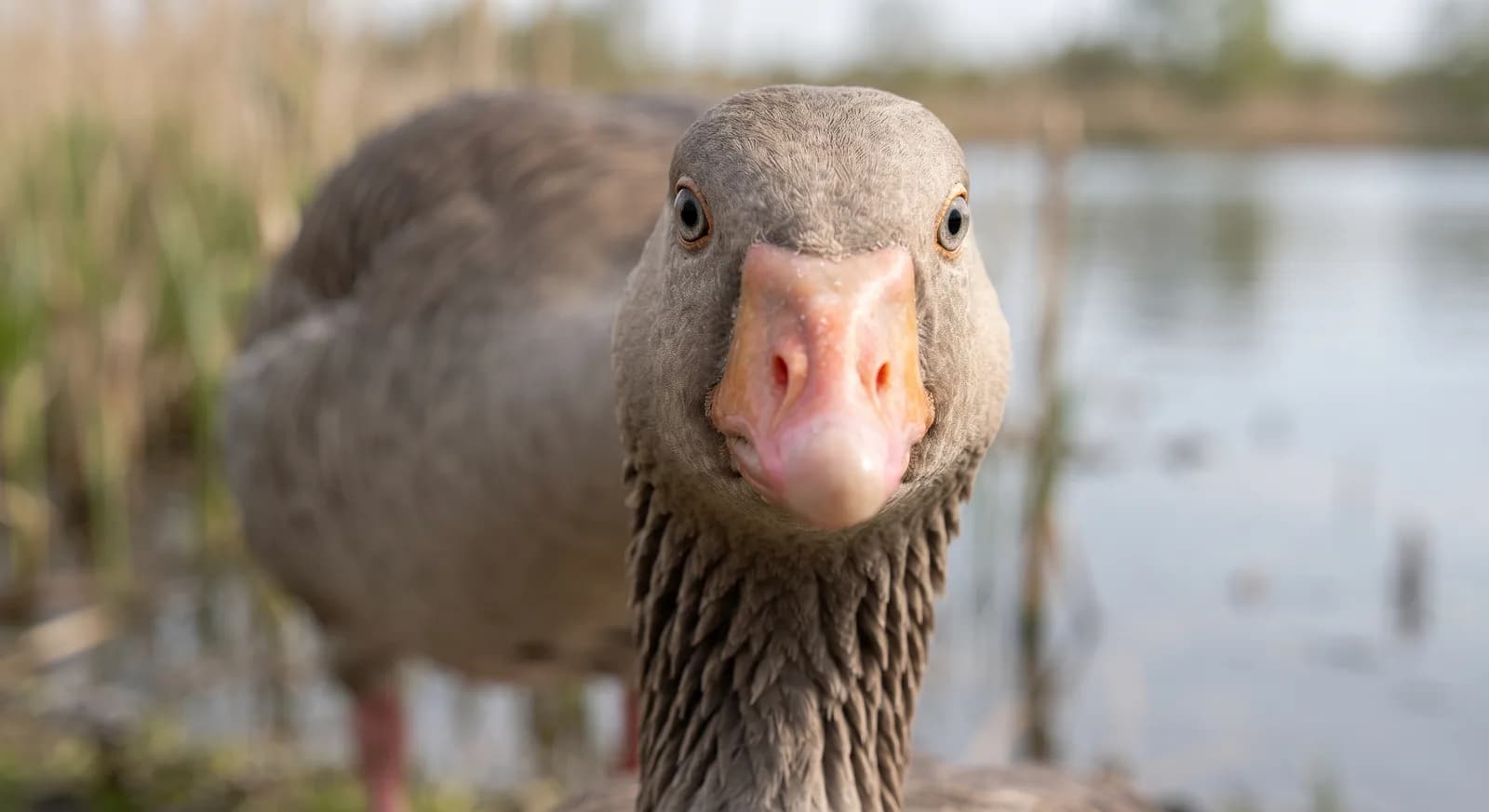
Greylag Goose
Anser anser
Eurasian Collared Dove
Streptopelia decaocto
Keep exploring
Based on what we already know about corn bunting.
Comments
Share an experience, a fun fact or a tip for seeing the corn bunting.
Be the first to comment.