Birds · Cuculiformes · Cuculidae
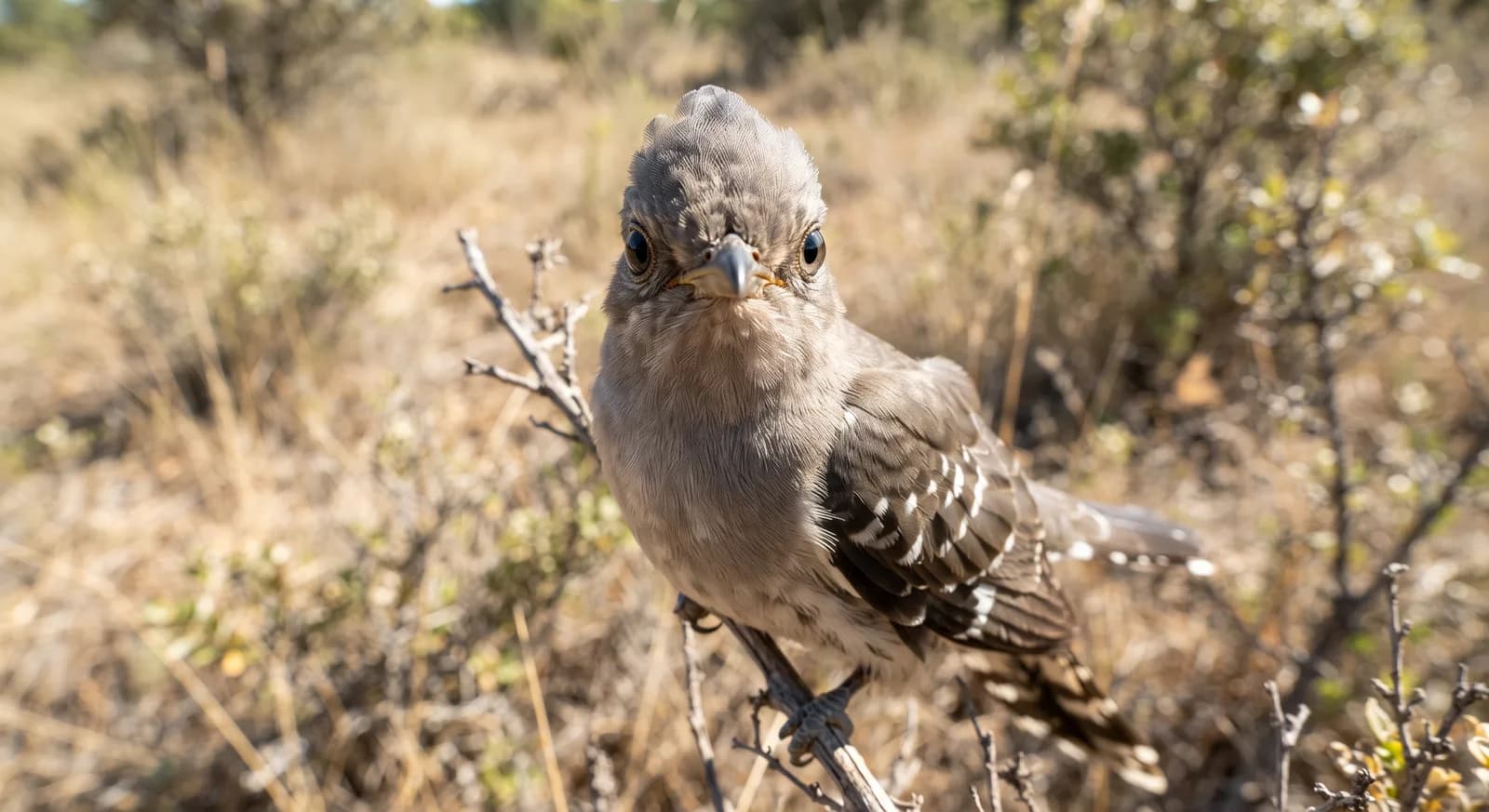
Clamator glandarius
The species is abundant and widely distributed; it faces no significant short-term risk.
A medium-sized cuculid with a striking erectile grey crest on the head, a dark brown back densely speckled with white and a long, graduated tail tipped in white. It is told apart from the cuckoo by its crest, its longer tail and the speckling on its back.
Weight
100 g – 170 g
Size
35 cm – 39 cm
Life expectancy
10 years
Diet
Insectivore
Feeds mainly on insects and other invertebrates.
Activity
Diurnal
Active mainly during the day.
Social structure
In pairs
Usually lives in pairs, sometimes for life.
Sighting difficulty
Easy
AI-generated images: illustrations, not photographs.
Sources consulted: SEO/BirdLife (ficha y III Atlas de las aves en época de reproducción en España); IUCN Red List; Asturnatura; Soler 2012, Enciclopedia Virtual de los Vertebrados Españoles (MNCN-CSIC); Soler et al. 2002, Avian Science 2; Ibáñez-Álamo et al. 2019, PLOS ONE 14
Best time: From February to August in Spain; it arrives very early, as soon as February
Parks and dive sites where this species has been documented — showing 10 of 42.
Other species in the catalogue with the most in common with Great Spotted Cuckoo — same habitat, park, country, tags or family.
Based on what we already know about great spotted cuckoo.
Share an experience, a fun fact or a tip for seeing the great spotted cuckoo.
Be the first to comment.
The pins mark the parks where its presence is documented.