 Least Concern
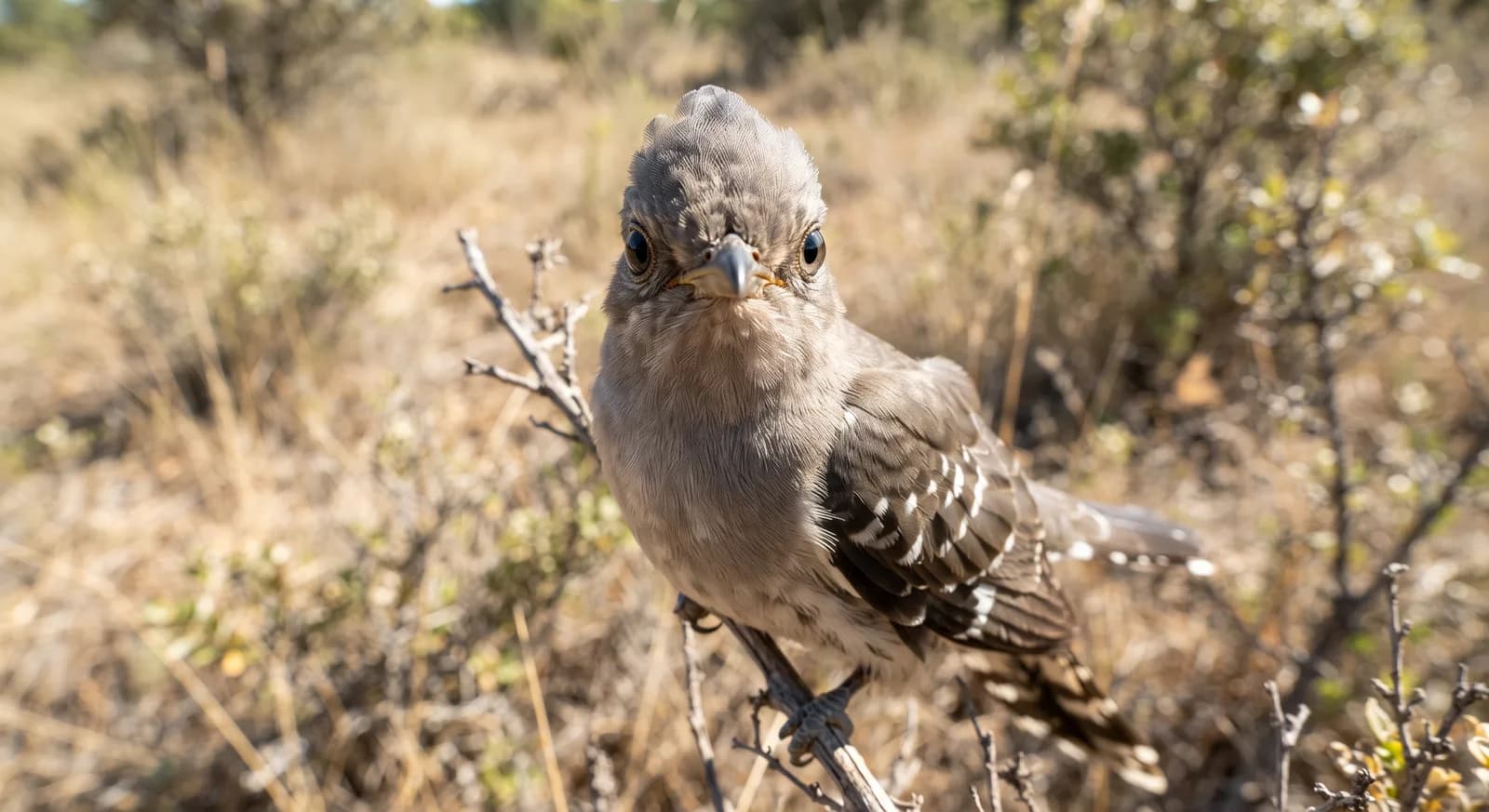
Great Spotted Cuckoo
Clamator glandarius
Birds · Cuculiformes · Cuculidae
Cuculus canorus
The species is abundant and widely distributed; it faces no significant short-term risk.
A slim bird with a long tail and pointed wings whose silhouette in flight can be mistaken for a sparrowhawk's. The male is grey on the back, head and breast, with a finely barred belly; the female may show that same plumage or a much less frequent rufous one.
Weight
91 g – 153 g
Size
32 cm – 34 cm
Life expectancy
10 years
Diet
Insectivore
Feeds mainly on insects and other invertebrates.
Activity
Diurnal
Active mainly during the day.
Social structure
Solitary
Lives and hunts alone, joining others only to breed.
Sighting difficulty
Easy
Estimated population
Between 40,000,000 and 74,999,999 mature individuals according to the IUCN Red List
Sources consulted: SEO/BirdLife (ficha y III Atlas de las aves en época de reproducción en España); IUCN Red List; Asturnatura; BirdLife International; Gordo y Pastoriza 2022, III Atlas; Davies, Cuckoo: Cheating by Nature; Canestrari et al. 2014, Science 343
Best time: From April to August in Spain; the male's song is the usual way of detecting it
Parks and dive sites where this species has been documented — showing 10 of 256.
Other species in the catalogue with the most in common with Common Cuckoo — same habitat, park, country, tags or family.
Based on what we already know about common cuckoo.
Share an experience, a fun fact or a tip for seeing the common cuckoo.
Be the first to comment.
The pins mark the parks where its presence is documented.