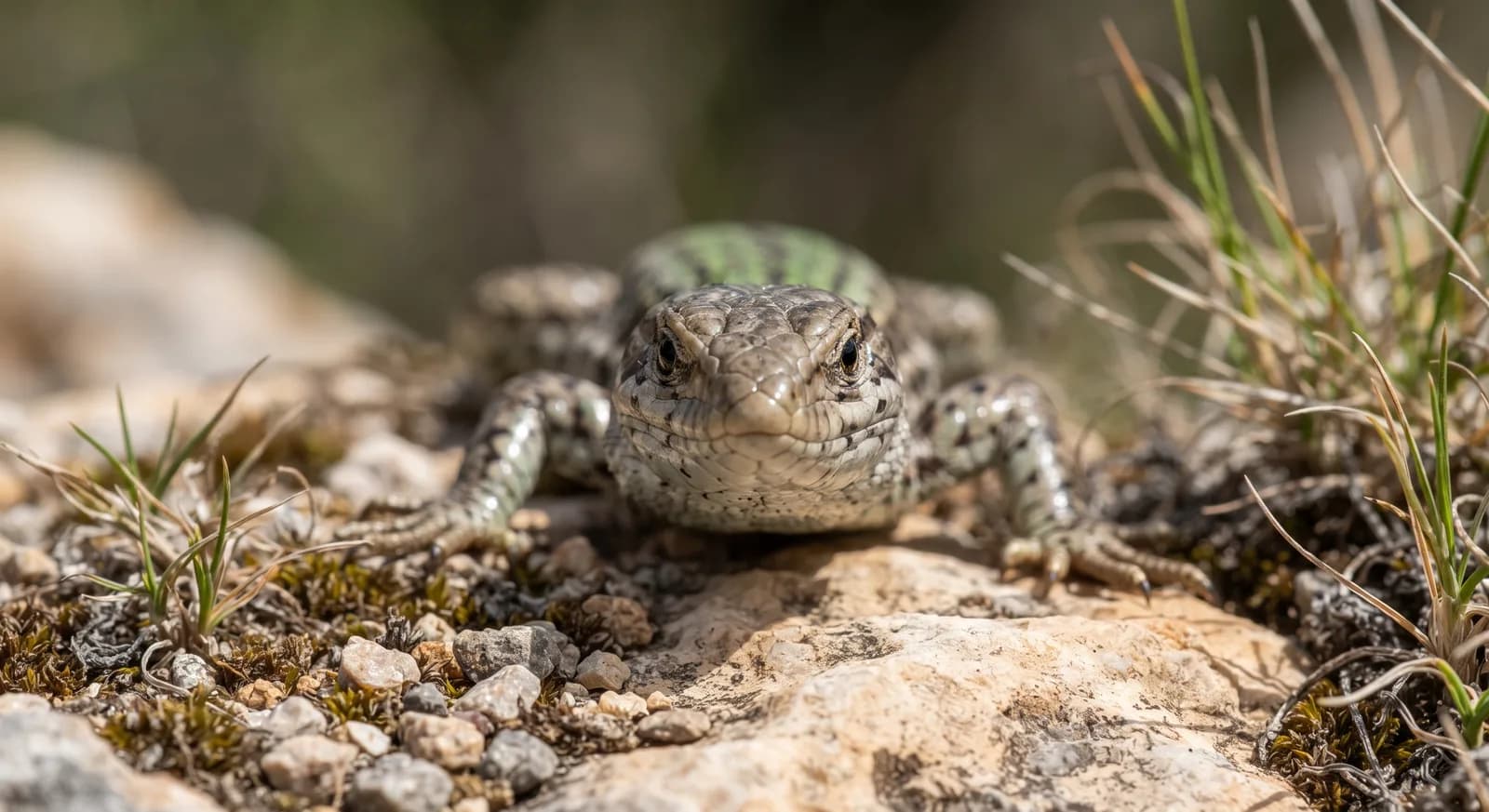
 Least Concern
Common Wall Lizard
Podarcis muralis
One of the 2 slow worms on WAnimals
Reptiles · Squamata · Anguidae
Anguis fragilis
The species is abundant and widely distributed; it faces no significant short-term risk.
For all that it looks like a snake, it is in fact a legless lizard, told apart by its movable eyelids and its ability to shed its tail. It is one of the longest-lived reptiles in the world for its small size.
Weight
20 g – 100 g
Size
40 cm – 50 cm
Life expectancy
20 years
Diet
Insectivore
Feeds mainly on insects and other invertebrates.
Activity
Irregular activity
Active at irregular times, by day or night depending on circumstances.
Social structure
Solitary
Lives and hunts alone, joining others only to breed.
Sources consulted: The Wildlife Trusts · ResearchGate (reproductive ecology Iberian study) · First-Nature · Wildlife Vagabond · A-Z Animals · AnAge (genomics.senescence.info) · Animal Diversity Web · Grokipedia
Best time: From March to October, mostly after rain and at dusk; it is often found under stones, sheets of metal and boards in meadows and along field edges.
Parks and dive sites where this species has been documented — showing 10 of 84.
Other species in the catalogue with the most in common with Slow Worm — same habitat, park, country, tags or family.
Based on what we already know about slow worm.
The pins mark the parks where its presence is documented.
