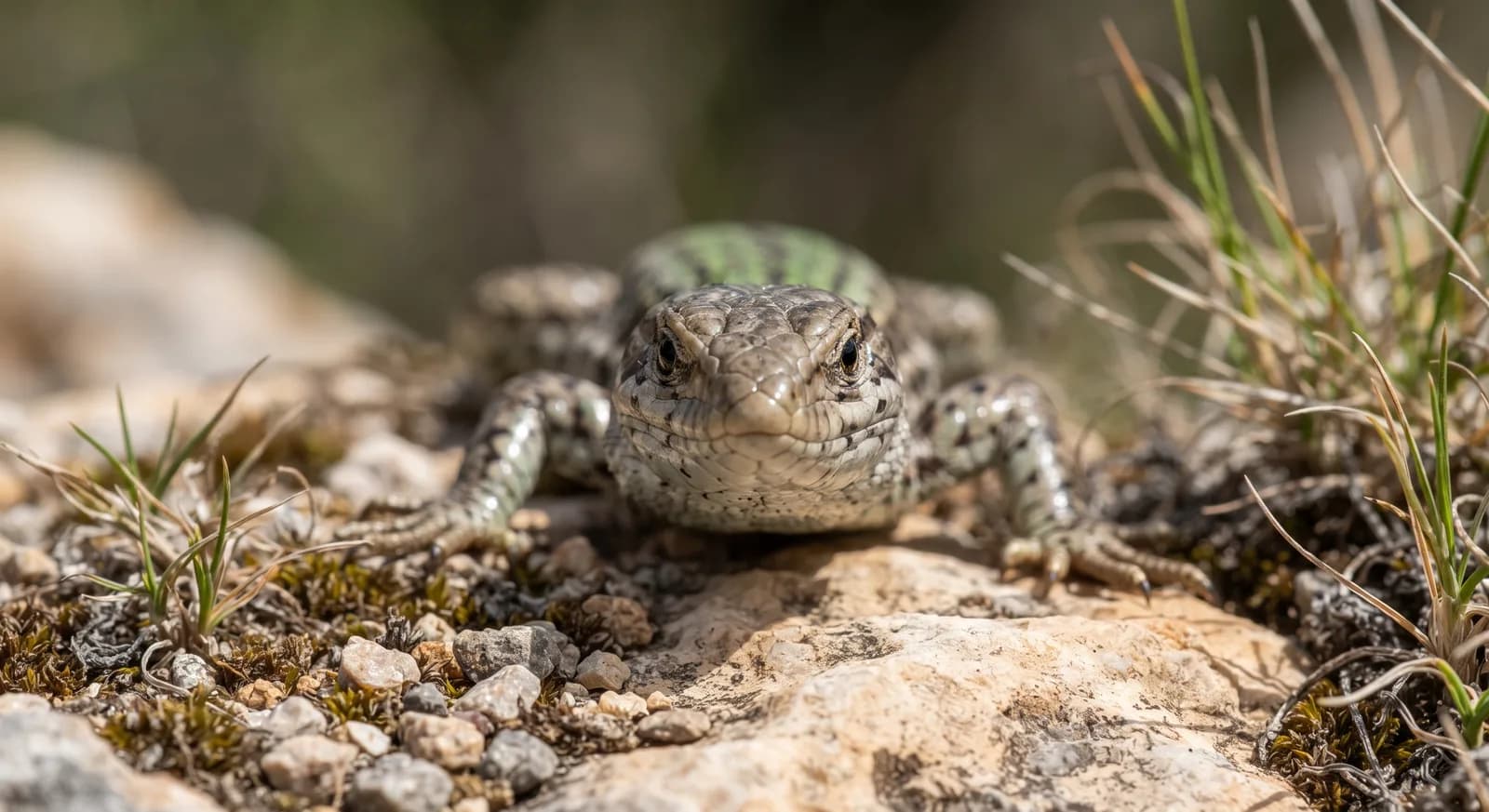
Least Concern
Western Green Lizard
Lacerta bilineata
One of the 9 wall lizards on WAnimals
Reptiles · Squamata · Lacertidae
Zootoca vivipara
The species is abundant and widely distributed; it faces no significant short-term risk.
It is the non-marine reptile that ranges farthest north, as far as the Arctic Circle, surviving in subarctic climates where hardly any other lizard or snake can.
Weight
2 g – 5 g
Size
12 cm – 18 cm
Life expectancy
6 years
Diet
Insectivore
Feeds mainly on insects and other invertebrates.
Activity
Diurnal
Active mainly during the day.
Social structure
Solitary
Lives and hunts alone, joining others only to breed.
Sources consulted: Animal Diversity Web · IERS · iNaturalist Pyrenees Biodiversity · AnAge (genomics.senescence.info) · The Animal Facts · Animalia.bio · Wildlife Online · PMC (mitochondrial DNA survey, sexual size dimorphism study)
Best time: From March to October, on sunny days, when it basks on bogs, heaths, damp meadows and path edges.
Parks and dive sites where this species has been documented — showing 10 of 179.
Other species in the catalogue with the most in common with Viviparous Lizard — same habitat, park, country, tags or family.
Based on what we already know about viviparous lizard.
The pins mark the parks where its presence is documented.