Insects · Coleoptera · Anobiidae
Common Furniture Beetle
Anobium punctatum
It has not yet been assessed against the IUCN criteria. See full glossary
The common furniture beetle, a small brown beetle whose larvae tunnel through the dry wood of furniture, beams and parquet for years before emerging as adults. The extremely fine dust that falls from the holes is the most common sign of its presence.
Size
up to 0.5 cm
Lifespan
1 years
Diet
Herbivore
Feeds mainly on plants.
Activity
Nocturnal
Active mainly at night.
Social structure
Solitary
Lives and hunts alone, joining others only to breed.
Sighting difficulty
Unknown
Fun facts
- The one- or two-millimetre holes we see in a piece of furniture are not the insect's way in but the adult's way out: by the time they appear, the larva has already spent years inside.
- The larval cycle lasts from two to five years, and stretches out further still if the wood is dry and poor in nutrients.
- It needs a certain amount of moisture in the wood, so central heating and the dry air of modern homes have greatly reduced how often it occurs.
- This is the woodworm of furniture, and its telltale signs are exit holes of about two millimetres and the fine sawdust that falls from them.
- The holes do not indicate an active infestation: they are where the adults came out. The real damage is inside, and it can go on for years without anything showing.
- Its name, the deathwatch beetle, comes from the sound the adult makes by tapping its head against the wood to call a mate: an audible ticking in the night-time silence of old houses, which came to be associated with death and the deathbed vigil.
- It needs wood with a certain amount of moisture, above 12%, so central heating and well-dried timber control it better than any treatment.
- It depends on symbiotic fungi and yeasts in its gut to digest cellulose.
- It is a serious threat to heritage: antique furniture, altarpieces, coffered ceilings and historic timber structures.
Life cycle & biology
- Skeleton type
- Invertebrate - chitin exoskeleton (insect)
- Habitat & environment
- Dry wood of furniture, beams, frames and floorboards
Sources consulted: Building Research Establishment (Reino Unido); Instituto del Patrimonio Cultural de España; Natural History Museum de Londres
Where to find it
See its range on the interactive mapRelated species
Other species in the catalogue with the most in common with Common Furniture Beetle — same habitat, park, country, tags or family.
 Near Threatened
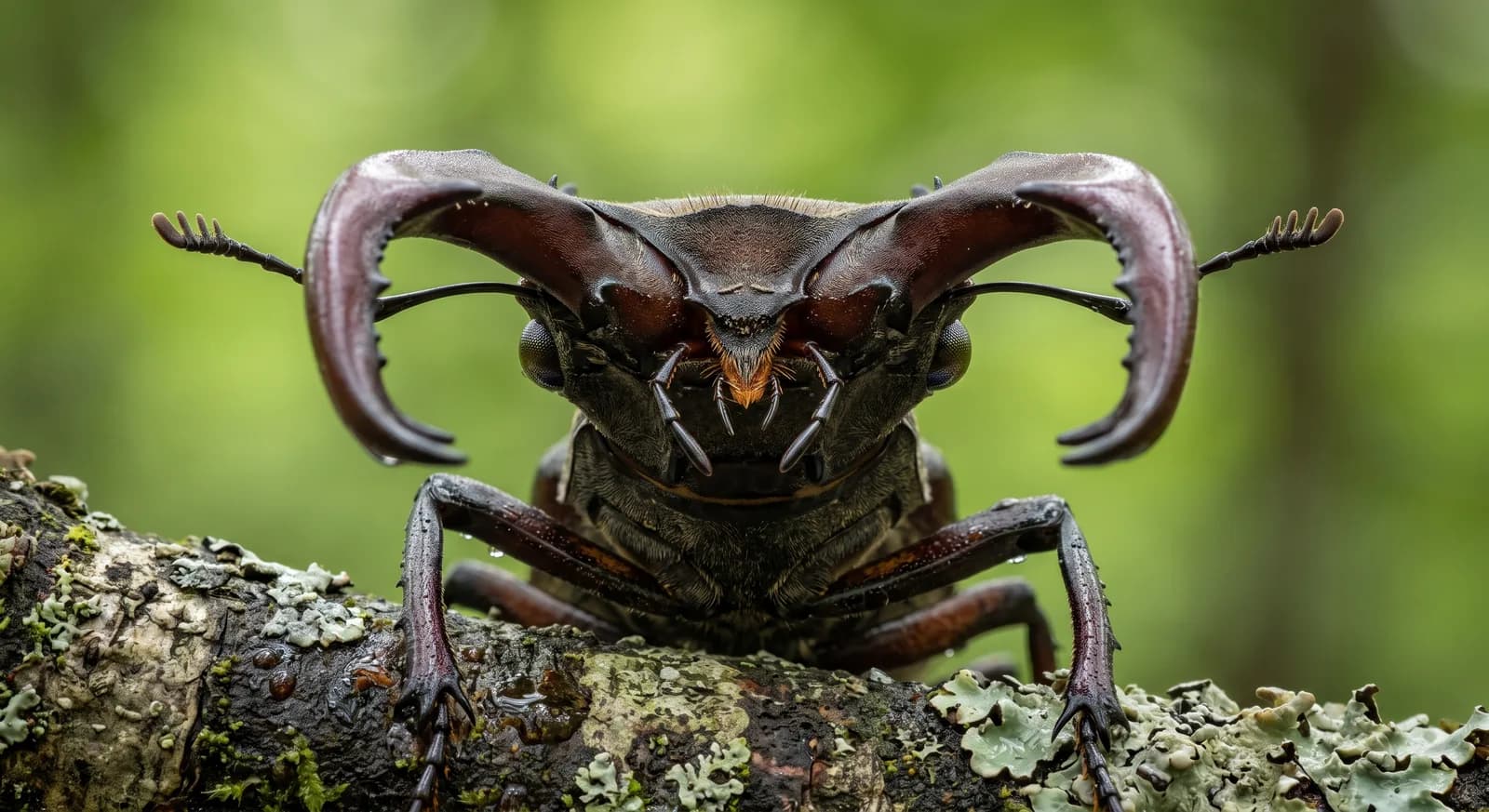
Stag Beetle
Lucanus cervus
Greater Capricorn Beetle
Cerambyx cerdo
 Least Concern
Siberian Flying Squirrel
Pteromys volans
Red-necked Wallaby
Notamacropus rufogriseus
Ant-lion
Myrmeleon formicarius
European Rhinoceros Beetle
Oryctes nasicornis
Keep exploring
Based on what we already know about common furniture beetle.
Comments
Share an experience, a fun fact or a tip for seeing the common furniture beetle.
Be the first to comment.