Skip to content
WAnimals
  • Map
  • Species
  • Parks
  • Diving
Log inCreate account
WAnimals

The guide for travellers and animal lovers: discover, plan and share your wild adventures around the world.

Discover wildlife

  • Species
  • Ecosystems
  • Glossary
  • Tags

Explore places

  • Map
  • Countries
  • Parks
  • Diving

Plan experiences

  • Guides

Learn

  • Blog

Resources

  • About us
  • How we build our profiles
  • Help centre
  • Contact
  • Install the app

Follow us

Account

  • Log in
  • Create account

© 2026 WAnimals. All rights reserved.

Terms of servicePrivacyCookiesLegal notice
MapSpeciesParksDiving
  1. Home
  2. Species
  3. Collared Flycatcher

One of the 3 flycatchers on WAnimals
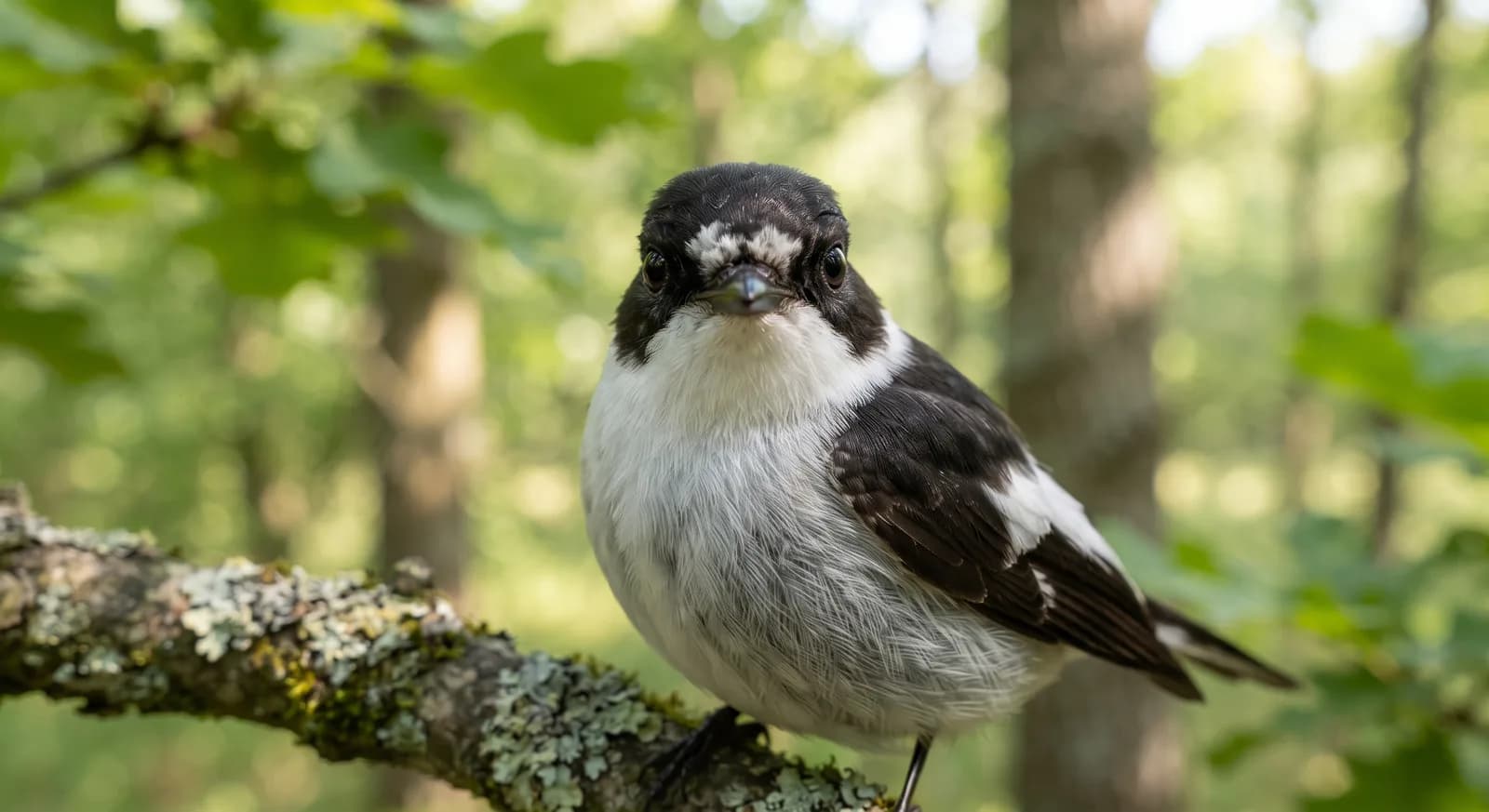
Collared Flycatcher (Ficedula albicollis)

Birds · Passeriformes · Muscicapidae

Collared Flycatcher

Ficedula albicollis

Least Concern

The species is abundant and widely distributed; it faces no significant short-term risk.

Spotted something wrong?

A black and white flycatcher very similar to the pied flycatcher, from which it is told apart by the complete white collar around the neck, the large white patch on the forehead and the pale rump. Outside the breeding season the black is replaced by brown and it becomes very hard to separate from its relative.

Weight

13 g on average

Size

12 cm – 13.5 cm

Life expectancy

3 years
Diet

Insectivore

Feeds mainly on insects and other invertebrates.

Activity

Diurnal

Active mainly during the day.

Social structure

In pairs

Usually lives in pairs, sometimes for life.

Temperate forest
45countries69parks14same family

AI-generated images: illustrations, not photographs.

Fun facts

  • It is one of the four black-and-white flycatcher species of the western Palaearctic, and where it overlaps with the pied flycatcher it hybridises with it to a limited extent.
  • Its song consists of slow whistles, very different from those of the pied flycatcher, but in mixed populations pied flycatchers will imitate it.
  • A case of triparental care has been documented: two females and one male feeding a single brood.

Life cycle and biology

Skeleton type
Vertebrate - internal bony skeleton (bird)
Habitat and environment
Mature woodland, parks and gardens of central and eastern Europe, with a marked preference for old trees with cavities. It also uses nest boxes
Birth weight
Altricial: born blind, naked or with sparse down and entirely dependent
Size at birth
Altricial: born blind, naked or with sparse down and entirely dependent
Sexual maturity
12 months
Gestation / incubation
12-14 days of incubation
Litter / clutch size
5-7 eggs as a rule, in an open nest inside a tree hole

Sources consulted: IUCN Red List (BirdLife International 2017) · De Juana et al. 2007, Ardeola 54(1) · Wikipedia (Collared flycatcher) · Laczi et al. 2021, Ecology and Evolution 11

Where to find it

Best time: On migration; in Spain it is a rarity and does not breed

Loading map…

Where to see it

Parks and dive sites where this species has been documented — showing 10 of 69.

Related species

Other species in the catalogue with the most in common with Collared Flycatcher — same habitat, park, country, tags or family.

Same taxonomic family

Keep exploring

Based on what we already know about collared flycatcher.

Share an experience, a fun fact or a tip for seeing the collared flycatcher.
See full glossary
This page in other languages: Español · Deutsch · Français · Português · Italiano

The pins mark the parks where its presence is documented.

See its range on the interactive map→
TriglavSlovenia
Mount OlympusGreece
PlitviceCroatia
DurmitorMontenegro
RetezatRomania
BiałowieżaPoland
Danube DeltaRomania
TatraPoland
LahemaaEstonia
Sutjeska National ParkBosnia and Herzegovina
See all 69 parks
Spotted FlycatcherLeast Concern

Spotted Flycatcher

Muscicapa striata

Least Concern

European Pied Flycatcher

Ficedula hypoleuca

European StonechatLeast Concern

European Stonechat

Saxicola rubicola

Least Concern

Common Nightingale

Luscinia megarhynchos

Least Concern

Blue Rock Thrush

Monticola solitarius

Isabelline WheatearLeast Concern

Isabelline Wheatear

Oenanthe isabellina

CountriesPoland
ParksTriglavSlovenia
TagsInsectivore
Insectivore
Diurnal
In pairs
Bird
Temperate forest
PolandHungaryBulgariaGreeceRomaniaGermany

Europe40

AlbaniaAndorraAustriaBelarusBelgiumBosnia and HerzegovinaBulgariaCroatiaCzechiaDenmarkEstoniaFinlandFranceGermanyGreeceHungaryIrelandItalyKosovoLatviaLiechtensteinLithuaniaLuxembourgMoldovaMontenegroNetherlandsNorth MacedoniaNorwayPolandPortugalRomaniaSan MarinoSerbiaSlovakiaSloveniaSpainSwedenSwitzerlandUkraineUnited Kingdom

Asia5

ArmeniaAzerbaijanGeorgiaRussiaTürkiye