 Least Concern
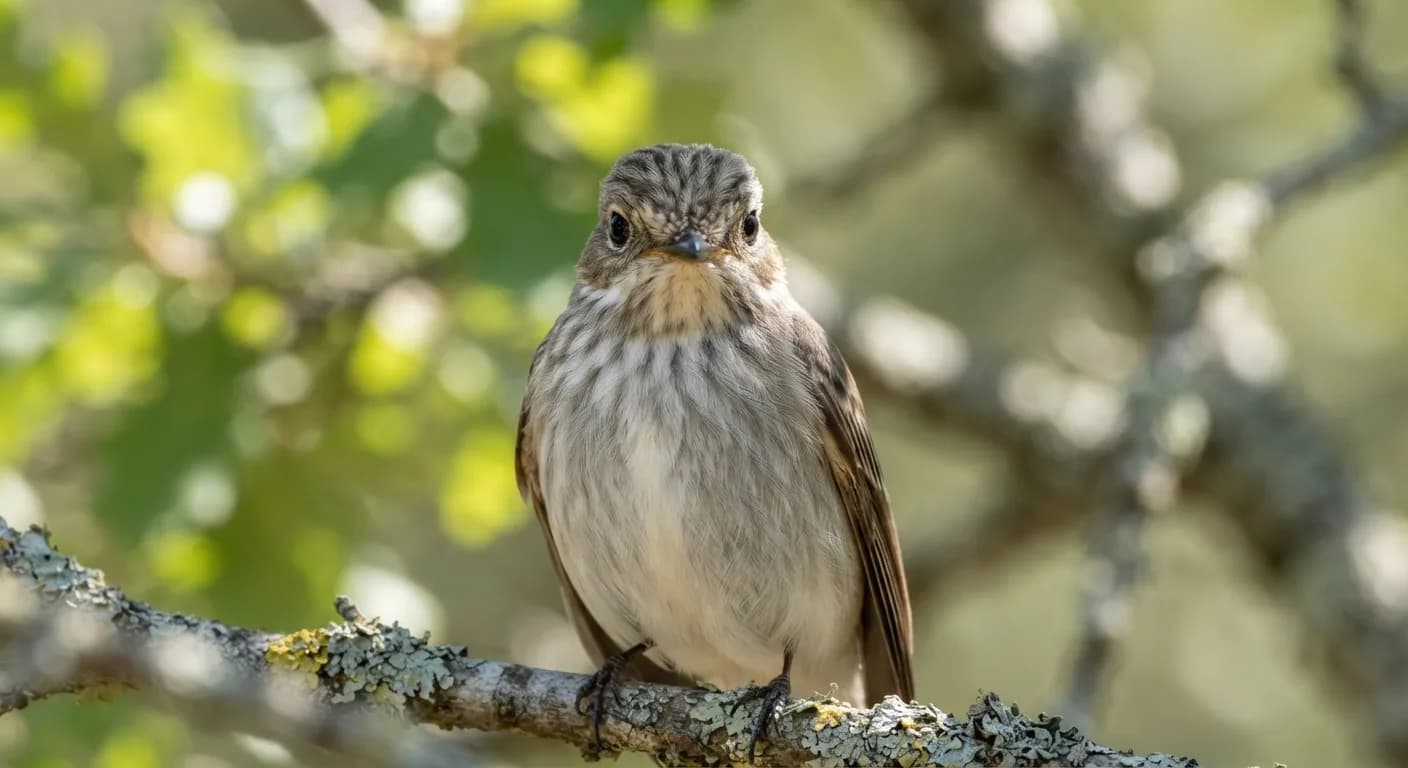
Spotted Flycatcher
Muscicapa striata
One of the 3 nightingales on WAnimals
Birds · Passeriformes · Muscicapidae
Luscinia megarhynchos
The species is abundant and widely distributed; it faces no significant short-term risk.
It is celebrated in culture and literature the world over for the male's extraordinary, powerful song, which can be heard by day as well as through the night — unusual among passerines.
Weight
20 g – 24 g
Size
16.5 cm on average
Life expectancy
2 years
Diet
Insectivore
Feeds mainly on insects and other invertebrates.
Activity
Irregular activity
Active at irregular times, by day or night depending on circumstances.
Social structure
Solitary
Lives and hunts alone, joining others only to breed.
Sources consulted: A-Z Animals · Animal Diversity Web · Binocular Base · Wikipedia (Thrush nightingale, comparative species account)
Best time: From April to July in the Iberian Peninsula, when the male sings by day and by night from dense scrub; it is a trans-Saharan migrant.
Parks and dive sites where this species has been documented — showing 10 of 152.
Other species in the catalogue with the most in common with Common Nightingale — same habitat, park, country, tags or family.
Based on what we already know about common nightingale.
The pins mark the parks where its presence is documented.