Skip to content
WAnimals
  • Map
  • Species
  • Parks
  • Diving
Log inCreate account
WAnimals

The guide for travellers and animal lovers: discover, plan and share your wild adventures around the world.

Discover wildlife

  • Species
  • Ecosystems
  • Glossary
  • Tags

Explore places

  • Map
  • Countries
  • Parks
  • Diving

Plan experiences

  • Guides

Learn

  • Blog

Resources

  • Help centre
  • Contact
  • Install the app

Follow us

Account

  • Log in
  • Create account

© 2026 WAnimals. All rights reserved.

About usHow we build our profilesTerms of servicePrivacyLegal notice
MapSpeciesParksDiving
  1. Home
  2. Species
  3. European Robin

One of the 2 robins on WAnimals
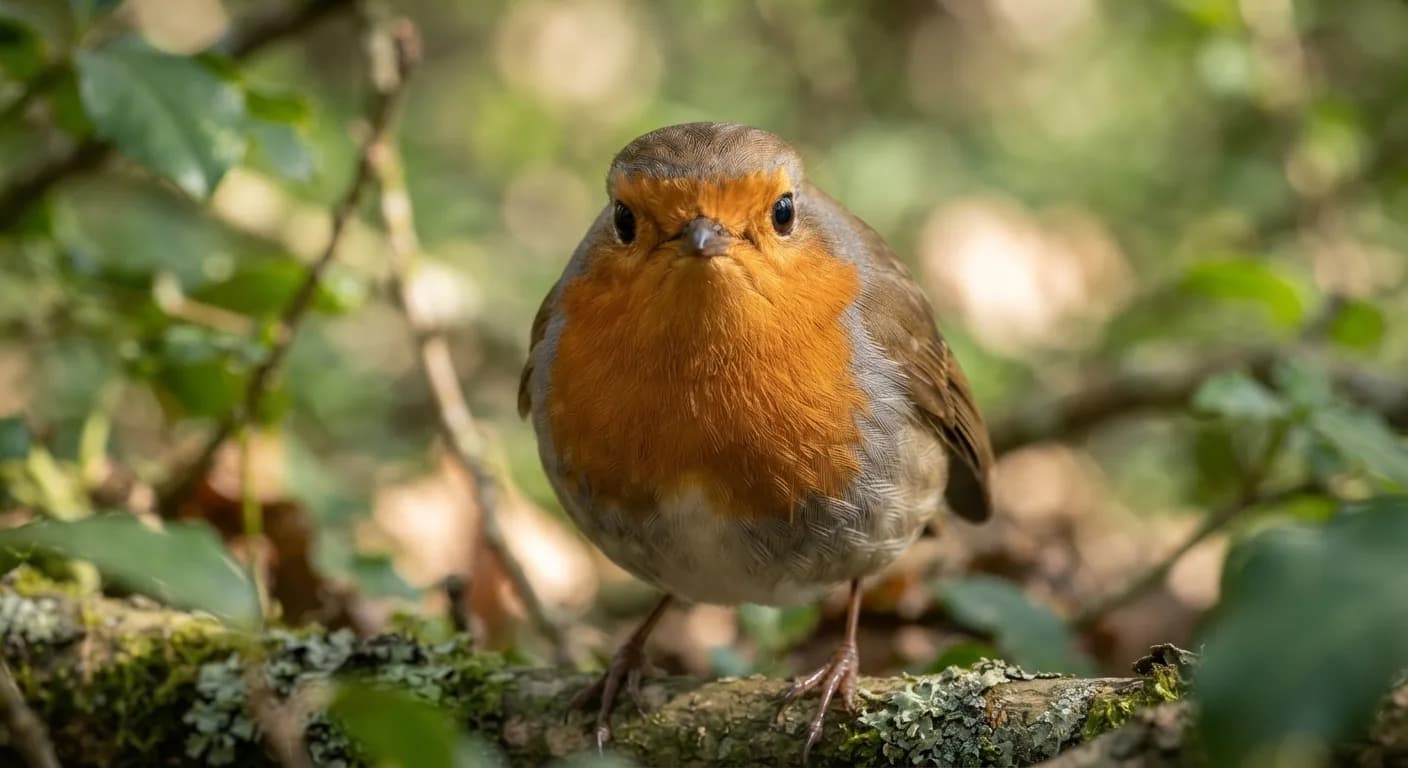
European Robin (Erithacus rubecula)

Birds · Passeriformes · Muscicapidae

European Robin

Erithacus rubecula

Least Concern

The species is abundant and widely distributed; it faces no significant short-term risk.

Spotted something wrong?

Unlike most songbirds, it defends its territory all year round, winter included, singing outside the main breeding season.

Weight

14 g – 22 g

Size

12.5 cm – 14 cm

Life expectancy

1 year
Diet

Omnivore

Combines animal and plant food depending on availability.

Activity

Diurnal

Active mainly during the day.

Social structure

Solitary

Lives and hunts alone, joining others only to breed.

Sighting difficulty

Easy

Temperate forestGrassland
50countries265parks14same family

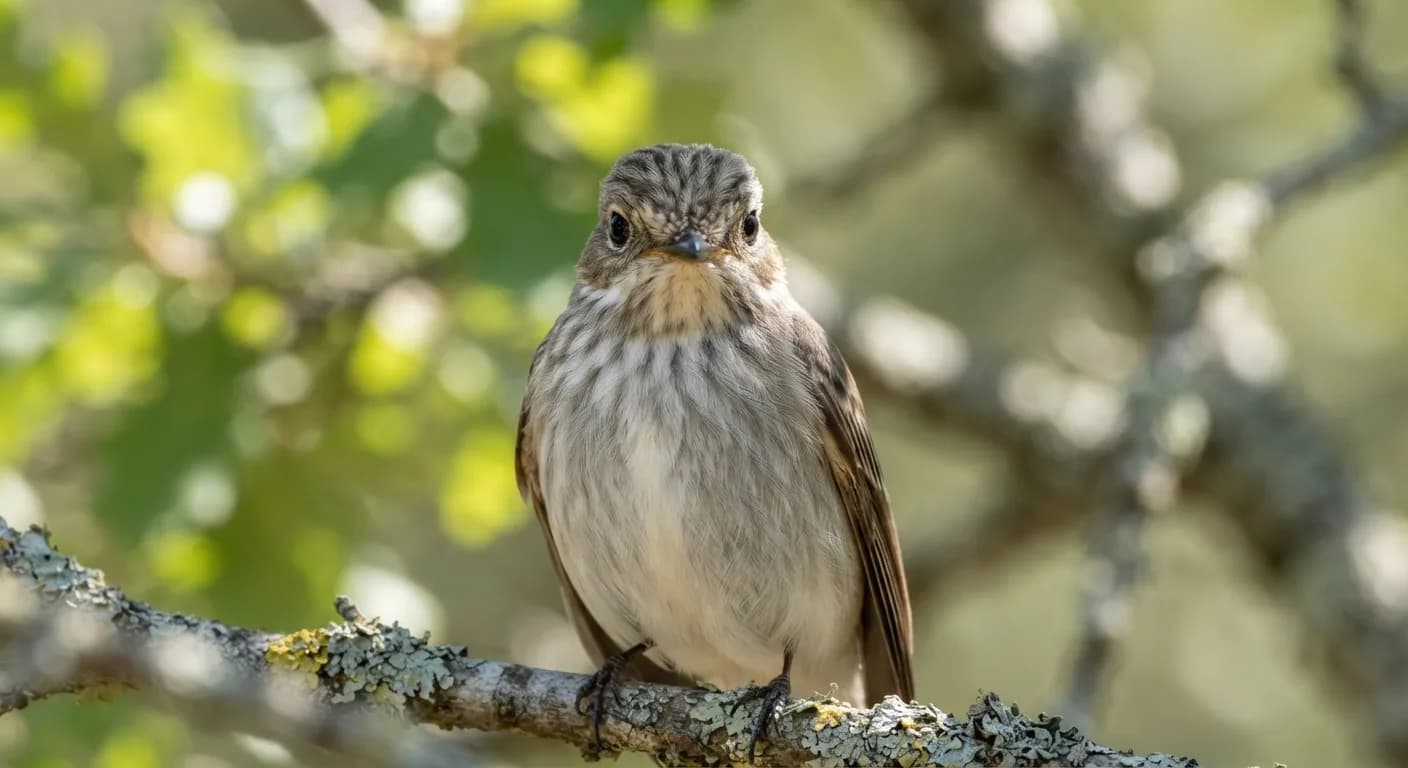
AI-generated images: illustrations, not photographs.

Fun facts

  • It is famous for how bold and trusting it is around people, often following gardeners about to pick off invertebrates.
  • It eats invertebrates such as insects, worms and spiders, supplemented with seeds and berries in winter.
  • One bird reached a record age of 19 years.
  • sentidosIt can sense the Earth's magnetic field through a light-dependent mechanism in the eye, involving photoreceptor proteins called cryptochromes.

Life cycle and biology

Skeleton type
Vertebrate - pneumatised bony skeleton (bird)
Habitat and environment
Woodland, hedgerows, parks and gardens across much of Europe, western Asia and North Africa
Birth weight
Tiny, pink and featherless on hatching
Size at birth
Tiny at hatching
Sexual maturity
1 year
Gestation / incubation
12-16 days (usual reference 13-14 days)
Litter / clutch size
4 to 7 eggs per clutch, with up to 2-3 broods a year

Sources consulted: A-Z Animals; Britannica; AnAge (genomics.senescence.info); Birds of the World; Animalia.bio; Birdfact; Birds and Blooms; Binocular Base

Where to find it

Best time: All year round; in winter it spreads across the whole of Spain and is very easy to see in parks and gardens, where each bird defends its territory alone.

Loading map…

Where to see it

Parks and dive sites where this species has been documented — showing 10 of 265.

Related species

Other species in the catalogue with the most in common with European Robin — same habitat, park, country, tags or family.

Same taxonomic family

Keep exploring

Based on what we already know about european robin.

Comments

Share an experience, a fun fact or a tip for seeing the european robin.

Be the first to comment.

See full glossary
This page in other languages: Español · Deutsch · Français · Português · Italiano

The pins mark the parks where its presence is documented.

See its range on the interactive map→
Doñana National ParkSpain
SarekSweden
PadjelantaSweden
JotunheimenNorway
HardangerviddaNorway
Pallas-YllastunturiFinland
Urho KekkonenFinland
Lake DistrictUnited Kingdom
CairngormsUnited Kingdom
Snowdonia (Eryri)United Kingdom
See all 265 parks
Spotted FlycatcherLeast Concern

Spotted Flycatcher

Muscicapa striata

European StonechatLeast Concern

European Stonechat

Saxicola rubicola

Least Concern

Common Nightingale

Luscinia megarhynchos

Collared FlycatcherLeast Concern

Collared Flycatcher

Ficedula albicollis

Rufous-tailed Rock ThrushLeast Concern

Rufous-tailed Rock Thrush

Monticola saxatilis

Least Concern

European Pied Flycatcher

Ficedula hypoleuca

CountriesSpain
ParksDoñana National ParkSpain
TagsOmnivore
Omnivore
Diurnal
Solitary
Bird
Temperate forest
Grassland

Europe45

Asia5

Spain
Poland
Finland
Italy
Sweden
United Kingdom
Albania
Andorra
Austria
Belarus
Belgium
Bosnia and Herzegovina
Bulgaria
Croatia
Cyprus
Czechia
Denmark
Estonia
Finland
France
Germany
Gibraltar
Greece
Hungary
Ireland
Italy
Kosovo
Latvia
Liechtenstein
Lithuania
Luxembourg
Malta
Moldova
Monaco
Montenegro
Netherlands
North Macedonia
Norway
Poland
Portugal
Romania
San Marino
Serbia
Slovakia
Slovenia
Spain
Sweden
Switzerland
Ukraine
United Kingdom
Vatican City
Armenia
Azerbaijan
Georgia
Russia
Türkiye