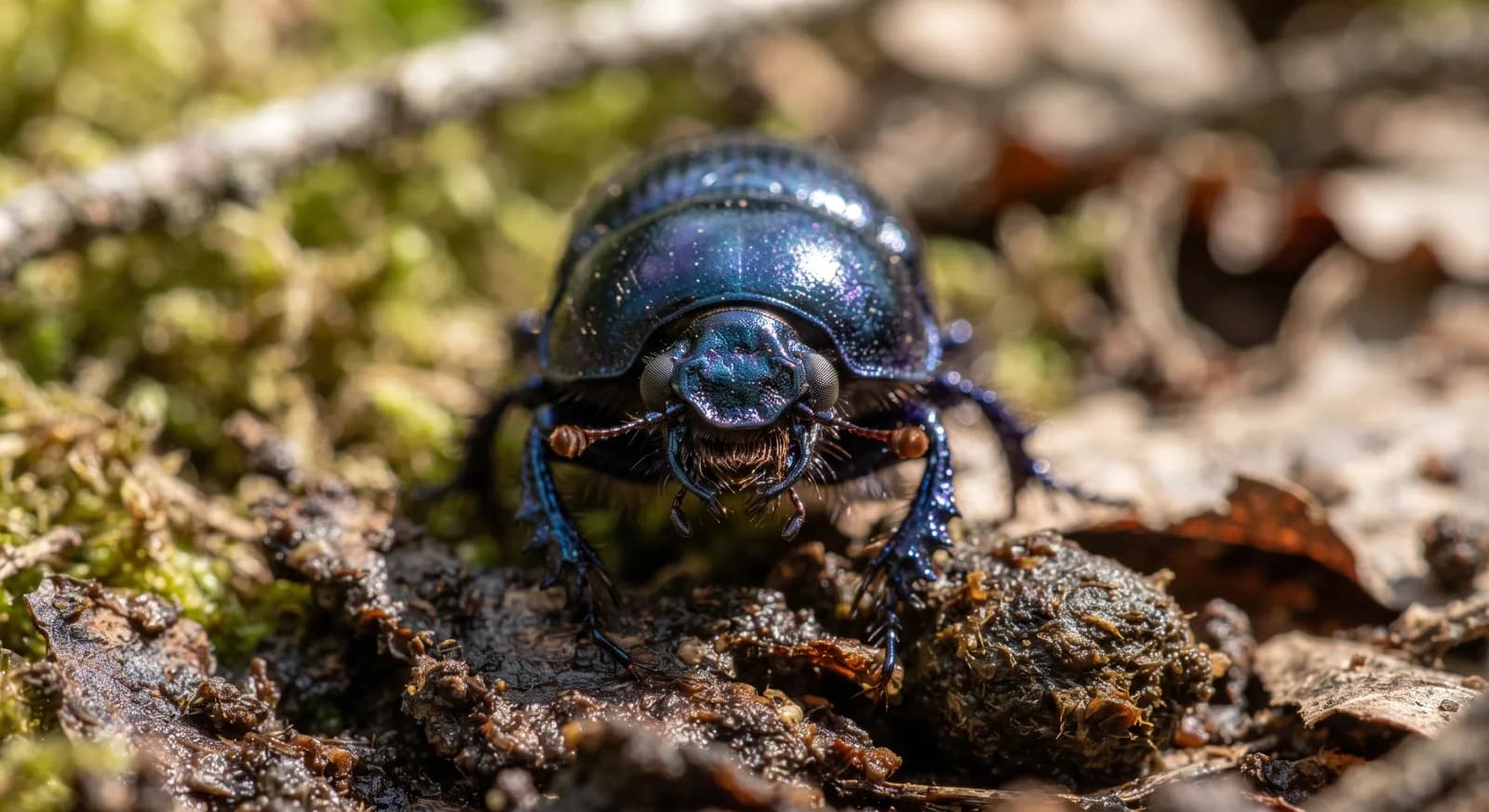
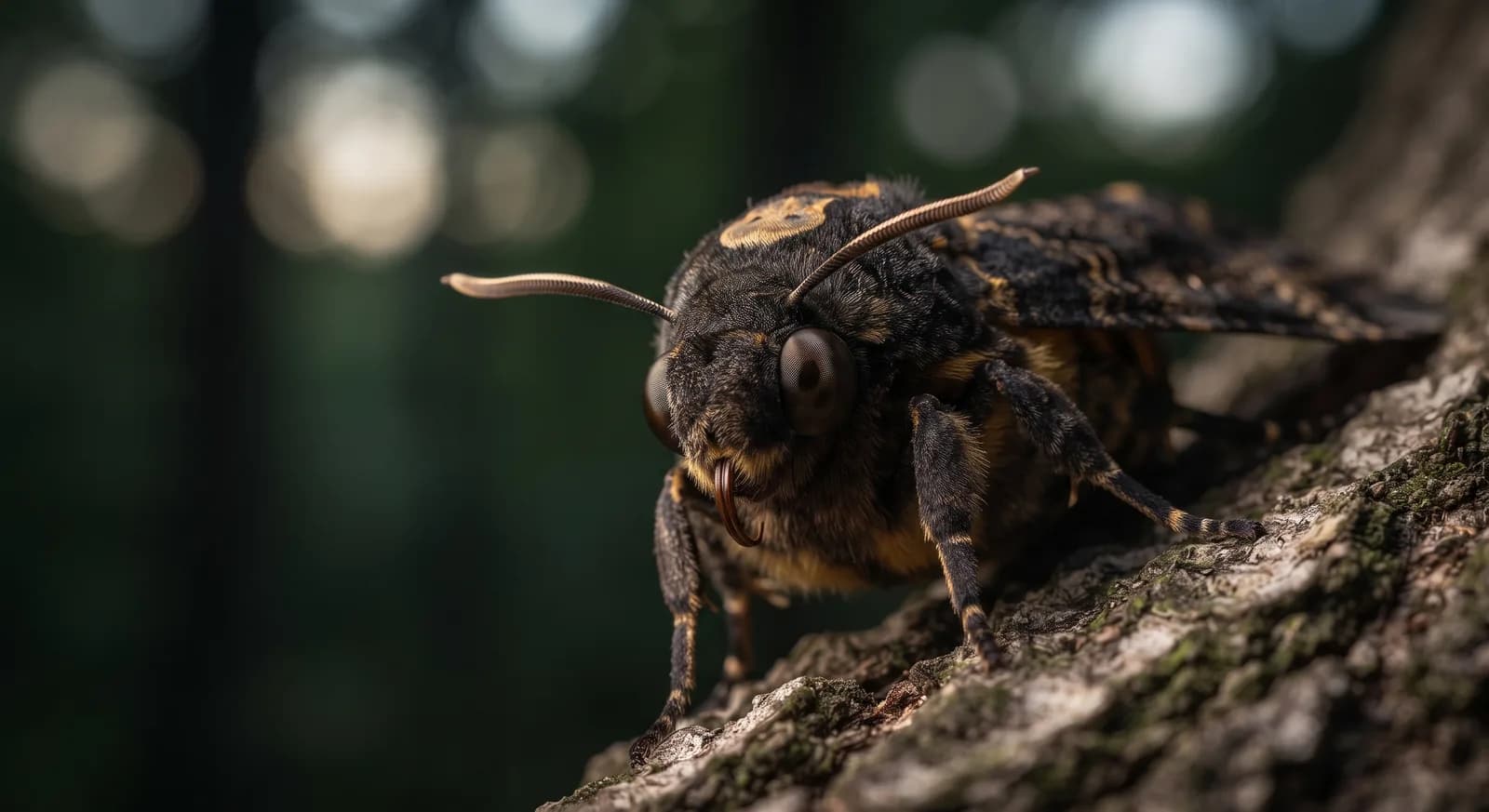
A stout, solidly built beetle, black with a characteristic green or bluish iridescence, above all on the underside. The antennae are lamellate and elbowed, and the legs, very strong and toothed, are adapted to digging the burrows in which it buries dung.
AI-generated images: illustrations, not photographs.
Fun facts
It can break off and carry a piece of dung weighing up to 200 times its own weight.
It has been calculated that in a year a population can bury as much as a tonne of dung, aerating and fertilising the soil while also cleaning the pasture.
The division of labour is the reverse of that in most beetles: here it is the male that makes and buries the ball, and the female only lays.
It does not roll balls: it digs. It sinks a deep vertical shaft directly beneath the dung pat and takes the dung down to the bottom, where the female lays her eggs. This is the strategy of the so-called tunnelling dung beetles, as opposed to rollers such as the sacred scarab.
That labour buries large quantities of dung and is an ecosystem service of the first order: it aerates the soil, works in nutrients and reduces flies and livestock parasites.
The pair cooperate: usually the male digs and the female provisions.
It almost always carries mites clinging to its body, which travel with it from dung pat to dung pat.
Its populations have fallen with the use of antiparasitic drugs of the avermectin family in livestock, which are excreted still active in the dung and kill the larvae of the beetles that process it.
Life cycle and biology
Skeleton type
Invertebrate - chitin exoskeleton (insect)
Habitat and environment
Grassland, dehesa woodland pasture and rural areas with livestock. It digs tunnels up to some 60 cm deep beneath cowpats
Sexual maturity
The adults emerge towards the end of June; mating takes place in spring and both sexes work together to dig the burrow and the chambers
Gestation / incubation
Laying takes place in spring; the larvae develop over the summer and some pupate and emerge as adults in autumn, feeding and overwintering inside the burrows, while others remain as larvae in the brood chambers and pupate in spring
Litter / clutch size
Both sexes dig a vertical shaft together, up to 50 cm deep, right beneath the dung; the female then opens horizontal brood chambers off to the sides, provisions each one with dung and a single egg and seals it with the soil she digs out of the next
Sources consulted: Universidad de Málaga (UMA Divulga); La Guía de Biología; Asturnatura; Fauna Europaea; Buglife, ficha Common Dor Beetle; Animalia, ficha Geotrupes stercorarius; Animalia; Bumblebee.org, guia de Geotrupidae; Ficha de especie de Geotrupes stercorarius; Buglife; NatureSpot, ficha Geotrupes stercorarius
Where to find it
Best time: Active from April to October in grazed pasture and also in woodland, where it breeds on rotting fungi and plant debris; it flies over the meadows on warm spring and summer afternoons and can be seen well into the autumn
Loading map…
Related species
Other species in the catalogue with the most in common with Dor Beetle — same habitat, park, country, tags or family.
Related to
Related to
Related to
Related to
Related to
Related to
Keep exploring
Based on what we already know about dor beetle.
Comments
Share an experience, a fun fact or a tip for seeing the dor beetle.