 Least Concern
Alpine Accentor
Prunella collaris
One of the 2 accentors on WAnimals
Birds · Passeriformes · Prunellidae
Prunella modularis
The species is abundant and widely distributed; it faces no significant short-term risk.
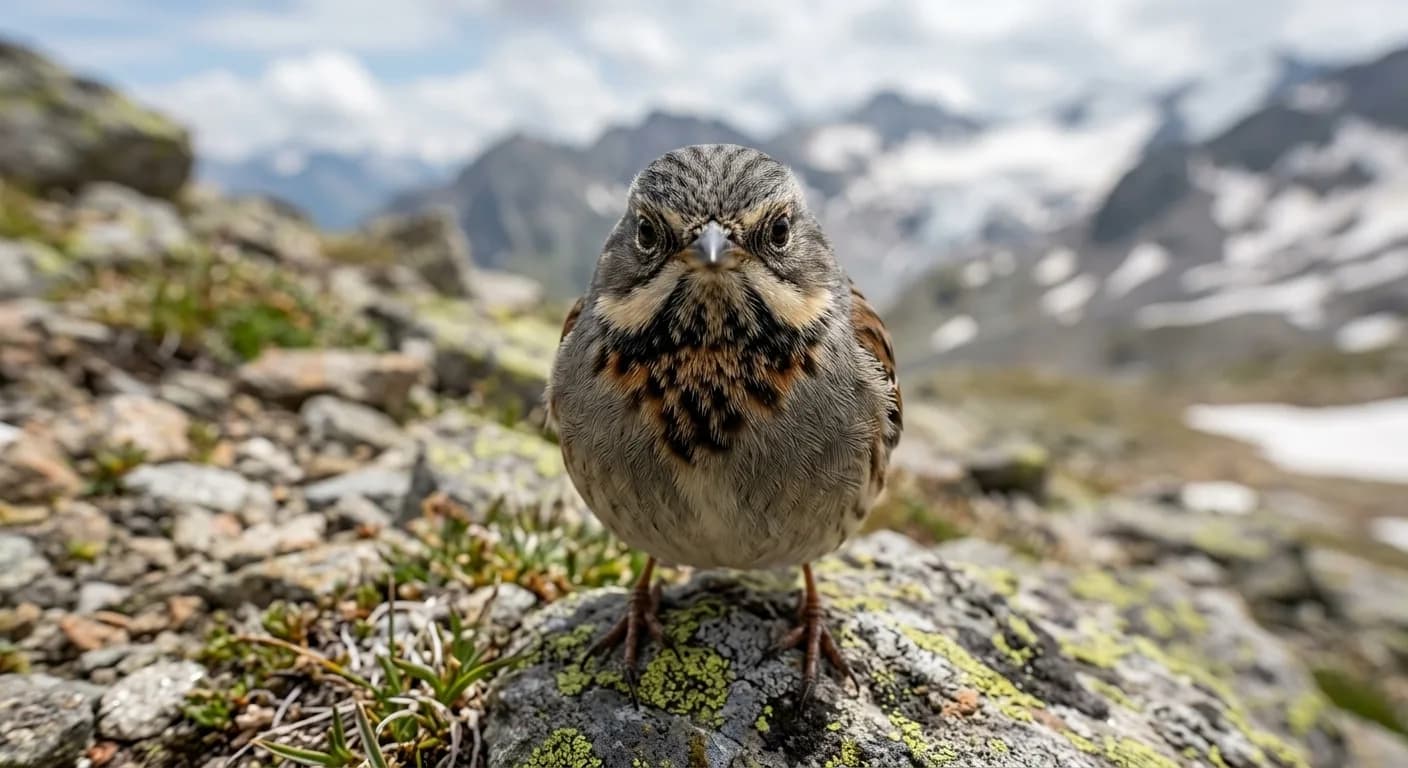
An unobtrusive bird the size of a sparrow, with a glossy slate-grey head, eyebrow, throat and breast contrasting with an ochre-brown back densely streaked with black. A fine insect-eater's bill and robust reddish legs. It is easily confused with a young robin or a wren.
Weight
20 g – 23 g
Size
14 cm on average
Life expectancy
5 years
Diet
Omnivore
Combines animal and plant food depending on availability.
Activity
Diurnal
Active mainly during the day.
Social structure
In pairs
Usually lives in pairs, sometimes for life.
Sighting difficulty
Easy
Sources consulted: SEO/BirdLife (ficha y III Atlas de las aves en época de reproducción en España); IUCN Red List; Asturnatura; Taboada Martínez y Justo Álvarez 2022, III Atlas; Ponce y Leal 2013 (SEO/BirdLife); MITECO - Inventario Español de Especies Terrestres; Cramp 1988
Best time: From October to March in most of Spain, when the European wintering birds arrive
Parks and dive sites where this species has been documented — showing 10 of 250.
Other species in the catalogue with the most in common with Dunnock — same habitat, park, country, tags or family.
Based on what we already know about dunnock.
Share an experience, a fun fact or a tip for seeing the dunnock.
Be the first to comment.
The pins mark the parks where its presence is documented.