Least Concern
Middle Spotted Woodpecker
Dendrocoptes medius
One of the 7 woodpeckers on WAnimals
Birds · Piciformes · Picidae
Dryobates minor
The species is abundant and widely distributed; it faces no significant short-term risk.
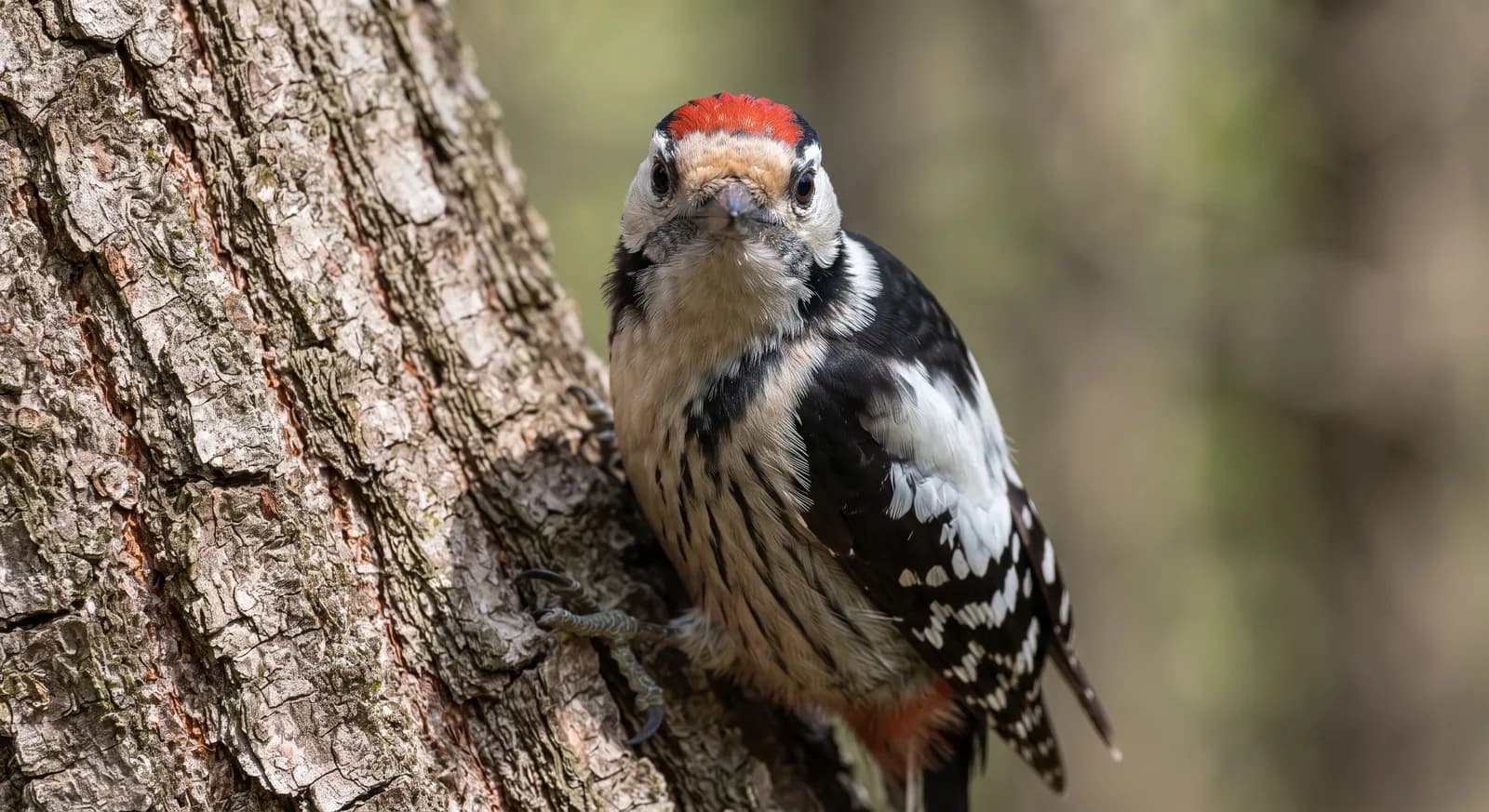
The smallest of the European woodpeckers, barely larger than a sparrow, with a plump, short body, a rounded head and a small bill angled slightly upwards. A black-and-white back with a strongly marked chequered pattern; the crown is red in males and dirty white in females.
Weight
20 g – 25 g
Size
14 cm – 16 cm
Diet
Insectivore
Feeds mainly on insects and other invertebrates.
Activity
Diurnal
Active mainly during the day.
Social structure
In pairs
Usually lives in pairs, sometimes for life.
Sources consulted: SEO/BirdLife (ficha y III Atlas de las aves en época de reproducción en España) · IUCN Red List · Asturnatura · Prieta Díaz 2022, III Atlas · Lista de aves de España de SEO/BirdLife 2019 · SEO/BirdLife 2012, Atlas de las aves en invierno
Best time: From February to May, when it drums and is easiest to detect; for the rest of the year it goes largely unnoticed
Parks and dive sites where this species has been documented — showing 10 of 221.
Other species in the catalogue with the most in common with Lesser Spotted Woodpecker — same habitat, park, country, tags or family.
Based on what we already know about lesser spotted woodpecker.
The pins mark the parks where its presence is documented.