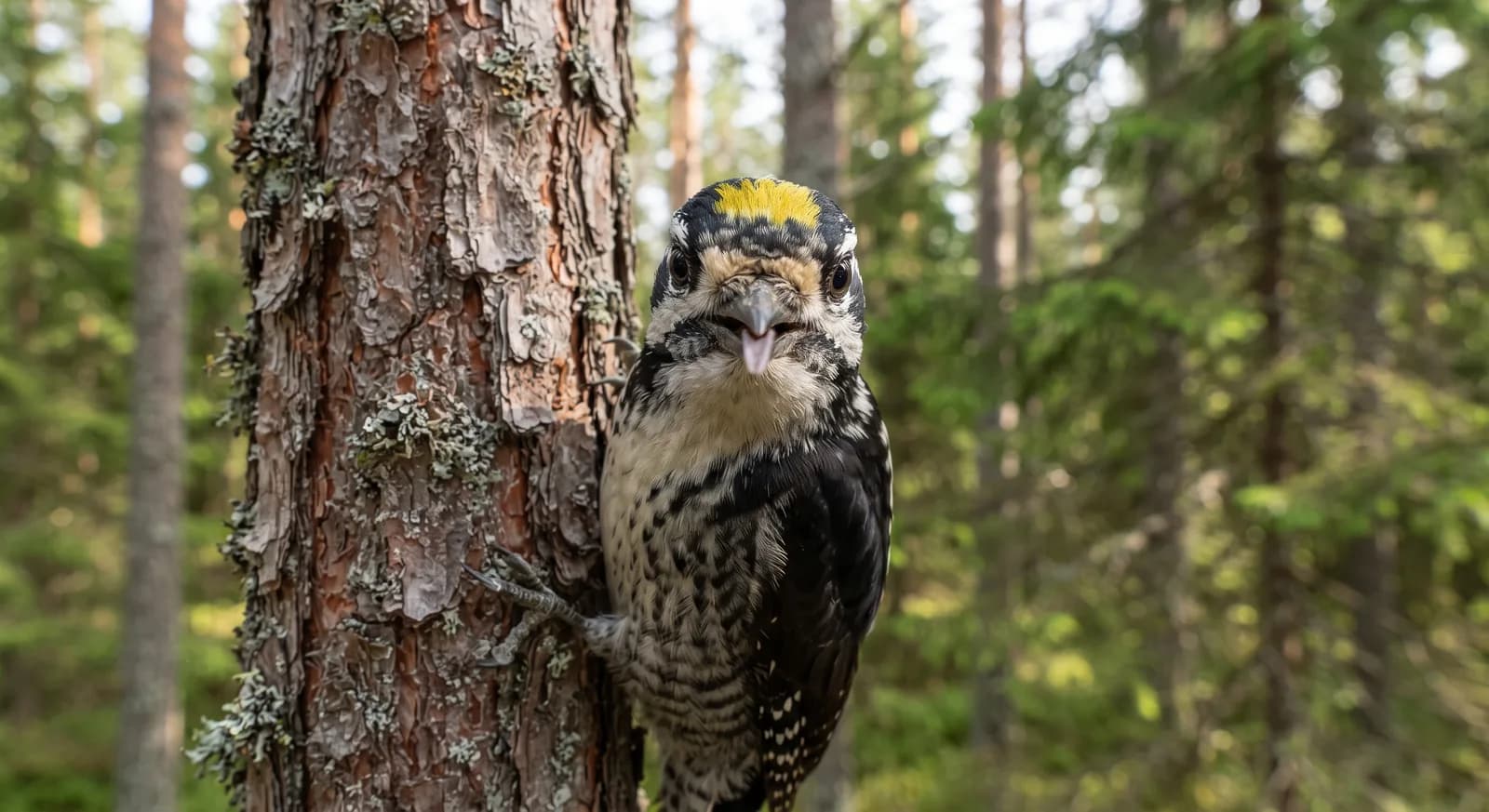
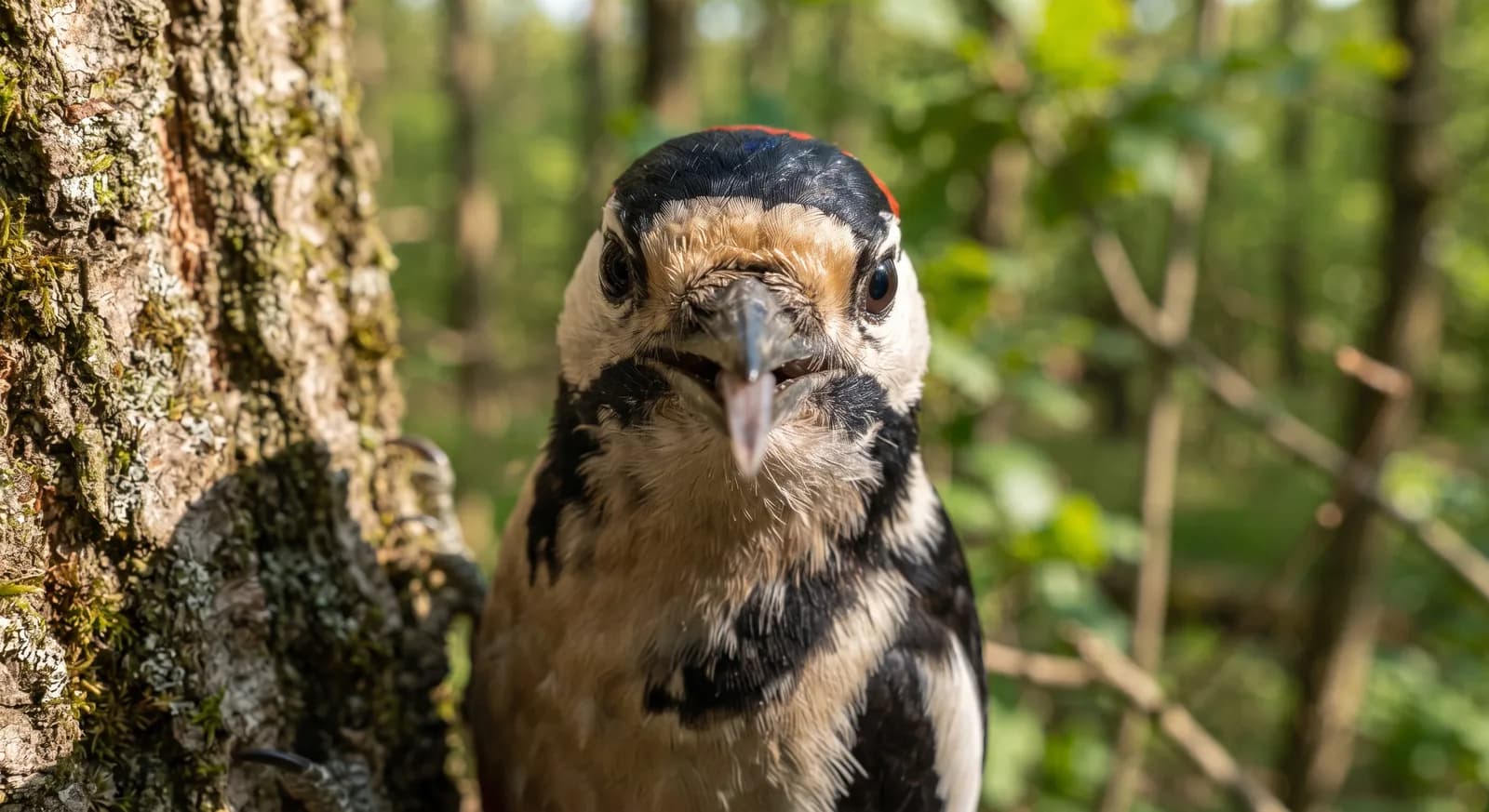
One of the 2 woodpeckers on WAnimals
Birds · Piciformes · Picidae
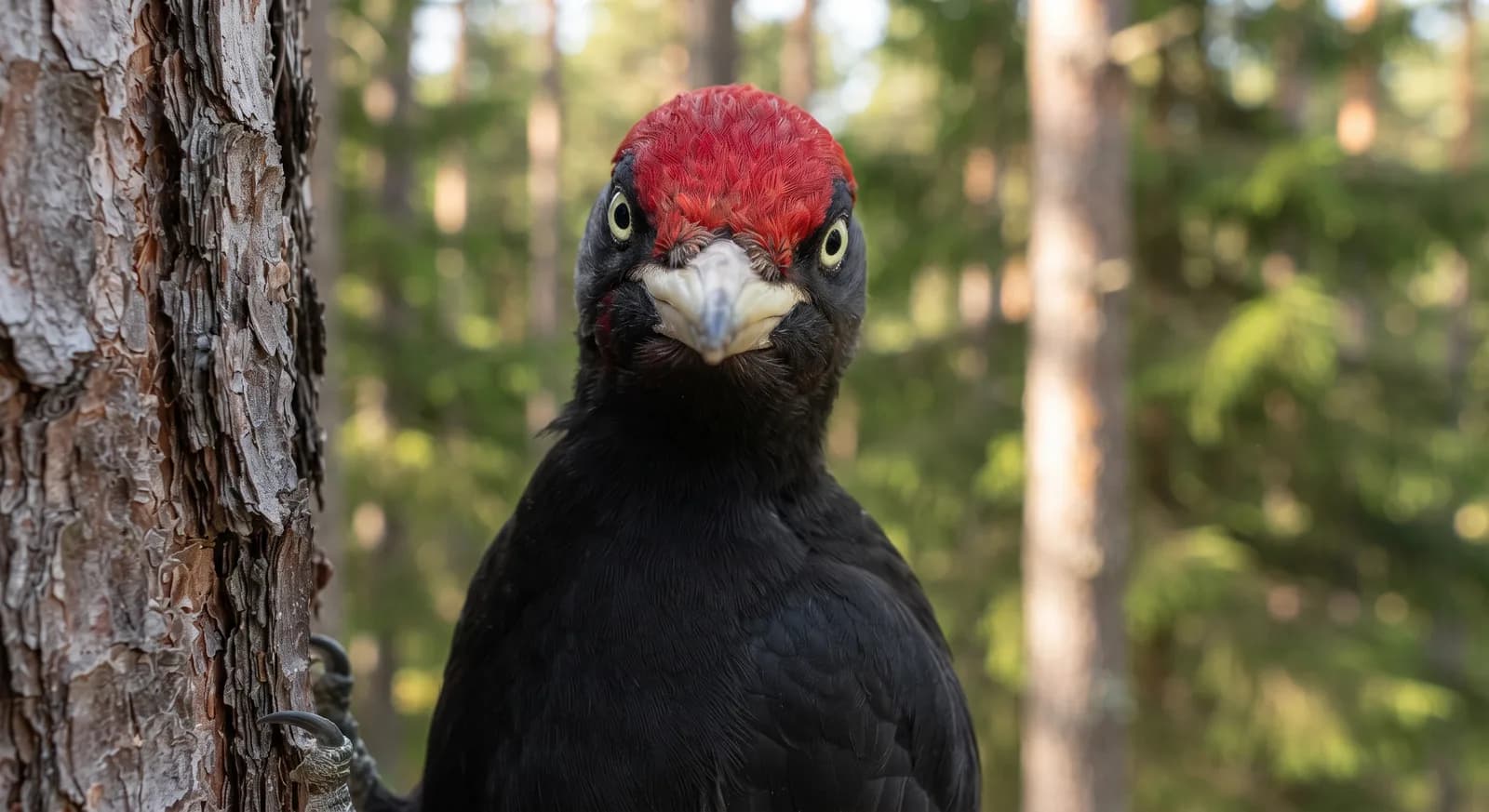
Dryocopus martius
The species is abundant and widely distributed; it faces no significant short-term risk.
The largest woodpecker in Europe. Entirely black plumage except for the red crown, which in the male covers the whole top of the head and in the female is reduced to the nape. Its flight is strong and direct, and its call a ringing laugh audible at a great distance.
Weight
321 g on average
Size
40 cm – 46 cm
Diet
Insectivore
Feeds mainly on insects and other invertebrates.
Activity
Diurnal
Active mainly during the day.
Social structure
In pairs
Usually lives in pairs, sometimes for life.
Sighting difficulty
Easy
Estimated population
Between 1,500,000 and 2,900,000 individuals worldwide
AI-generated images: illustrations, not photographs.
Sources consulted: IUCN Red List; Wikipedia (Dryocopus martius); SEO/BirdLife; estudio sobre conectividad forestal en Cataluña (atlas 1980-2000 e inventarios forestales); Garmendia et al. 2006, Biodiversity and Conservation 15; Cárcamo 2006, Pirineos 161; Boie 1826; Linnaeus 1758
Best time: All year round in mature mountain beech and pine woods
Parks and dive sites where this species has been documented.
Other species in the catalogue with the most in common with Black Woodpecker — same habitat, park, country, tags or family.
Based on what we already know about black woodpecker.
Share an experience, a fun fact or a tip for seeing the black woodpecker.
Be the first to comment.
The pins mark the parks where its presence is documented.